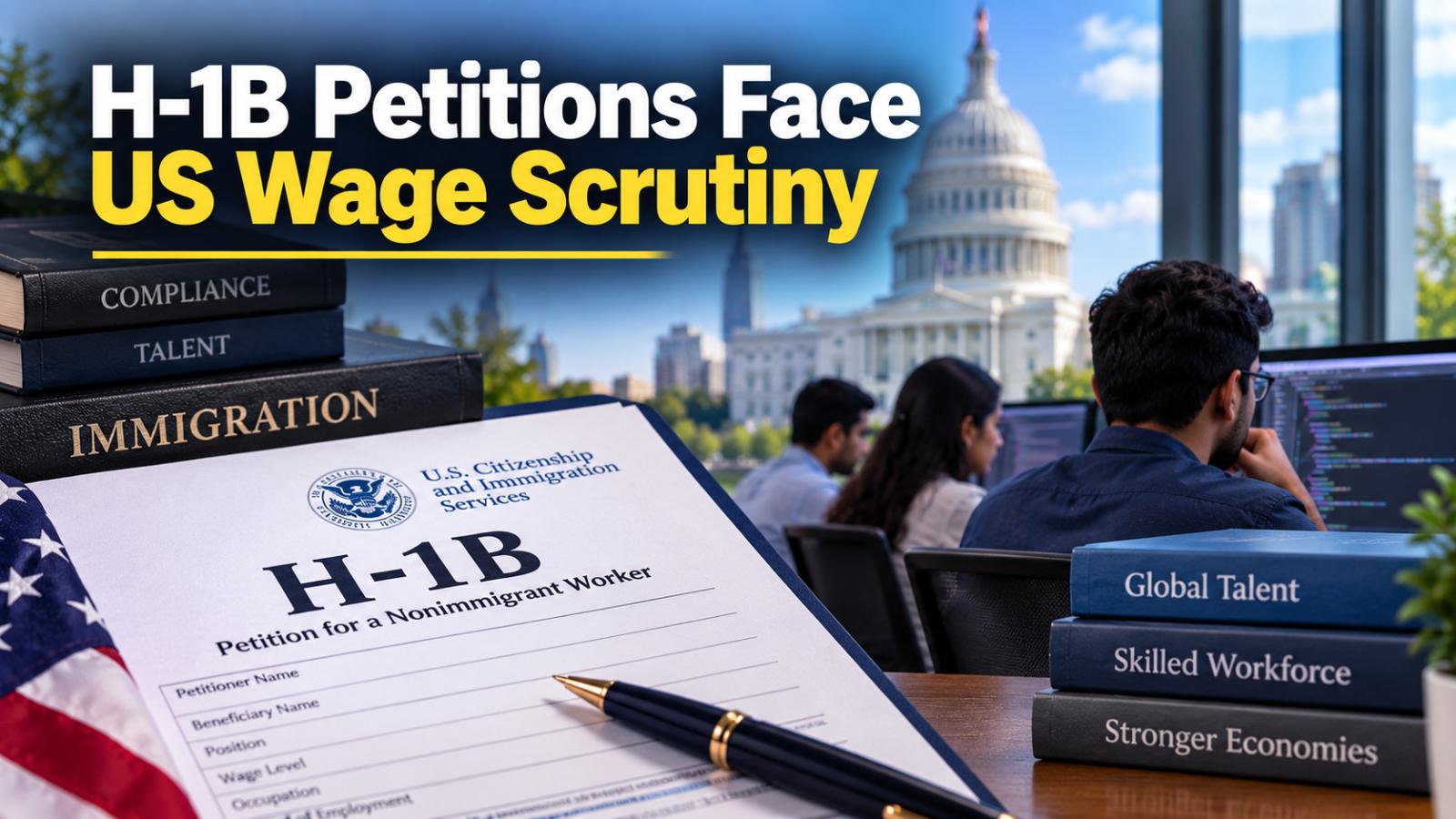
US immigration authorities have denied and revoked multiple H-1B petitions filed by a major IT consulting company after finding that skilled technology jobs were classified at wage levels lower than the duties and requirements of those positions supported.
USCIS Flags Lower Wage Classifications
UNITED STATES, September 5, 2026 US Citizenship and Immigration Services said its Vermont office identified multiple H-1B petitions in which skilled technology positions were assigned wage levels that did not accurately correspond with the work involved.
USCIS said the affected petitions were denied or revoked as part of its efforts to enforce employment-based immigration rules and protect US workers. The agency has not identified the consulting company involved, disclosed the number of petitions affected or specified the technology occupations under review.
Why H-1B Wage Levels Matter
Employers seeking H-1B workers must submit a Labor Condition Application and comply with applicable wage requirements. The employer generally must pay at least the required actual or prevailing wage for the position. Wage levels are assessed using factors including occupation, experience, education, skills and job responsibilities.
USCIS said the petitions under scrutiny involved classifications below the levels supported by the duties and requirements of the skilled jobs, a practice the agency said could undercut required wages and create unfair competition for American workers.
IT Consulting Firms Face Closer Scrutiny
The action does not introduce a blanket restriction on H-1B workers or technology consulting firms. Instead, it signals closer examination of whether employers’ job descriptions, qualification requirements and wage classifications are consistent with one another.
A petition can face denial or revocation when USCIS determines that the supporting documentation does not meet applicable requirements. For employers, the latest enforcement action highlights the importance of accurately matching skilled positions with the appropriate wage level and maintaining clear evidence supporting each petition.
Indian H-1B Professionals Watch Developments
The issue has particular relevance for Indian technology professionals, who account for the largest share of approved H-1B beneficiaries. USCIS data cited in the report show that 283,397 approved H-1B beneficiaries in fiscal year 2024 were born in India, representing about 71% of approvals.
The latest action therefore adds to attention around H-1B employer compliance, although USCIS has not said that all workers at the unnamed company are affected. Any impact on an individual worker’s employment or immigration status would depend on the circumstances of that specific petition and available legal options.