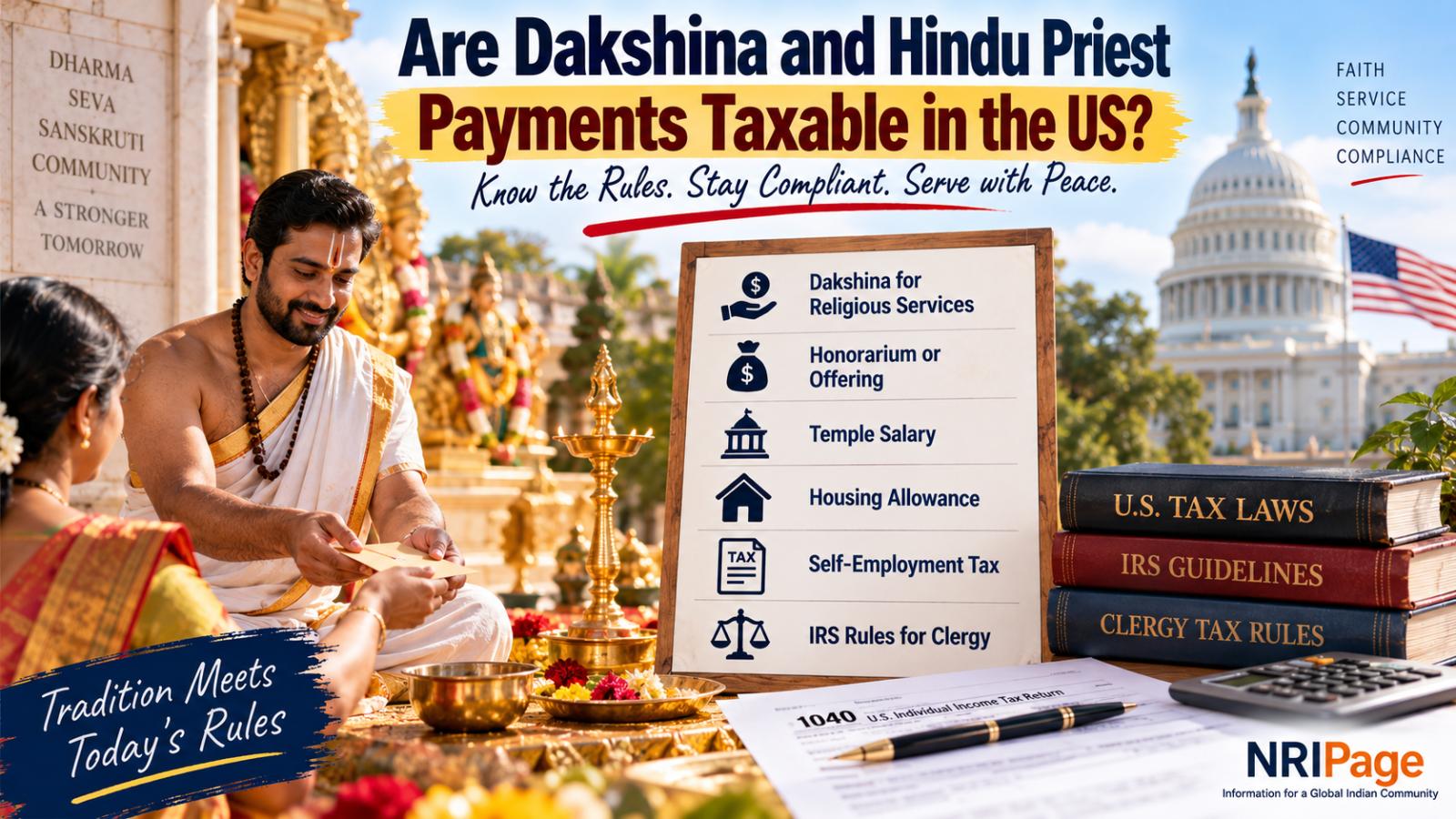
Are dakshina and Hindu priest payments taxable in the US? IRS rules generally treat compensation for religious services as taxable income. Temple salary, direct ceremony payments, self-employment tax and qualifying housing allowances can follow different rules.
Payments made to Hindu priests in the United States can be taxable even when described as dakshina, honorarium or offerings. For federal tax purposes, the key question is whether the money was connected to services the priest performed.
Dakshina for religious services can be taxable
IRS Publication 517 says ministers must include salaries and fees for ministerial services in gross income. It also includes offerings received for ceremonies such as marriages, baptisms and funerals. Amounts received directly from congregation members for personal religious services can be self-employment earnings.
For a Hindu priest who meets the IRS definition of a minister, dakshina received for a puja, wedding, housewarming or other ceremony can therefore be taxable when tied to the service.
An honorarium is not automatically tax-free
Federal tax rules generally include payments for personal services in gross income. Calling a payment a donation, gift, dakshina or honorarium does not by itself make it non-taxable.
A genuine personal gift unrelated to services can be treated differently. When money is given because a priest performed a ceremony, however, the facts surrounding the payment matter more than the label.
Temple salary and direct payments may differ
A priest can be an employee for income-tax purposes depending on the working relationship with the temple. IRS guidance says taxable employee compensation is generally reported on Form W-2.
Direct fees received from individuals for ceremonies may instead be treated as self-employment income. IRS Publication 517 says ministerial earnings are generally subject to self-employment tax under SECA even when the minister is otherwise treated as a church employee, unless an approved exemption applies.
Housing allowances have special rules
Qualifying ministers may be able to exclude a properly designated housing allowance from federal income tax within IRS limits. However, the allowance or value of provided housing is generally included when calculating self-employment tax.
Tax treatment depends on the priest's circumstances and whether the person meets the federal definition of a minister. Immigration authorization is also a separate issue: an R-1 priest can face restrictions on outside paid religious work even when the income itself is taxable.
Temples and priests should therefore consider both immigration rules and federal tax reporting before treating dakshina or honorarium as tax-free money.
Reviewed against current IRS guidance on September 19, 2026. This article provides general information and is not individualized tax or legal advice.