























#nrilaws
Can US visa holders earn from YouTube, events or side businesses?
US visa holders can face immigration restrictions when earning from YouTube, religious events, freelance work or side businesses. Active self-employment may count as employment, so H-1B, F-1, R-1 and visitor visa holders must follow different authorization rules. Earning extra money through YouTube, religious events, freelancing or a small business may seem different from taking a traditional second job. Under US immigration law, however, the k
Can US visa holders earn from YouTube, events or side businesses?
US visa holders can face immigration restrictions when earning from YouTube, religious events, freelance work or side businesses. Active self-employment may count as employment, so H-1B, F-1, R-1 and visitor visa holders must follow different authorization rules. Earning extra money through YouTube, religious events, freelancing or a small business may seem different from taking a traditional second job. Under US immigration law, however, the k
What US temples should check before sponsoring a Hindu priest
US temples sponsoring Hindu priests under R-1 rules should verify their own nonprofit eligibility, the priest's denominational membership and qualifications, religious duties, work hours, compensation and work location before filing Form I-129. US temples planning to sponsor a Hindu priest should review both the temple's eligibility and the priest's qualifications before filing an R-1 petition. The process requires documentation about the relig
What US temples should check before sponsoring a Hindu priest
US temples sponsoring Hindu priests under R-1 rules should verify their own nonprofit eligibility, the priest's denominational membership and qualifications, religious duties, work hours, compensation and work location before filing Form I-129. US temples planning to sponsor a Hindu priest should review both the temple's eligibility and the priest's qualifications before filing an R-1 petition. The process requires documentation about the relig
Can US temples provide housing, food and allowances to priests?
US temples can provide priests with housing, room and board, stipends and other support. For R-1 workers, USCIS requires the compensation arrangement to be documented, while IRS rules determine whether housing and other benefits are excluded from income or taxable. Hindu temples in the United States may provide priests with accommodation, food, stipends and other living support instead of—or in addition to—a conventional salary. For priests
Can US temples provide housing, food and allowances to priests?
US temples can provide priests with housing, room and board, stipends and other support. For R-1 workers, USCIS requires the compensation arrangement to be documented, while IRS rules determine whether housing and other benefits are excluded from income or taxable. Hindu temples in the United States may provide priests with accommodation, food, stipends and other living support instead of—or in addition to—a conventional salary. For priests
Are dakshina and Hindu priest payments taxable in the US?
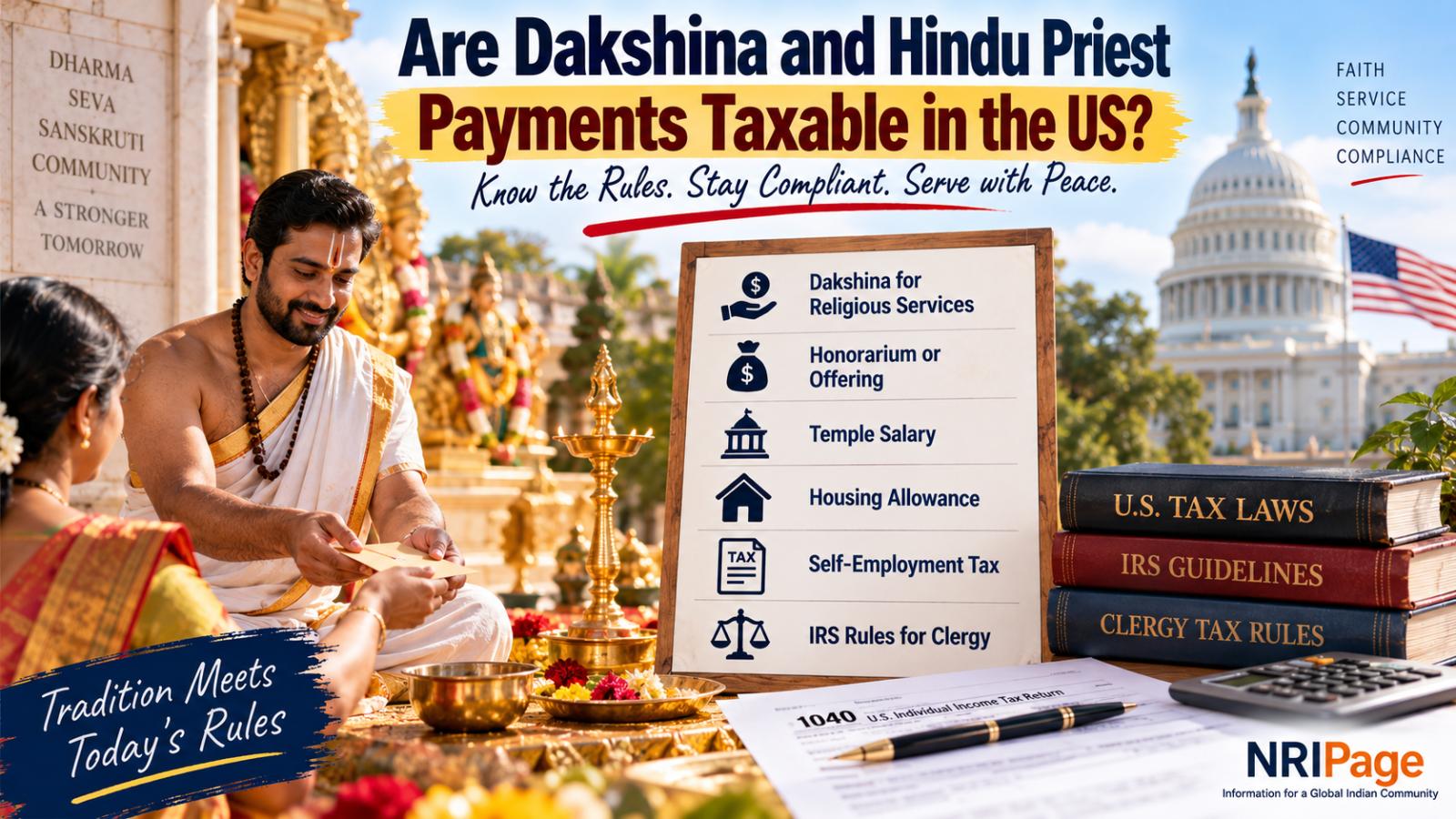
Are dakshina and Hindu priest payments taxable in the US? IRS rules generally treat compensation for religious services as taxable income. Temple salary, direct ceremony payments, self-employment tax and qualifying housing allowances can follow different rules. Payments made to Hindu priests in the United States can be taxable even when described as dakshina, honorarium or offerings. For federal tax purpo
Are dakshina and Hindu priest payments taxable in the US?
Are dakshina and Hindu priest payments taxable in the US? IRS rules generally treat compensation for religious services as taxable income. Temple salary, direct ceremony payments, self-employment tax and qualifying housing allowances can follow different rules. Payments made to Hindu priests in the United States can be taxable even when described as dakshina, honorarium or offerings. For federal tax purpo
Temple volunteer or employee? When unpaid service becomes work in the US
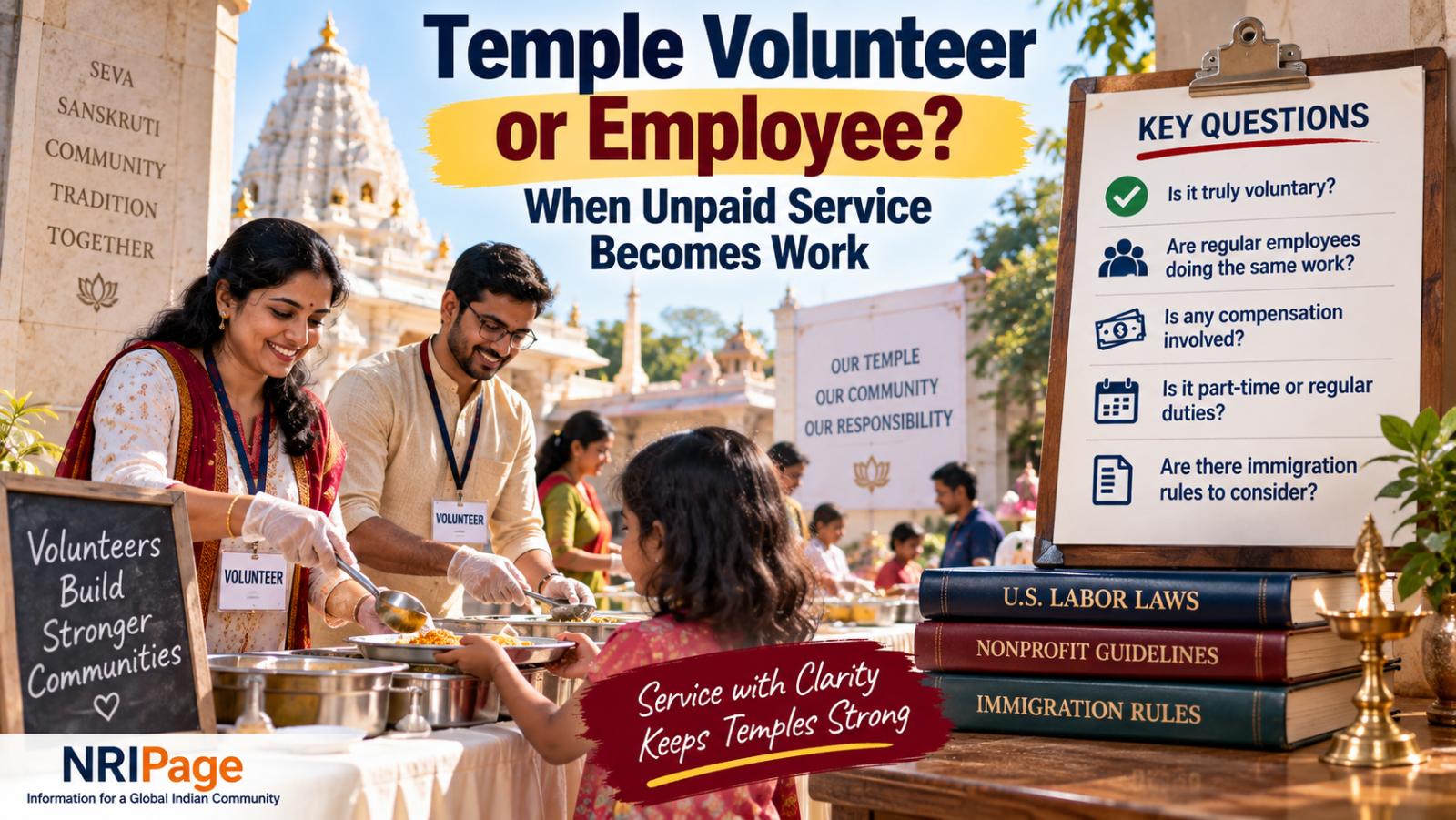
A temple volunteer is not automatically an employee under U.S. law. Genuine unpaid religious service is generally permitted at nonprofits, but regular duties, expected compensation or replacing paid workers can change the analysis. Visa holders also face separate immigration rules. Indian temples across the United States often depend on volunteers for festivals, kitchens, religious programs, administration and community events. But when does un
Temple volunteer or employee? When unpaid service becomes work in the US
A temple volunteer is not automatically an employee under U.S. law. Genuine unpaid religious service is generally permitted at nonprofits, but regular duties, expected compensation or replacing paid workers can change the analysis. Visa holders also face separate immigration rules. Indian temples across the United States often depend on volunteers for festivals, kitchens, religious programs, administration and community events. But when does un
What counts as unauthorized employment for U.S. visa holders?
Unauthorized employment in the USA can include working without permission, working beyond an approved period or taking employment outside the limits of a visa category. H-1B, F-1, R-1, visitor and dependent visa holders can face very different rules. Taking a side job, freelancing or accepting paid work in the United States can create immigration problems when a visa holder does not have the required empl
What counts as unauthorized employment for U.S. visa holders?
Unauthorized employment in the USA can include working without permission, working beyond an approved period or taking employment outside the limits of a visa category. H-1B, F-1, R-1, visitor and dependent visa holders can face very different rules. Taking a side job, freelancing or accepting paid work in the United States can create immigration problems when a visa holder does not have the required empl
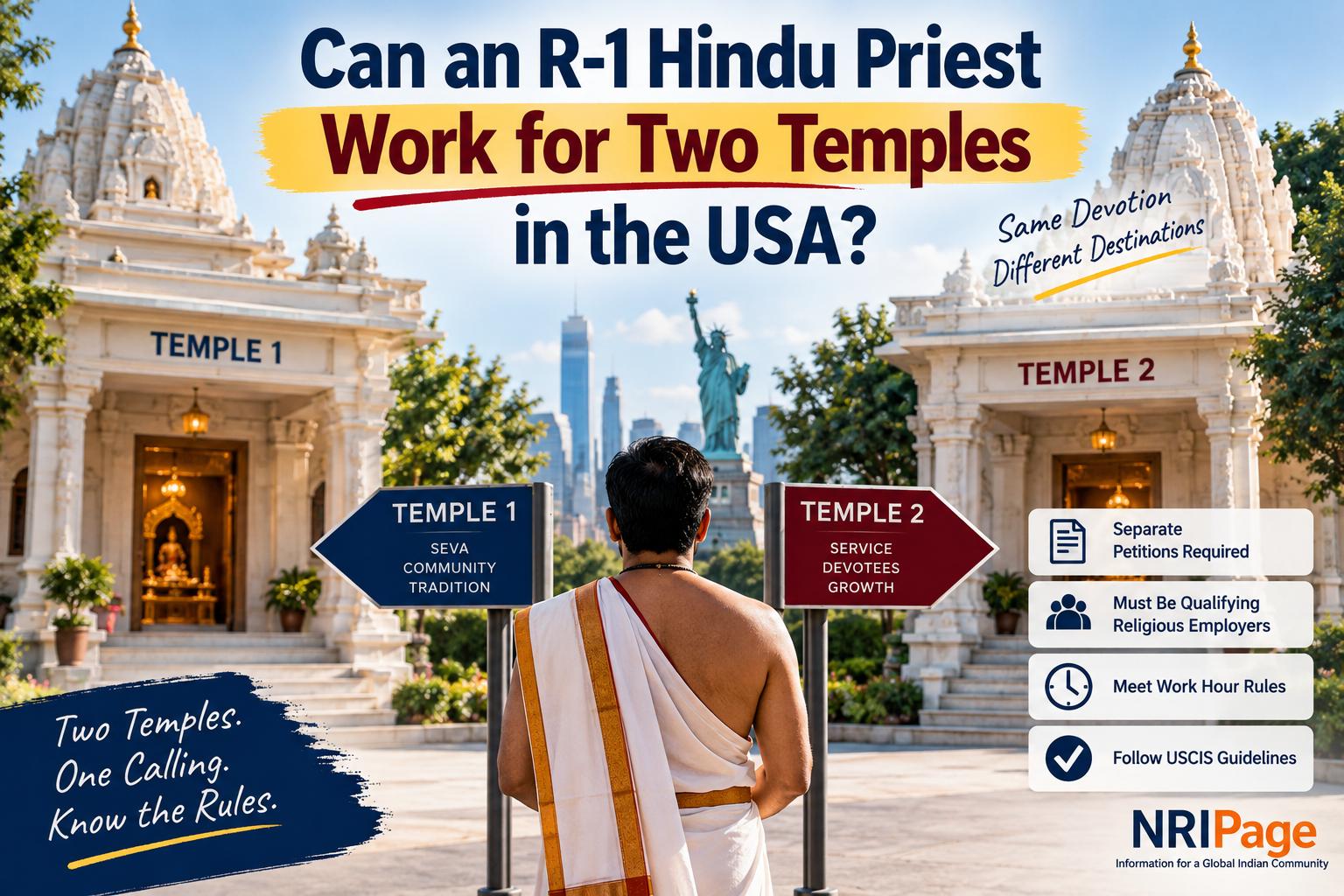
Can an R-1 Hindu priest work for two temples in the USA?
An R-1 Hindu priest can potentially work for two temples in the United States, but approval from one temple does not automatically authorize employment with another. Federal rules require each additional qualifying religious employer to obtain authorization for the worker. A Hindu priest in R-1 religious worker status can potentially work for two temples in the United States. However, approval to work for
Can an R-1 Hindu priest work for two temples in the USA?
An R-1 Hindu priest can potentially work for two temples in the United States, but approval from one temple does not automatically authorize employment with another. Federal rules require each additional qualifying religious employer to obtain authorization for the worker. A Hindu priest in R-1 religious worker status can potentially work for two temples in the United States. However, approval to work for
Can R-1 Hindu priests perform private pujas for money?
Can an R-1 Hindu priest perform private pujas for money in the USA? A home ceremony is not automatically prohibited, but R-1 workers cannot freely take independent paid work. The sponsoring employer, approved duties, work locations and payment arrangement can determine whether the work is authorized. Hindu priests in the United States are often invited to homes for weddings, housewarmings, Satyanarayana p
Can R-1 Hindu priests perform private pujas for money?
Can an R-1 Hindu priest perform private pujas for money in the USA? A home ceremony is not automatically prohibited, but R-1 workers cannot freely take independent paid work. The sponsoring employer, approved duties, work locations and payment arrangement can determine whether the work is authorized. Hindu priests in the United States are often invited to homes for weddings, housewarmings, Satyanarayana p
R-1 visa rules for Hindu priests in the USA explained
The R-1 visa allows qualifying Hindu priests and other religious workers to work temporarily for eligible U.S. religious organizations. Key requirements include two years of denominational membership, an approved employer petition and at least 20 hours of religious work weekly. The R-1 visa for Hindu priests allows qualifying religious workers to serve temporarily at eligible religious or
R-1 visa rules for Hindu priests in the USA explained
The R-1 visa allows qualifying Hindu priests and other religious workers to work temporarily for eligible U.S. religious organizations. Key requirements include two years of denominational membership, an approved employer petition and at least 20 hours of religious work weekly. The R-1 visa for Hindu priests allows qualifying religious workers to serve temporarily at eligible religious or
Can Hindu priests work a second job in the USA?
Can a Hindu priest work a second job in the USA? Citizens and green card holders generally have broad employment rights, but priests in R-1 religious worker status face specific restrictions on employers, job duties and outside secular work. A Hindu priest working in the United States may or may not be able to take a second job. The key factor is not the person's religious role itself, but their U.S. immigration and employment status
Can Hindu priests work a second job in the USA?
Can a Hindu priest work a second job in the USA? Citizens and green card holders generally have broad employment rights, but priests in R-1 religious worker status face specific restrictions on employers, job duties and outside secular work. A Hindu priest working in the United States may or may not be able to take a second job. The key factor is not the person's religious role itself, but their U.S. immigration and employment status


