A temple volunteer is not automatically an employee under U.S. law. Genuine unpaid religious service is generally permitted at nonprofits, but regular duties, expected compensation or replacing paid workers can change the analysis. Visa holders also face separate immigration rules.
Indian temples across the United States often depend on volunteers for festivals, kitchens, religious programs, administration and community events. But when does unpaid service stop being volunteering and start looking like employment?
Under federal wage law, the answer depends more on the actual relationship and duties than on the title given to the worker.
What counts as genuine temple volunteering?
The U.S. Department of Labor says people may freely volunteer their time to religious, charitable, civic, humanitarian and similar nonprofit organizations as a public service without becoming employees under the Fair Labor Standards Act.
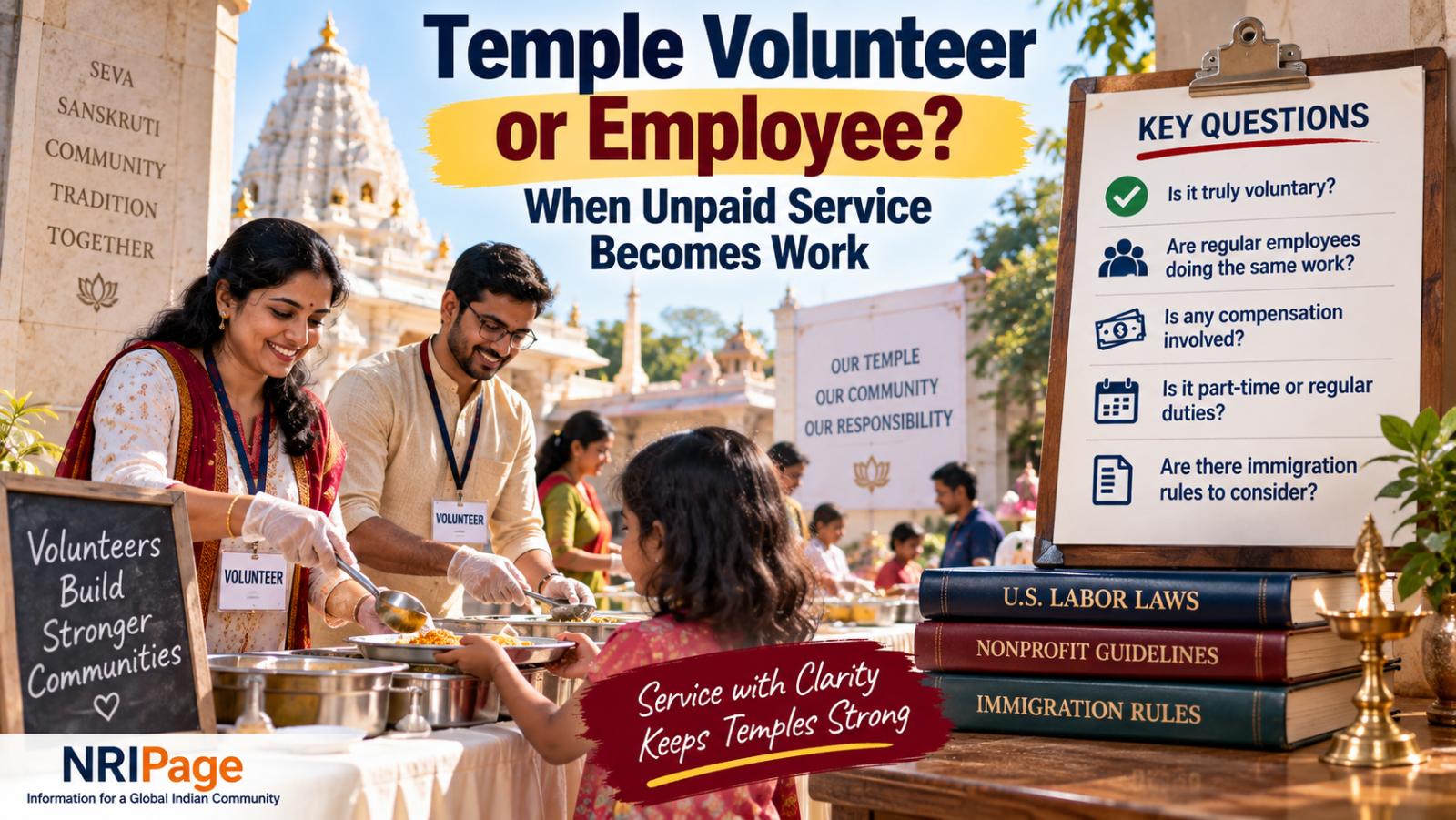
A genuine volunteer generally serves for religious or public-service reasons without expecting or receiving compensation. The Labor Department says such service is typically part time and should not displace regular employees or involve work that would otherwise normally be performed by paid workers.
When unpaid service may look like employment
The word “volunteer” by itself is not decisive.
If an organization directs a person's work like a regular employee, requires the service during assigned working time or uses the person to perform normal employee duties, wage-and-hour questions can arise. The Labor Department also says an employee of a nonprofit generally cannot volunteer to perform the same type of services for that organization that the employee is already paid to provide.
Nonprofit status does not automatically eliminate employment-law obligations. Religious organizations can have employees covered by federal wage rules depending on the nature of their work and applicable FLSA coverage.
Can volunteers receive money?
True nonprofit volunteering is generally based on service performed without contemplation or receipt of compensation. Regular payments tied to services can therefore make the arrangement harder to characterize as ordinary volunteering.
Temples should distinguish genuine voluntary seva from arrangements in which a person performs scheduled ongoing duties in return for compensation.
Visa holders need an additional check
Employment law and immigration law are separate issues.
A service may appear voluntary under wage rules while a visa holder still has to comply with restrictions attached to immigration status. For example, federal guidance for F-1 students imposes specific limits on employment and treats unauthorized employment as a potential status violation.
That distinction matters for students and temporary visa holders who regularly assist temples or other nonprofit organizations. They should not assume that describing an activity as “volunteering” automatically resolves immigration questions.
For temples, the safest approach is to clearly document whether a role is genuine voluntary religious or community service or an employment position requiring proper wage and immigration compliance.
Reviewed against U.S. Department of Labor and federal immigration guidance on September 19, 2026. This article provides general information and is not individualized legal advice.