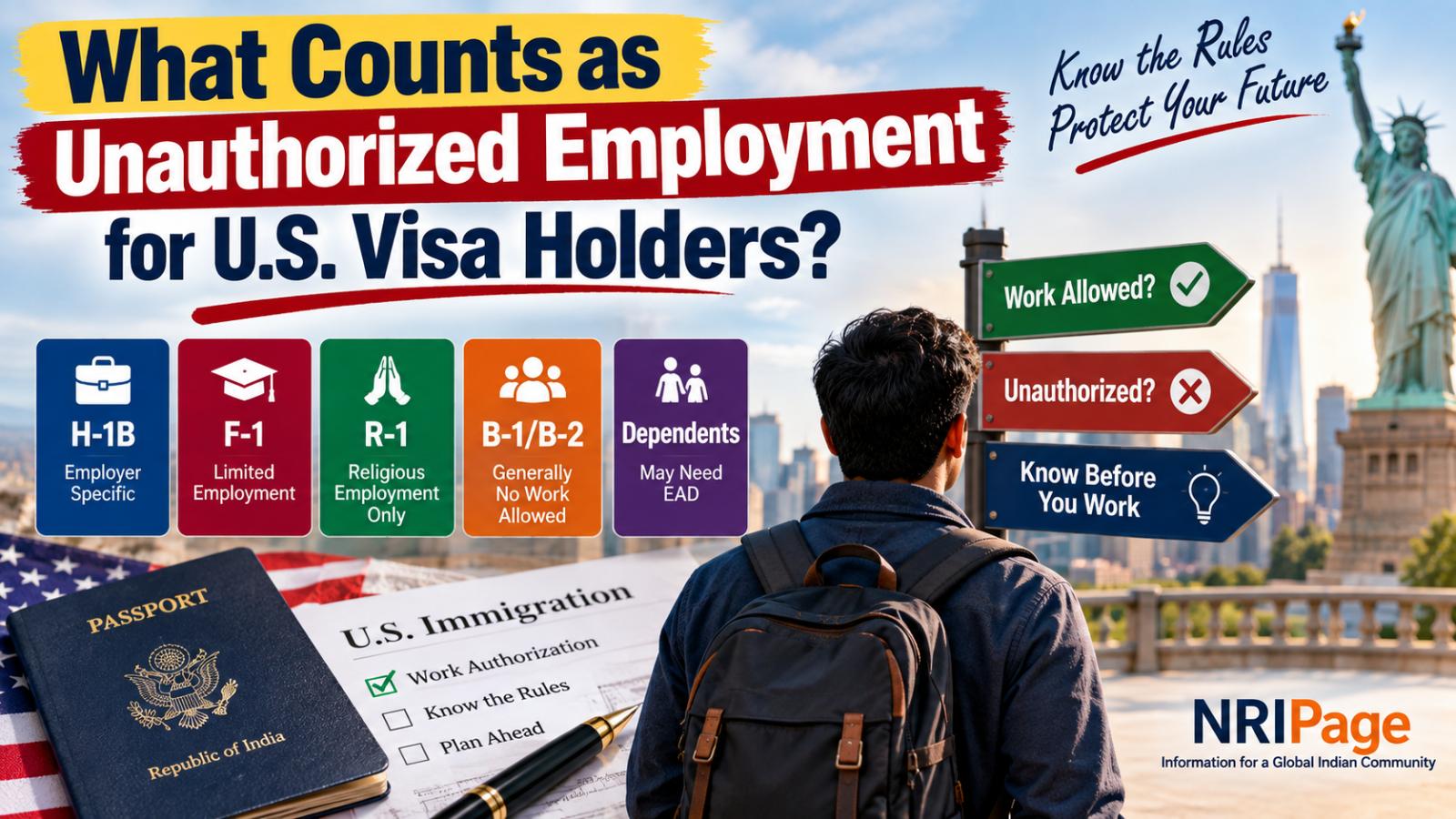
Unauthorized employment in the USA can include working without permission, working beyond an approved period or taking employment outside the limits of a visa category. H-1B, F-1, R-1, visitor and dependent visa holders can face very different rules.
Taking a side job, freelancing or accepting paid work in the United States can create immigration problems when a visa holder does not have the required employment authorization.
USCIS has defined unauthorized employment as service or labor performed for a U.S. employer without authorization, or employment that continues beyond the authorized period.
Visa status determines what work is allowed
Some nonimmigrant classifications authorize employment only under specific conditions. Others require the person to obtain an Employment Authorization Document (EAD) before beginning work.
USCIS materials distinguish workers authorized only for a particular employer from people whose immigration category provides broader employment authorization.
A pending immigration application also does not automatically mean a person can begin working. USCIS guidance specifically states that filing an adjustment-of-status application by itself does not authorize employment.
Common examples of unauthorized employment
A visitor in B-1 or B-2 status generally cannot accept U.S. employment. B-1 visitors may conduct limited business activities, but USCIS states that B-1 and B-2 visitors are not authorized for employment in the United States.
An H-1B worker is generally tied to approved H-1B employment. Taking a second job without the required H-1B authorization can therefore create a problem; U.S. immigration rules provide mechanisms for concurrent H-1B employment when properly petitioned.
An F-1 student must follow the rules governing permitted student employment, such as authorized practical training or qualifying off-campus employment. USCIS requires specific authorization for several types of F-1 off-campus work.
For an R-1 religious worker, working for an organization outside the authorized religious employment arrangement can also constitute unauthorized employment.
Do cash payments or freelance jobs count?
Payment method does not determine whether work is authorized. Receiving cash, being paid as an independent contractor or describing income as an honorarium does not automatically remove immigration restrictions.
The important question is whether the person was legally authorized to perform that work under the applicable immigration category.
Why unauthorized work matters
Unauthorized employment can affect maintenance of nonimmigrant status and may also affect certain future immigration applications. The consequences depend on the person's status, immigration history and the benefit later sought.
For Indian visa holders considering a second job, freelance assignment, paid religious service or other side income, checking the exact limits of their status before beginning work is safer than assuming that small, occasional or cash-paid work falls outside immigration rules.
Reviewed against USCIS guidance on September 19, 2026. This article provides general information and is not individualized legal advice.