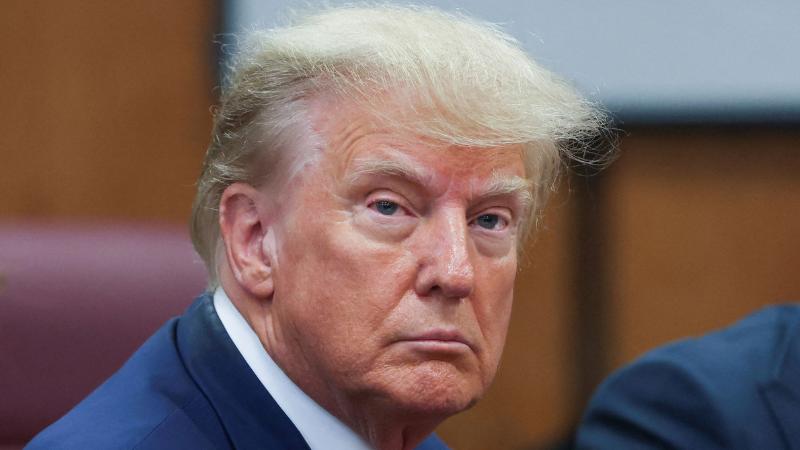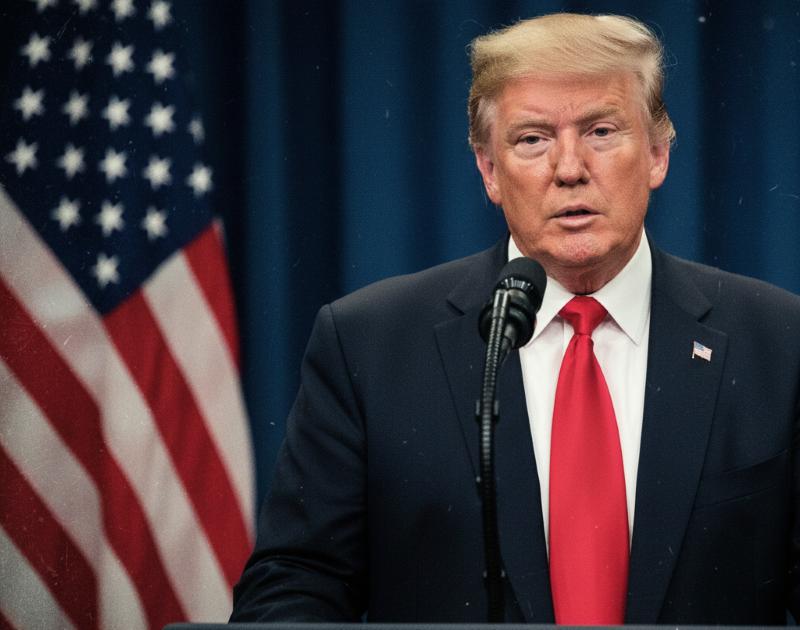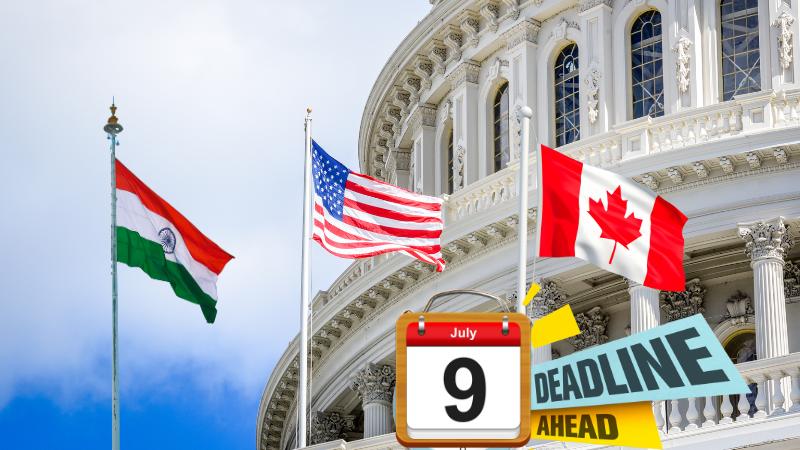
President Donald Trump has announced that he does not intend to extend the 90-day pause on tariffs beyond July 9, signaling a return to aggressive trade measures that could affect several countries unless individual trade agreements are secured. Speaking in an interview, Trump stated that his administration would begin sending formal notifications to countries soon, warning them of upcoming trade penalties unless they finalize deals with the United States.
The president emphasized that each country will be judged on how it treats the United States in trade relations, noting that nations not aligned with U.S. interests would receive letters outlining new tariff rates. According to Trump, the notifications will say, “Congratulations, we’re allowing you to shop in the United States of America, you’re going to pay a 25 per cent tariff, or a 35 per cent or a 50 per cent or 10 per cent.” This remark reflects Trump’s signature approach to leveraging tariffs as a negotiation tool to secure better trade terms.
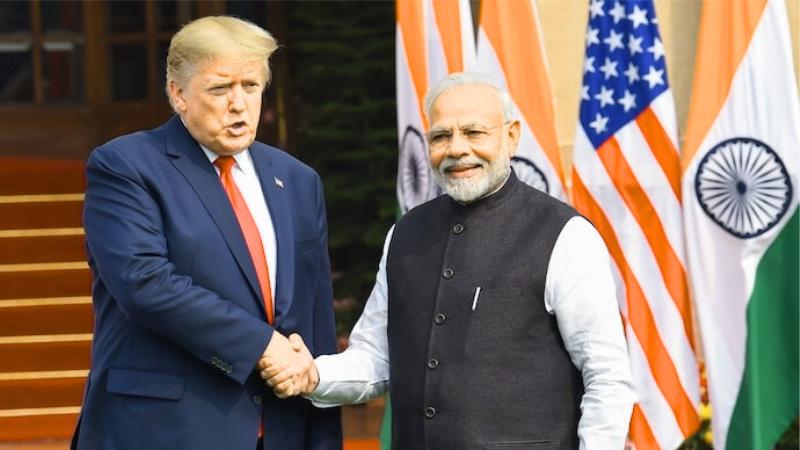
The timing of the statement is particularly significant, as the United States and India are in the final stages of negotiating a preliminary trade deal. High-level sources familiar with the discussions indicate that while substantial progress has been made, a political-level intervention may be necessary to resolve remaining differences and finalize the agreement. The expectation is that a limited agreement covering select trade categories will be announced soon, with a broader bilateral deal expected by October.
India has recently dispatched a delegation to Washington, D.C. for further trade talks, hoping to seal a deal that can pave the way for enhanced economic cooperation. Both sides are aiming for a symbolic breakthrough that would demonstrate mutual commitment to strengthening economic ties, particularly amid global uncertainties and shifting alliances in trade.
Meanwhile, Trump’s approach has also intensified trade tensions with Canada. On Friday, he abruptly cut off trade discussions with Ottawa, citing Canada’s digital services tax targeting U.S. technology giants such as Amazon, Apple, Google, and Meta. Trump described Canada’s tax policy as a “blatant attack” on American companies and announced that he would be imposing a new tariff rate on Canadian goods within the next week.
The Canadian government is set to begin enforcing the 3 percent digital tax from Monday. This levy applies to digital services revenue exceeding $20 million per year generated from Canadian users and is retroactively effective from 2022. Trump’s reaction underlines his administration’s longstanding opposition to unilateral digital taxation efforts aimed at American tech firms.
In addition to India and Canada, Trump’s trade team has been active on multiple fronts. The administration has recently submitted a fresh proposal to the European Union in an attempt to reignite trade negotiations. At the same time, trade discussions have progressed with Japan and two other unnamed nations currently in advanced talks with Washington. Japanese officials have expressed cautious optimism, stating that both countries aim to reach a mutually beneficial agreement that addresses market access and trade imbalances.
Despite acknowledging the difficulty of securing separate deals with dozens of countries, Trump reaffirmed the administration’s ambitious target of negotiating 90 trade deals in 90 days. He insisted that the United States must pursue individual agreements to ensure each deal is tailored to specific national interests, rather than relying on multilateral structures.
This renewed push for trade action places considerable pressure on foreign governments to accelerate negotiations with the U.S. ahead of the July 9 deadline. Trump’s comments suggest that failure to reach agreements in time could lead to significant tariffs on a wide range of imported goods. The strategy is likely to draw mixed reactions globally, with some countries rushing to secure deals while others may view the move as a challenge to multilateral trade norms.
The coming weeks will be critical for India, Canada, and other nations engaged in trade talks with the U.S., as Trump’s administration signals a readiness to pivot from negotiation to enforcement. The outcomes of these discussions could have far-reaching implications not only for bilateral ties but also for the broader global trade landscape, especially as countries attempt to balance national interests with growing protectionist sentiment from the U.S. side.