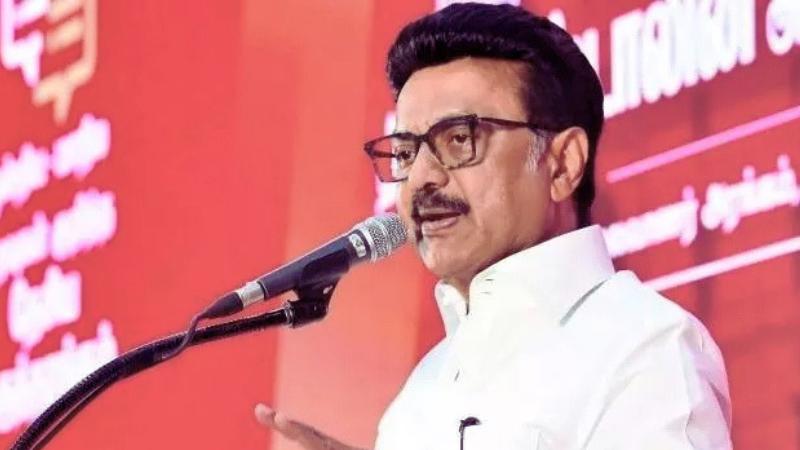
Tamil Nadu Chief Minister M. K. Stalin has unveiled the DMK’s election manifesto ahead of the April 23 Assembly polls, doubling down on welfare schemes while trying to position the state as a growth engine. The announcement, made in Chennai, signals a clear strategy: retain voter loyalty through direct benefits while promising economic expansion.
The headline move is obvious and targeted—monthly financial assistance for women heads of families will be increased from Rs 1,000 to Rs 2,000, impacting over 1.37 crore beneficiaries. The elderly pension will also be raised to Rs 2,000. This isn’t just welfare—it’s a vote consolidation strategy focused on households where financial influence is strongest.
The manifesto expands existing schemes rather than introducing radically new ones. The government’s breakfast scheme will now cover students up to Class 8, widening its reach among lower and middle-income families. Women self-help groups will gain access to interest-free loans up to Rs 5 lakh, pushing financial inclusion but also tying beneficiaries closer to state-backed programs.
Healthcare is another area where the DMK is scaling up rather than innovating. Insurance coverage limits are being expanded, eligibility thresholds raised, and dialysis facilities doubled. The promise of constructing 10 lakh houses over five years adds to the welfare-heavy narrative—but raises execution questions given past housing rollout speeds.
The manifesto continues Tamil Nadu’s long-standing “freebie economy” model. Free electricity for over 20 lakh beneficiaries stays, and students in higher education will receive laptops—about 35 lakh of them. These are high-visibility, high-impact promises, but they come with fiscal pressure that the manifesto doesn’t fully address.
A new “Illatharasi” scheme offers a one-time Rs 8,000 coupon for women to purchase appliances like refrigerators, washing machines, and stoves. It’s politically smart—direct, tangible, and immediately useful—but economically, it leans heavily toward consumption rather than long-term productivity.
On the growth side, Stalin has promised to attract Rs 18 lakh crore in investments and expand tech infrastructure through Neo Tidel Parks. The ambition is to push Tamil Nadu toward a USD 120 billion economy. The gap, however, is clear: execution. Investment promises are easy; converting them into jobs at scale is where most governments fall short. The DMK is betting on continuity—arguing that it has delivered and should be allowed to expand. Whether voters prioritize immediate financial benefits or question long-term sustainability will decide how effective this manifesto really is.