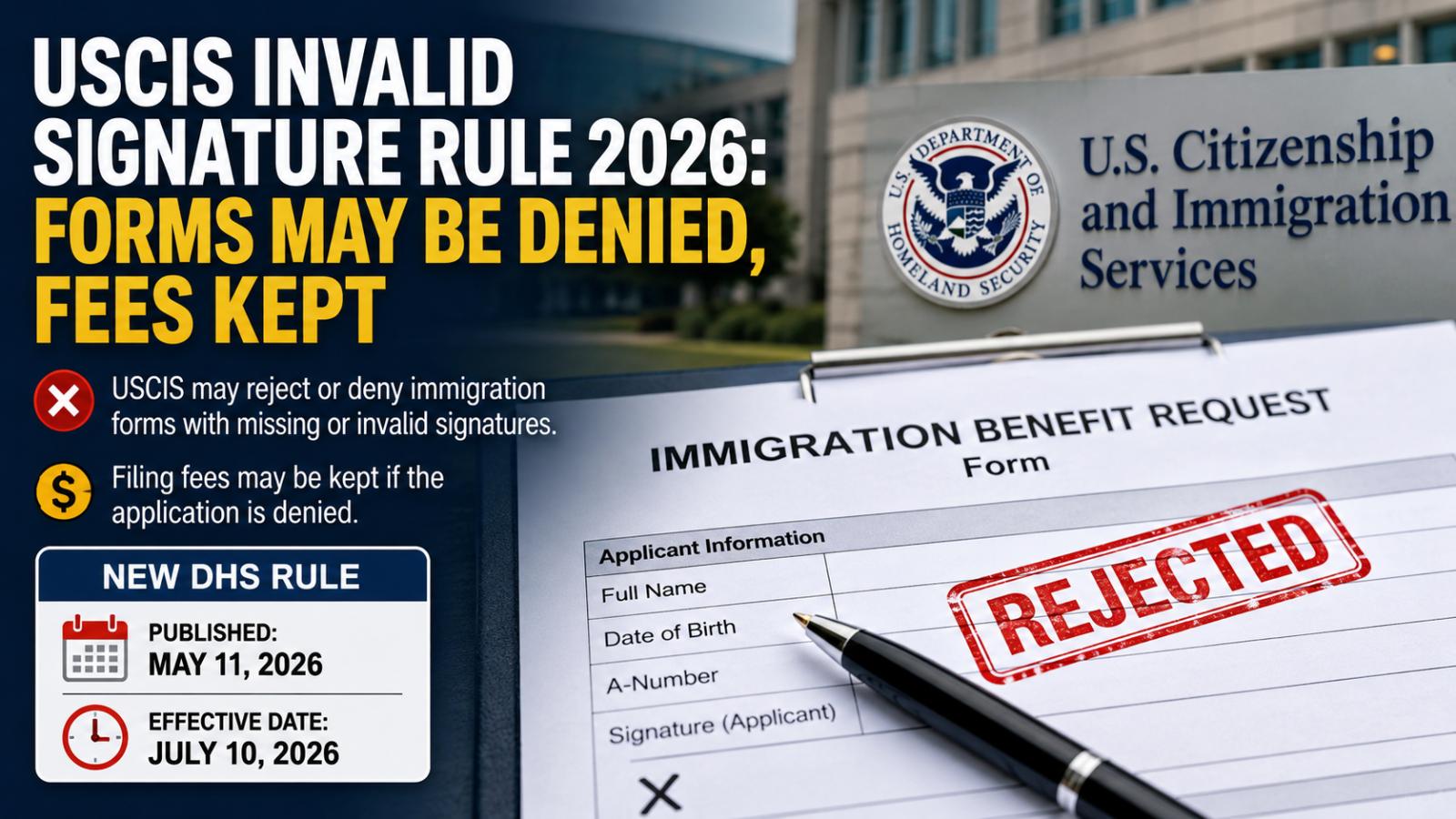
The USCIS invalid signature rule 2026 could make small filing mistakes more costly for immigration applicants, employers and petitioners.
The U.S. Department of Homeland Security published an interim final rule on Monday, May 11, 2026, clarifying how U.S. Citizenship and Immigration Services may handle immigration benefit requests with missing, incomplete or invalid signatures. The rule is set to take effect on Friday, July 10, 2026.
What the USCIS Signature Rule Changes
Under the updated rule, USCIS may reject or deny immigration filings if officers determine that a required signature is missing or invalid. If a filing is rejected before adjudication, the applicant may be able to correct the issue and refile.
However, if USCIS accepts the case and later denies it because of an invalid signature, the agency may treat the request as fully adjudicated and may keep the filing fee. That difference is important because many immigration forms carry significant costs and strict filing deadlines.
Who Could Be Affected
The rule may affect a wide range of immigration benefit requests, including visa petitions, green card applications, employment authorization filings, adjustment of status requests, family-based petitions and citizenship-related forms.
Applicants, sponsors, attorneys and employers should carefully review every required signature before submitting paperwork to USCIS. Common risks include missing signatures, signatures placed in the wrong section, copied signatures, stamped signatures or electronic signatures not allowed by the specific form instructions.
Why It Matters for Applicants
For immigrants and employers, a USCIS rejected form signature issue can mean lost time, missed filing windows and additional costs. A denial could be more serious because the filing fee may not be refunded and the applicant may need to start the process again.
The safest step is to use the latest USCIS form version, follow the form instructions closely and confirm that every required person has signed properly before filing.