Last Updated: July 18, 2026
When an Indian student dies in a U.S. car crash, several legal and administrative steps follow before the remains can be returned to India. This guide explains the police investigation, family notification, medical examiner procedures, Indian Consulate assistance, insurance claims and the repatriation process.
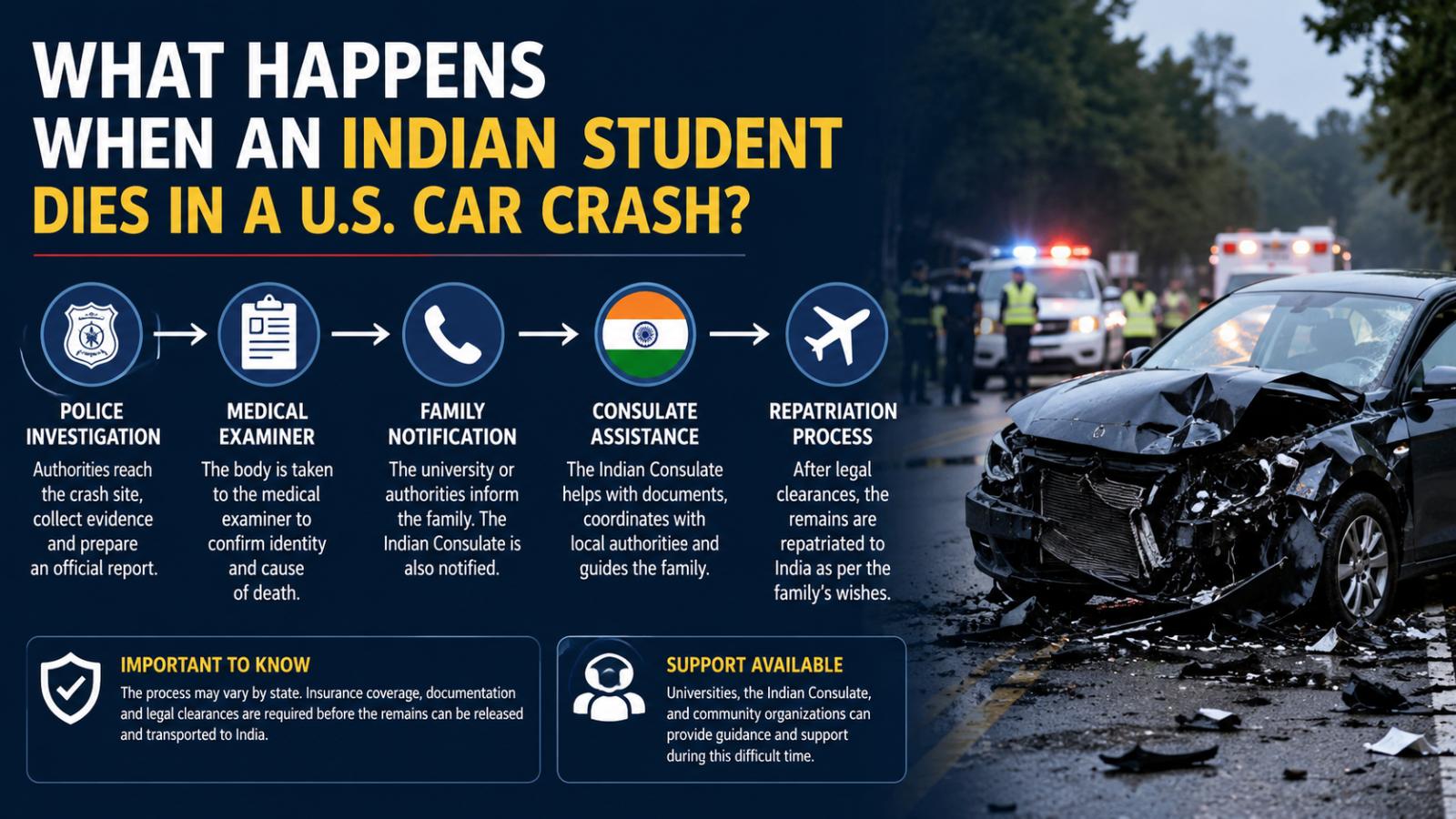
The death of an Indian student in a U.S. car crash triggers a series of legal, medical and administrative procedures before the student's remains can be returned to India. While the exact process varies by state, authorities generally follow established protocols to investigate the crash, notify the family and coordinate the release of the remains.
It is equally important to know whether Indian students in the U.S. have insurance and what types of protection are commonly included before an emergency occurs.
Police Begin the Crash Investigation
Local or state law enforcement officers secure the crash scene, collect evidence and determine the circumstances of the collision. Investigators document the vehicles involved, interview witnesses when available and prepare an official crash report. If necessary, the investigation may continue for weeks before a final determination is made.
Medical Examiner Confirms the Cause of Death
In fatal crashes, the deceased is usually transferred to a medical examiner or coroner's office. Officials verify the person's identity, determine the cause and manner of death, and issue the documentation required before the remains can be released.
Family and Indian Consulate Are Notified
Authorities or the educational institution typically work to notify the student's next of kin. The nearest Indian Consulate may assist the family by coordinating documentation, communicating with local authorities and helping facilitate the return of the remains to India. The consulate's role is primarily administrative and does not automatically include financial assistance.
Insurance and Repatriation Process
Depending on the student's insurance coverage, certain expenses such as repatriation of remains or accidental death benefits may be covered. Families may also need to work with a funeral home, the insurance provider and the airline transporting the remains. Coverage varies by policy, so benefits are not automatic.
Families should also understand whether student insurance covers repatriation to India, as coverage varies by policy and insurer.
What Happens Next?
If another driver was responsible for the crash, the family may be eligible for compensation. Learn whether families can receive compensation after a U.S. student crash.
After all legal requirements are completed, the remains may be transported to India for final rites if the family chooses repatriation. If the crash investigation is still ongoing, authorities may release additional findings later. Families may also pursue insurance claims or other legal remedies if another party is found responsible for the collision.
If the accident involved a rented vehicle, insurance responsibilities may differ. Read the rental car insurance guide for Indian students in the U.S. to understand available coverage.
When investigators determine that the student was responsible for the collision, legal and financial liability follows a different process. Read who pays after an international student causes a fatal U.S. crash to understand how insurance and estate claims are handled.