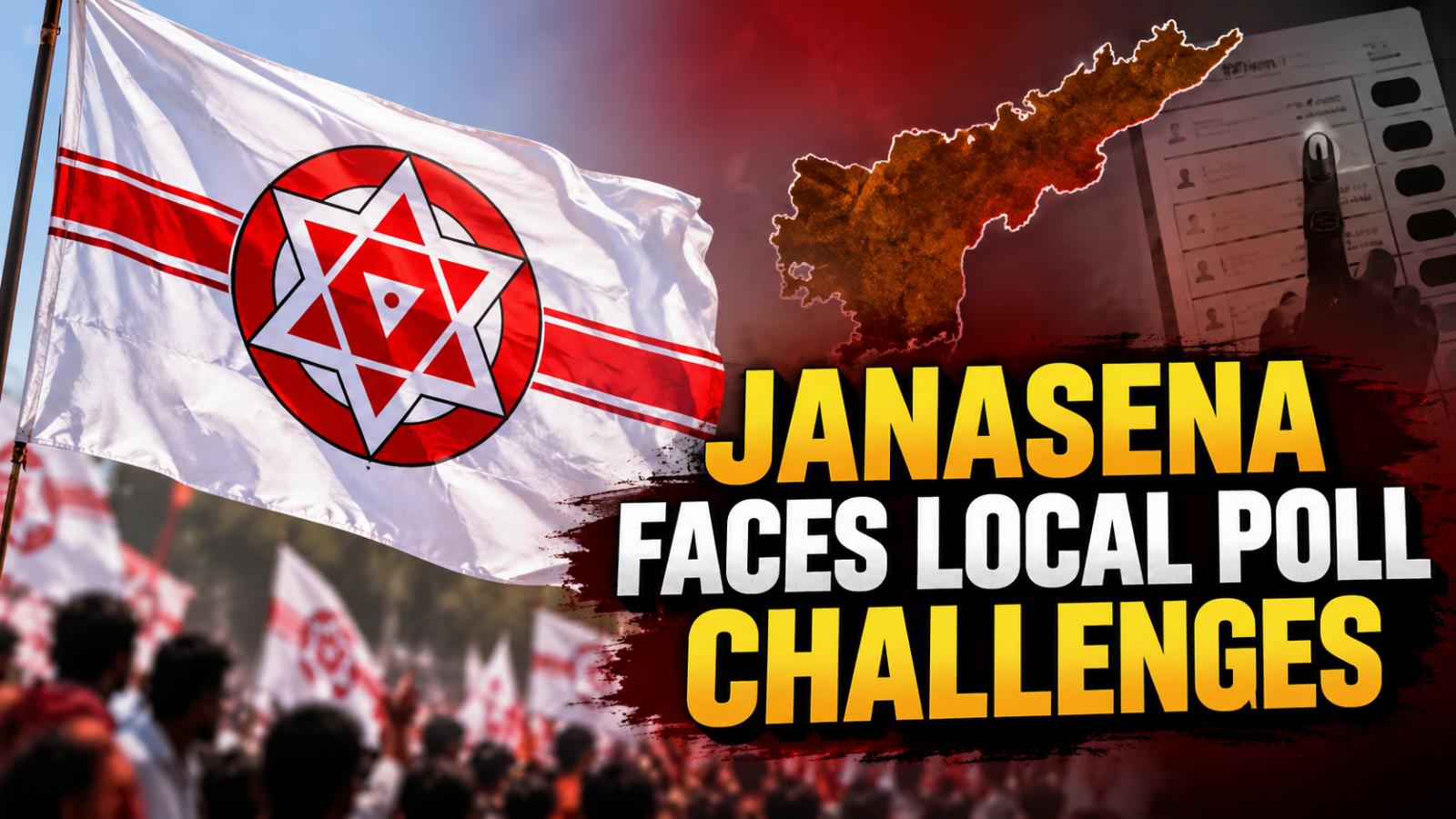
Janasena is facing organizational challenges as it prepares for its first full-scale local body elections in Andhra Pradesh. Questions have emerged over the party's handling of seat-sharing expectations and the rejection of nomination papers of some candidates over reported technical errors.
Seat-Sharing Expectations Disappoint Janasena Cadre
Ahead of the elections, expectations reportedly grew among sections of the Janasena cadre that the party could receive around 35–40% of seats under the alliance's seat-sharing arrangement. Such expectations were initially amplified on social media and were later echoed by some party representatives.
However, the eventual allocation was reportedly lower than those expectations, leading to disappointment among some supporters. The issue has also triggered political exchanges involving supporters of Janasena, TDP and YSR Congress.
For the alliance, managing expectations among grassroots workers could be important. Coordination between alliance partners and effective transfer of votes could play a significant role in closely contested local seats.
Nomination Rejections Raise Organizational Concerns
Another challenge for Janasena is the reported rejection of nomination papers filed by some of its candidates. According to the reasons cited in the original account, several rejections were linked to alleged technical mistakes or deficiencies in nomination documents.
Nomination filing is a crucial part of the election process, and political parties generally use legal and organizational teams to scrutinize documents before they are submitted. Stronger verification procedures could help candidates identify errors before filing deadlines and reduce the risk of losing an opportunity to contest because of procedural issues.
For Janasena, such incidents could raise questions about its preparedness at the grassroots level, particularly as the party expands its participation in local elections across Andhra Pradesh.
Political Blame Emerges Over Rejected Nominations
Some Janasena supporters have reportedly questioned whether alliance partner TDP had a role in certain nomination setbacks. However, such allegations should not be presented as established fact without supporting evidence.
The reasons formally provided by Returning Officers in individual cases are more relevant in determining why particular nominations were rejected. Where technical errors or documentation deficiencies are cited, those official findings should remain central to assessing the issue.
The controversy could nevertheless provide political ammunition to opponents seeking to highlight possible differences between Janasena and TDP. Clear communication between the alliance partners and their respective cadres may therefore become increasingly important during the campaign.
Janasena Faces Test of Grassroots Preparedness
Local body elections require extensive coordination at multiple levels, including candidate selection, nomination scrutiny, campaign management, booth-level organization and cooperation between alliance partners.
For Janasena, the elections are therefore more than a test of electoral strength. They also provide an opportunity to assess how effectively the party's organizational structure can manage a large-scale local election.
Addressing communication gaps, setting realistic expectations among party workers and establishing stronger procedures for checking nomination documents could help Janasena avoid preventable setbacks. Improving these systems may also become important for the party as it seeks to strengthen its grassroots presence in Andhra Pradesh politics.