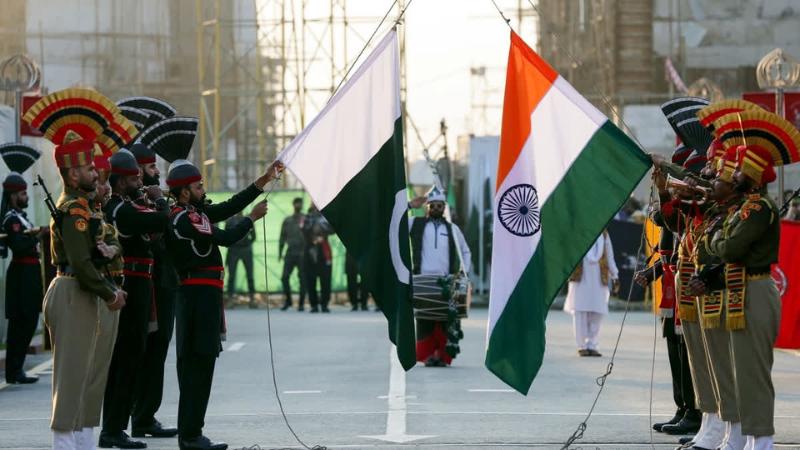
In a significant escalation of tensions following the deadly terror attack in Pahalgam, the Indian government has announced a complete ban on all imports from Pakistan. The decision, announced by the Ministry of Commerce, comes in the wake of mounting national security concerns and is seen as part of a broader strategy to isolate Pakistan diplomatically and economically on the global stage.
The notification issued by the Indian government clearly states that "direct or indirect import or transit of all goods originating in or exported from Pakistan, whether or not freely importable or otherwise permitted, shall be prohibited with immediate effect, until further orders." The government emphasized that the restrictions are necessary in the interest of national security and public policy. Any exception to this ban will require prior approval from Indian authorities.
This sweeping move comes days after a horrifying terror attack at Baisaran meadow in Jammu and Kashmir’s Pahalgam region, where at least 26 civilians, including a Nepalese tourist and a local pony guide, were killed by terrorists. The attack sent shockwaves across the country and intensified scrutiny of Pakistan’s alleged support for cross-border terrorism. The Indian government, led by Prime Minister Narendra Modi and Home Minister Amit Shah, has taken a firm stand that no trade or bilateral engagement with Pakistan will resume unless terrorism is eradicated from the region.
The trade ban is not entirely unexpected. Since the 2019 Pulwama attack, India had already imposed a 200% duty on Pakistani products, severely curtailing the already minimal trade between the two countries. Imports from Pakistan, which once included items such as fruits, oilseeds, and pharmaceuticals, had dwindled to less than 0.0001% of India's total imports in the fiscal year 2024–25. The Wagah-Attari border, the only active land route for trade between the two countries, had already been sealed shortly after the Pahalgam incident.
The current decision, however, formalizes and expands the prohibition, extending it to goods in transit and indirect imports. This move has symbolic and strategic significance, as it further underscores India’s hardening stance against what it views as state-sponsored terrorism emanating from Pakistani soil. Following the attack, India also announced the suspension of the Indus Waters Treaty, a key water-sharing agreement signed between the two countries in 1960 under the World Bank’s supervision. The Indian government has indicated it may now divert or halt the flow of waters from the Indus river system that currently benefit Pakistan. If implemented, such a move could drastically impact Pakistan’s agricultural sector and water security, affecting millions of its citizens.
In another unprecedented step, India has cancelled all visas issued to Pakistani nationals, including those granted for medical treatment. Pakistani citizens residing in India have been given a deadline to exit the country. Pakistan has retaliated by threatening to suspend all bilateral agreements, including the historic Simla Accord of 1972. Both countries have downgraded diplomatic ties, with consular services and official contacts virtually frozen. The security situation along the Line of Control (LoC) and International Border has also deteriorated. Reports from the region suggest an increase in provocative firing from Pakistani forces aimed at Indian military posts, further heightening tensions. India has reinforced border security and remains on high alert in anticipation of potential escalations.
Pakistan Conducts Missile Test Amid Escalating Tensions
Adding fuel to the already volatile situation, Pakistan on Saturday claimed it successfully tested a surface-to-surface ballistic missile, the Abdali Weapon System, during a military drill named Exercise INDUS. The missile reportedly has a range of 450 kilometers and is equipped with advanced navigation and maneuverability features. The timing of the test has not gone unnoticed in New Delhi. Indian officials have reportedly termed the missile launch a "grave provocation," especially given the context of the recent terror attack and the diplomatic freeze between the two nations. Military analysts suggest that Pakistan's move is both a show of strength and a signal to its domestic audience, but it risks drawing sharp international criticism.
The Indian response to the missile test has so far been measured but stern. Sources indicate that the Ministry of External Affairs and the Ministry of Defence are closely monitoring the situation and are prepared to respond if any threats to national security arise. There has been no official statement yet from the Indian side regarding any countermeasures. Home Minister Amit Shah reiterated India’s firm stance that under no circumstances will trade or diplomatic dialogue resume with Pakistan unless there is concrete evidence of action taken against terror networks operating on its soil. "Terrorism and trade cannot go hand in hand. There will be no talks unless the bloodshed in Jammu and Kashmir stops," Shah said in a recent statement.
India's decisions over the past week signal a comprehensive shift in its approach to dealing with Pakistan. The combination of economic sanctions, diplomatic isolation, military readiness, and potential water diversion from the Indus River reflects a multi-pronged strategy aimed at forcing behavioral change in Islamabad. The coming weeks will be crucial in determining whether the situation de-escalates or spirals into further conflict. The international community, including the United Nations and neighboring countries like China and Afghanistan, is closely watching developments. India has made it clear that national security and public safety will remain its top priorities, and it will not shy away from taking stringent actions against any perceived threats.