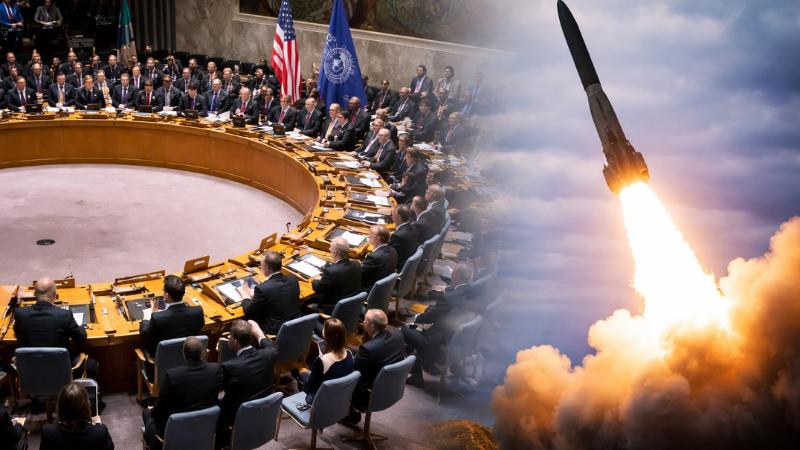
The United States sharply criticised Russia on Monday, January 12, for its use of a nuclear-capable Oreshnik ballistic missile in Ukraine, describing the launch as a dangerous and unjustified escalation of the ongoing conflict. The condemnation was delivered during an emergency meeting of the United Nations Security Council convened to address the latest developments in the war.
Addressing the council, US Deputy Ambassador to the United Nations Tammy Bruce said Russia’s decision to deploy an intermediate-range ballistic missile, even without a nuclear warhead, marked a troubling shift in the nature of the conflict. She said the strike represented an “inexplicable escalation” at a time when diplomatic efforts were underway to bring an end to the fighting through negotiations. Bruce noted that Washington was actively engaging with Kyiv, international partners, and Moscow in pursuit of a settlement, making the missile launch particularly alarming.
The US envoy also condemned what she described as Russia’s continued and intensifying attacks on Ukraine’s civilian infrastructure. She said repeated strikes on energy facilities and other non-military targets were worsening humanitarian conditions across the country, especially as winter temperatures set in. According to US officials, such actions undermine stability and raise the risk of further escalation beyond Ukraine’s borders.
Britain echoed Washington’s concerns during the same Security Council session. Acting UK Ambassador James Kariuki described the missile launch as reckless and warned that it posed a serious threat to regional and international security. He said the use of such weapons increased the risk of miscalculation and unintended consequences, particularly given the proximity of the strike area to NATO territory.
Earlier on Monday, Moscow confirmed that it had launched the Oreshnik missile on Friday, January 9. Russian authorities claimed the strike targeted an aviation repair facility in Ukraine’s western Lviv region. Officials in Moscow said the attack was carried out in retaliation for what they alleged was a Ukrainian attempt to target a residence associated with President Vladimir Putin. Ukrainian authorities have denied making any such attempt.
Ukraine acknowledged that a ballistic missile was fired toward the Lviv region, which lies close to the Polish border, but did not confirm whether the aviation facility cited by Russia was struck. The lack of independent verification has left questions about the extent of the damage caused by the missile and its precise military impact.
The missile launch came amid a broader escalation in Russian air operations. On the same day, Russia carried out heavy air strikes on Kyiv, killing at least four people, according to Ukrainian officials. The bombardment caused widespread disruption to essential services, knocking out heating in roughly half of the capital’s residential buildings. Thousands of residents were left without warmth as temperatures fell below freezing, compounding the humanitarian strain on the city.
Western diplomats at the United Nations warned that the combination of missile launches and sustained attacks on civilian infrastructure risked deepening the conflict and increasing instability across Europe. Calls were renewed for restraint and renewed diplomatic engagement, even as fighting on the ground continued to intensify.