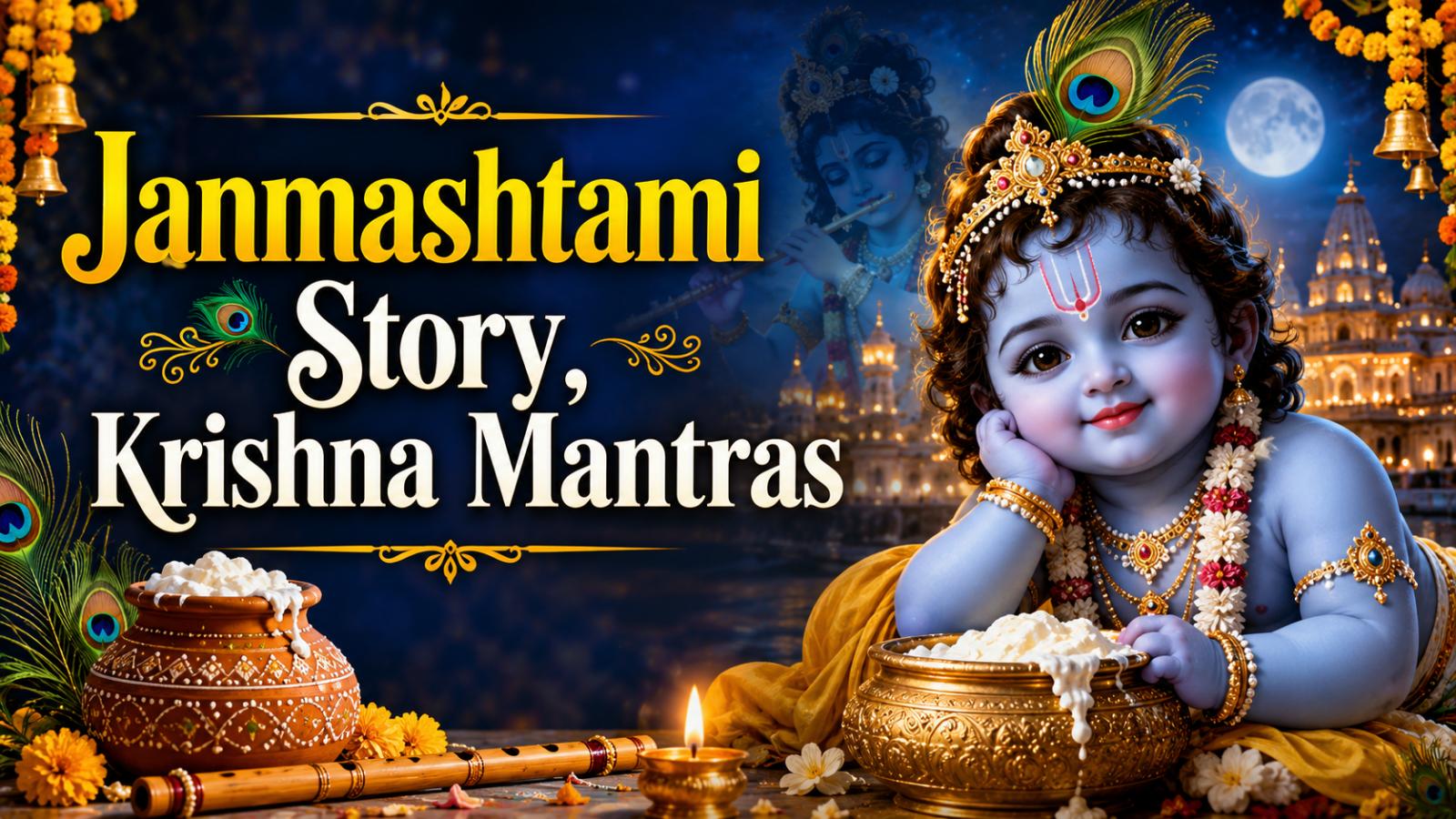
Krishna Janmashtami celebrates the birth of Lord Krishna, regarded in Hindu tradition as the eighth avatar of Lord Vishnu. According to tradition, Krishna was born at midnight on Ashtami during Krishna Paksha of the Hindu month of Bhadrapada.
The festival symbolizes the victory of dharma over adharma and hope over oppression. Devotees across India and around the world observe the occasion with fasting, prayers, bhajans, temple celebrations and midnight worship. Mathura and Vrindavan are especially associated with Krishna’s birth and childhood.
Krishna Janmashtami 2026: Date, Puja Time, Fasting & Complete Guide
Kansa’s Prophecy and Krishna’s Birth
The Janmashtami story begins in Mathura, where King Kansa ruled. His sister Devaki married Vasudeva, but during their wedding journey, a divine prophecy warned Kansa that Devaki’s eighth son would bring about his downfall.
Fearing the prophecy, Kansa imprisoned Devaki and Vasudeva and tried to prevent it from coming true by targeting their children.
When the time came for Devaki’s eighth child to be born, Lord Vishnu is believed to have revealed that he would appear as their son. Vasudeva was instructed to take the newborn to Gokul and exchange him with the baby born to Nanda and Yashoda.
Krishna was born at midnight inside the prison. Tradition describes several miracles surrounding his birth: the guards fell asleep, the prison doors opened and Vasudeva’s chains were released.
Vasudeva Carries Krishna to Gokul
Vasudeva carried the newborn Krishna through a storm toward Gokul. As he crossed the River Yamuna, the waters are believed to have allowed him safe passage, while Shesha protected the infant from the rain with his hood.
After reaching Gokul, Vasudeva exchanged Krishna with Yashoda’s newborn daughter and returned to Mathura.
When Kansa tried to harm the baby girl, she transformed into Goddess Yogamaya and warned him that the child destined to defeat him was already safe elsewhere.
Krishna then grew up in Gokul and Vrindavan, where stories of his childhood describe his playful nature, miracles and devotion among the people. Years later, Krishna returned to Mathura and defeated Kansa, freeing his parents and ending the king’s oppressive rule.
Why Krishna Janmashtami Is Celebrated
Janmashtami is therefore more than a celebration of Krishna’s birth. For devotees, it represents the belief that righteousness ultimately triumphs over injustice and that divine guidance appears when dharma is threatened.
Krishna’s teachings, especially those associated with the Bhagavad Gita, emphasize duty, devotion, selfless action and spiritual wisdom.
On Janmashtami, devotees commonly observe fasting, decorate temples and homes, sing bhajans and kirtans, recite Krishna mantras and perform special midnight puja marking the traditional time of Krishna’s birth.
The festival remains a celebration of faith, devotion, hope and the enduring message that good ultimately prevails over evil.
Janmashtami Mantras: Powerful Krishna Chants, Meaning and Benefits
Chanting Krishna mantras is an important devotional practice during Janmashtami. Along with fasting, puja, bhajans and kirtan, devotees recite sacred names and verses to remember Lord Krishna and strengthen their spiritual focus.
Important Krishna Mantras for Janmashtami
- Krishna Beej Mantra
Krim Krishnaya Namah
Meaning: I bow to Lord Krishna. - Krishna Janmashtami Mantra
Vasudeva Sutam Devam Kansa Chanura Mardanam,
Devaki Paramanandam Krishnam Vande Jagadgurum.
Meaning: Salutations to Krishna, son of Vasudeva and Devaki, destroyer of Kansa and Chanura and spiritual teacher of the world. - Krishna Puja Mantra
Om Krishnaya Vasudevaya Haraye Paramatmane,
Pranatah Kleshanashaya Govindaya Namo Namah.
Meaning: Salutations to Krishna, Vasudeva’s son, the Supreme Soul and Govinda, who removes the difficulties of those who surrender to him. - Bhagavad Gita Teaching
Karmanyevadhikaraste Ma Phaleshu Kadachana,
Ma Karmaphalaheturbhur Ma Te Sango'stvakarmani.
Meaning: Perform your duty sincerely without becoming attached to the results of your actions. - Hare Krishna Mahamantra
Hare Krishna Hare Krishna, Krishna Krishna Hare Hare,
Hare Rama Hare Rama, Rama Rama Hare Hare.
This widely chanted mantra is used during bhajans, kirtans, temple worship and personal devotional practice.
Benefits Traditionally Associated With Mantra Chanting
According to devotional traditions, regular Krishna mantra chanting is believed to encourage mental peace, concentration, positive thinking and deeper devotion. It may also help devotees develop spiritual discipline and maintain a prayerful state of mind throughout Janmashtami.
Many families also chant mantras while praying for happiness, harmony, health and well-being.
These benefits are rooted in religious and spiritual belief and can differ according to an individual’s faith and practice.
How to Chant Krishna Mantras on Janmashtami
Devotees may begin after bathing and wearing clean clothes. A clean puja space can be prepared with an image or idol of Lord Krishna, followed by lighting a diya and offering flowers, Tulsi leaves, fruits or traditional bhog.
Choose one or more Krishna mantras and chant slowly while focusing on their meaning. A Tulsi mala may be used by those who follow that practice.
Mantras can be recited throughout Janmashtami, especially during puja, meditation, bhajans and kirtans. Devotees observing the traditional midnight celebration may also chant them before and during Krishna Janmotsav.
The emphasis in devotional practice is generally placed on sincerity, concentration and faith rather than simply completing a particular number of repetitions.