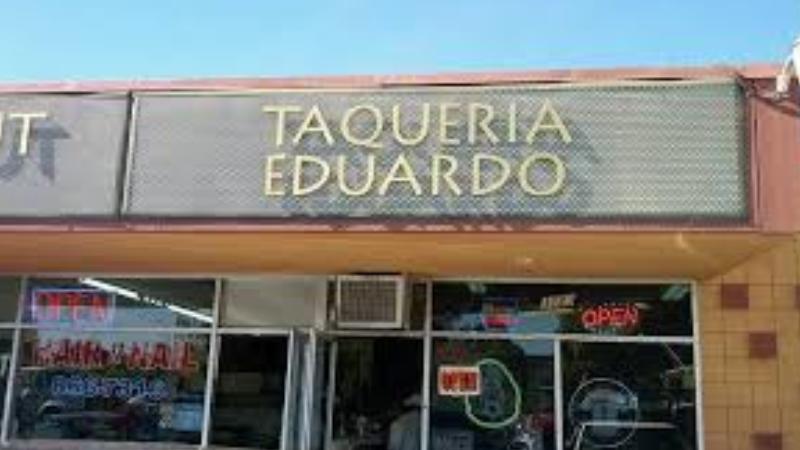
A beloved local Mexican restaurant that has served San Jose for over two decades is at risk of closing its doors as plans for a new fast-food restaurant could force it out. Taqueria Eduardo, located at 255 Race Street near West San Carlos Street, is one of two locations operated by owner Luis Martinez. However, this long-standing neighborhood staple may not survive the potential arrival of a new Chick-fil-A at the same location. The San Jose Planning Director’s Hearing is scheduled for June 11 to review the proposed project, and the outcome could determine the fate of the restaurant.
The possible displacement has sparked strong opposition from local community organizations, including the Buena Vista Neighborhood Association and CatalyzeSV. These groups have stood with Martinez, raising concerns over the impact of removing a small, community-centered business in favor of a corporate fast-food outlet. An online petition started by the neighborhood association has gathered more than 2,300 signatures, reflecting the public’s growing frustration and determination to preserve the cultural and culinary presence Taqueria Eduardo has brought to the area for years.
Luis Martinez, who has invested his heart and energy into running the restaurant, expressed his concerns and uncertainty over the future. He shared that he has wanted to remodel the space to better serve customers, but the looming threat of eviction has made it difficult to plan. In an effort to expand and stay relevant, Taqueria Eduardo recently incorporated the adjacent space of a former nail salon, which vacated amid rumors of the upcoming Chick-fil-A development. Now, Martinez feels his efforts and business could be swept aside if the project moves forward.
Customers of the restaurant are becoming more vocal in their support for Martinez and his establishment. The petition link is visibly displayed at the restaurant’s register, encouraging patrons to take part in the resistance. Martinez also mentioned that developers have approached him to gain his support for the Chick-fil-A project, but he remains concerned about the viability of his business. While he owns a second location on Bascom Avenue, he says the Race Street location is the main source of income for his family and staff.
Efforts to bring a Chick-fil-A to the region have previously been blocked. In 2023, a similar proposal in nearby Campbell was denied after facing widespread backlash. This precedent has offered some hope to Martinez and his supporters, who are urging city officials to reconsider the latest application. Critics argue that the proposal undermines the city’s goals for sustainable and community-focused development.
Alex Shoor, executive director of CatalyzeSV, stated that his organization reviewed the Chick-fil-A proposal and identified several problems, especially the displacement of two local businesses. The new design plans for the proposed site include a large shaded patio area and 27 trees across the 1.09-acre property. However, Shoor emphasized that the absence of a drive-thru does not mitigate the broader concerns. He pointed out that the land could be used more effectively to build multistory housing with retail space on the ground floor, instead of turning it into a fast-food outpost and oversized parking lot. He added that San Jose has several other locations that would be more suitable for a Chick-fil-A, ones that wouldn't require uprooting longstanding community businesses.
The situation unfolding around Taqueria Eduardo is a familiar one in many urban areas where the need for development is often pitted against the preservation of small, locally owned businesses. These establishments not only provide unique flavors and personal service but also serve as cultural anchors in their neighborhoods. The restaurant’s fate now rests on the decision made at the June 11 Planning Director’s Hearing, and its supporters hope their voices will be heard in time to protect a piece of San Jose’s heritage.
As redevelopment pressures mount across San Jose, the question remains whether economic growth must always come at the expense of cherished local institutions. The case of Taqueria Eduardo is emblematic of the broader tension between corporate expansion and community preservation, a challenge that city planners and residents must navigate together.