A heated confrontation erupted at the United Nations Security Council after Estonia accused Russia of violating its airspace in a deliberate provocation, prompting NATO nations to rally behind Tallinn and issue strong warnings to Moscow. The incident has further heightened tensions in Eastern Europe, where concerns over Russian military activity remain high following its long-standing confrontations with neighboring countries.
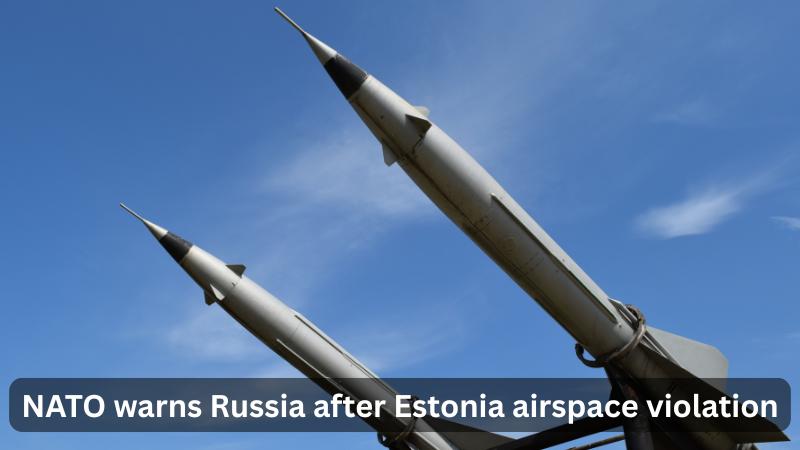
According to Estonian officials, three Russian MiG-31 fighter jets entered the country’s airspace without permission last Friday, remaining for around twelve minutes before being forced back. Estonia immediately labeled the action as a deliberate breach of sovereignty and a threat to world peace. At the UN meeting, Estonian representatives provided what they described as hard evidence, displaying close-up images of the Russian aircraft armed with missiles and combat ready. Foreign Minister Margus Tsahkna drew a direct line between this violation and Russia’s history of aggression, citing the 2008 war in Georgia, the 2014 annexation of Crimea, and the 2022 invasion of Ukraine as clear examples of Moscow’s disregard for international law.
Estonia’s prime minister Kaja Kallas described the incident as a calculated provocation that could have had devastating results. She mocked Moscow’s claims that such violations are accidental, saying that the evidence shows otherwise. Kallas also made an indirect swipe at Russia during her remarks, stating that there is a country in the room that consistently violates the very principles of the United Nations while claiming to defend them.
The condemnation was strongly echoed by NATO allies. US ambassador to the UN, Mike Waltz, declared that the United States will defend every inch of NATO territory against any act of aggression, calling on Russia to halt its dangerous behavior. Poland’s prime minister Donald Tusk went further, warning that his country would shoot down any missile or aircraft entering Polish airspace without permission. Poland’s foreign minister Radosław Sikorski was blunt in his message, stating that if another missile or aircraft entered NATO space and was taken down, Russia should not expect sympathy or complaints over the wreckage falling back on NATO territory.
Russia, for its part, rejected all accusations. On Monday, it denied that its jets had entered Estonian airspace and claimed the allegations were fabricated to inflame tensions between East and West. Moscow argued that Estonia and its NATO partners were attempting to escalate the situation by presenting false claims and exaggerated evidence. The Kremlin maintained that it had no reason to provoke NATO and dismissed the charges as political maneuvering.
This incident came on the heels of another tense episode just over a week earlier, when more than 20 Russian drones reportedly entered Polish airspace, forcing NATO aircraft to intercept and destroy some of them. For Estonia and other NATO allies, the latest airspace violation is part of a pattern of deliberate attempts to test NATO’s resolve and military preparedness. The presence of armed Russian fighter jets so close to sovereign territory has only strengthened fears of accidental clashes spiraling into broader conflict.
At the UN session, European nations collectively stressed that their patience is wearing thin. Estonia reiterated that Russia is a real threat to global peace and security and emphasized that international rules must be upheld. The discussion highlighted the growing divide within the Security Council, with Western nations demanding accountability while Russia dismissed the allegations as unsubstantiated.
The escalating rhetoric has left many observers concerned about the risks of miscalculation. With NATO states openly declaring their willingness to shoot down intruding aircraft, the margin for error is shrinking. Each incident raises the possibility that a violation, whether deliberate or accidental, could trigger a chain of events with far-reaching consequences.
Despite the sharp exchanges, NATO leaders reiterated their commitment to collective defense and their readiness to respond to any challenge. For Estonia, which has lived under the shadow of Russian aggression for decades, the solidarity shown at the UN serves as reassurance that its allies will stand firm. Yet the underlying reality is that the Baltic state remains on the frontline of one of the most volatile confrontations in international politics today.
As the UN meeting concluded, the message from NATO was clear: any further airspace violations will not be tolerated. While Russia continues to deny responsibility, its actions are being closely monitored by Western intelligence and military forces. For now, the standoff adds yet another chapter to the growing list of disputes that underline the fragility of peace in Eastern Europe and the enduring mistrust between Russia and NATO.