Trump invites Colombia’s president to White House after diplomatic tensions over Venezuela and drug policy
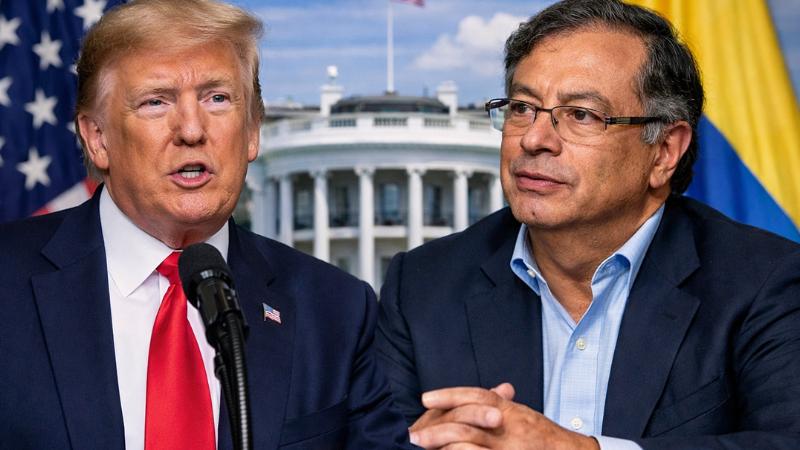
United States President Donald Trump and Colombian President Gustavo Petro have taken a step toward resetting strained bilateral relations following a period of heightened diplomatic tension. The two leaders spoke by phone on Wednesday, Jan. 7, in their first direct conversation since relations deteriorated sharply in early January amid wider regional developments. In a statement released by the White House, Mr. Trump said he invited President Petro to visit the White House in Washington for further discussions on issues of mutual concern.
During the call, the leaders addressed longstanding disagreements tied to counternarcotics cooperation and broader regional security matters. The phone conversation, described by U.S. officials as respectful in tone, marked a departure from recent rhetoric that underscored deep divisions between the two capitals. “It was a great honor to speak with the President of Colombia, Gustavo Petro, who called to explain the situation of drugs and other disagreements that we have had,” President Trump wrote on his social media platform following the call, adding that he “appreciated his call and tone” and looked forward to an in-person meeting.
The invitation to the White House comes amid a diplomatic backdrop shaped in part by recent events in neighboring Venezuela. Earlier in the week, United States forces conducted a military operation in Venezuela that resulted in the capture of that country’s president, Nicolás Maduro, and his wife; both have since been transported to the United States to face charges. This operation, and comments by President Trump regarding the U.S. role in Venezuela, amplified existing tensions with several Latin American governments, including Colombia.
Relations between the U.S. and Colombia had been tense due to comments by Mr. Trump in which he publicly criticised Mr. Petro’s leadership and repeatedly asserted that Colombia was facing significant challenges related to drug trafficking. Mr. Trump had accused the Colombian government, without presenting public evidence, of enabling the flow of cocaine into the United States — comments that drew swift rebukes from Bogota.
In prior remarks, Mr. Trump suggested that more assertive actions against drug trafficking could be considered, and referred to the situation in stark terms during comments to reporters aboard Air Force One. As relations became more strained, Colombia announced its continued commitment to cooperating with the United States on drug interdiction operations, emphasising the importance of joint efforts to address illicit trafficking and narco-organized crime.
President Petro, who assumed office as Colombia’s first leftist head of state, has been outspoken in his criticism of the Venezuelan operation and has called for renewed dialogue with Washington. In remarks to supporters in Bogota following the phone call, Mr. Petro said that he had requested the restart of diplomatic conversation between the two countries and expressed hope that engagement would lead to constructive cooperation. Colombian officials characterised the call as “cordial” and indicative of a willingness by both sides to manage disagreements through formal diplomatic channels.
The planned White House meeting is expected to cover a wide range of shared priorities, including regional security, counternarcotics efforts, and economic collaboration. Observers note that the outreach signals a possible de-escalation in rhetoric that has previously complicated U.S.–Colombia ties. While dates for President Petro’s visit have not yet been confirmed, US and Colombian officials indicated that preparations are underway.
Analysts suggest that the decision to pursue high-level dialogue reflects mutual interest in stabilising relations and advancing cooperation on issues that impact both nations. Colombia remains one of the United States’ principal partners in addressing drug trafficking and regional security challenges in Latin America. The upcoming discussions at the White House may set the tone for future engagements and help bridge gaps that emerged during recent diplomatic strains.