















Venezuela quake death toll climbs as search operations continue
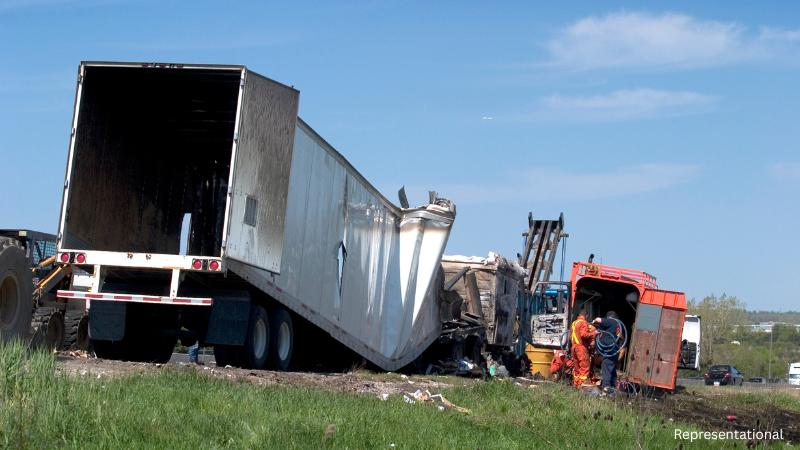
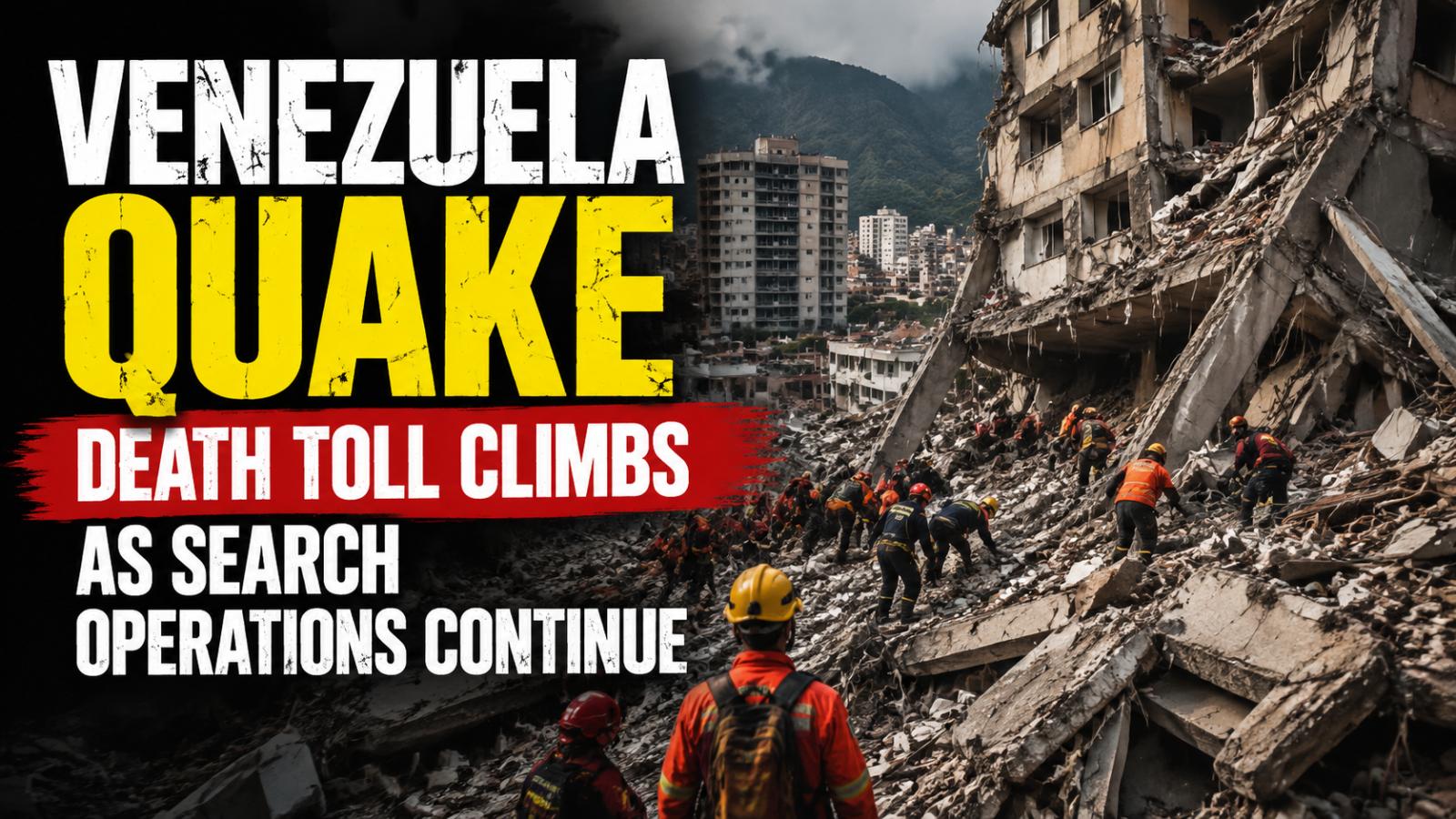
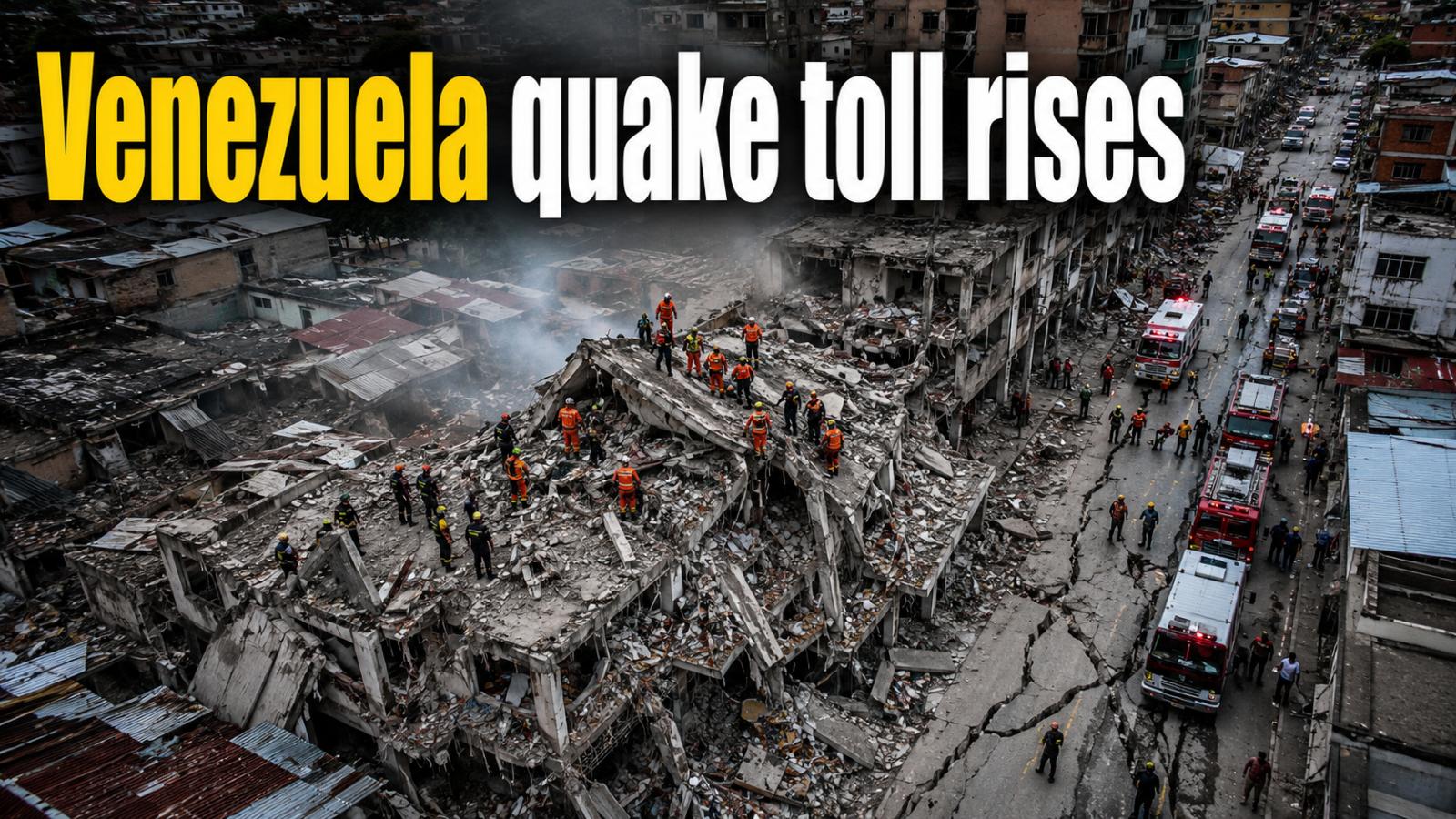
Two strong earthquakes struck Venezuela in quick succession on June 24, triggering large-scale destruction across multiple regions. The back-to-back tremors caused buildings to collapse, roads to fracture, and essential services to fail in several urban zones. The disaster has left authorities struggling to stabilise affected areas as the death toll continues to rise. Cities struggle with severe structural damage Major urban centres, including parts of Caracas and La Guaira, have been heavily impacted. Entire residential blocks were reduced to rubble, trapping residents and blocking access routes for emergency teams. The destruction has slowed rescue movement, with heavy debris and unstable structures making operations dangerous and time-consuming. Rescue teams race against time in difficult conditions Search and rescue crews are continuing operations in severely damaged districts, often working with limited equipment and unstable conditions. Hospitals in nearby regions are under pressure as injured survivors arrive continuously. Temporary shelters have been set up, but shortages of clean water, electricity, and medical supplies are complicating relief efforts. Government coordination under pressure Authorities led by interim leadership have confirmed a rising death toll, now reported at 2,595, while acknowledging that many individuals remain unaccounted for. Officials have denied claims of improper handling of victims and stated that identification procedures are being followed. Emergency coordination efforts are ongoing across multiple agencies. Uncertainty grows as recovery continues The full scale of the disaster is still unfolding. Rescue teams warn that numbers may change as deeper layers of collapsed structures are cleared. With communication lines disrupted and many zones still inaccessible, officials say the priority remains locating survivors and preventing further loss of life. Long recovery ahead for affected regions Beyond immediate rescue work, Venezuela now faces a long rebuilding process. Restoring housing, infrastructure, and basic services will take significant time, while displaced families continue to rely on temporary shelters and aid support. The focus remains on survival, recovery, and restoring stability in affected regions.
Venezuela quake death toll climbs as search operations continue
Two strong earthquakes struck Venezuela in quick succession on June 24, triggering large-scale destruction across multiple regions. The back-to-back tremors caused buildings to collapse, roads to fracture, and essential services to fail in several urban zones. The disaster has left authorities struggling to stabilise affected areas as the death toll continues to rise. Cities struggle with severe structural damage Major urban centres, including parts of Caracas and La Guaira, have been heavily impacted. Entire residential blocks were reduced to rubble, trapping residents and blocking access routes for emergency teams. The destruction has slowed rescue movement, with heavy debris and unstable structures making operations dangerous and time-consuming. Rescue teams race against time in difficult conditions Search and rescue crews are continuing operations in severely damaged districts, often working with limited equipment and unstable conditions. Hospitals in nearby regions are under pressure as injured survivors arrive continuously. Temporary shelters have been set up, but shortages of clean water, electricity, and medical supplies are complicating relief efforts. Government coordination under pressure Authorities led by interim leadership have confirmed a rising death toll, now reported at 2,595, while acknowledging that many individuals remain unaccounted for. Officials have denied claims of improper handling of victims and stated that identification procedures are being followed. Emergency coordination efforts are ongoing across multiple agencies. Uncertainty grows as recovery continues The full scale of the disaster is still unfolding. Rescue teams warn that numbers may change as deeper layers of collapsed structures are cleared. With communication lines disrupted and many zones still inaccessible, officials say the priority remains locating survivors and preventing further loss of life. Long recovery ahead for affected regions Beyond immediate rescue work, Venezuela now faces a long rebuilding process. Restoring housing, infrastructure, and basic services will take significant time, while displaced families continue to rely on temporary shelters and aid support. The focus remains on survival, recovery, and restoring stability in affected regions.
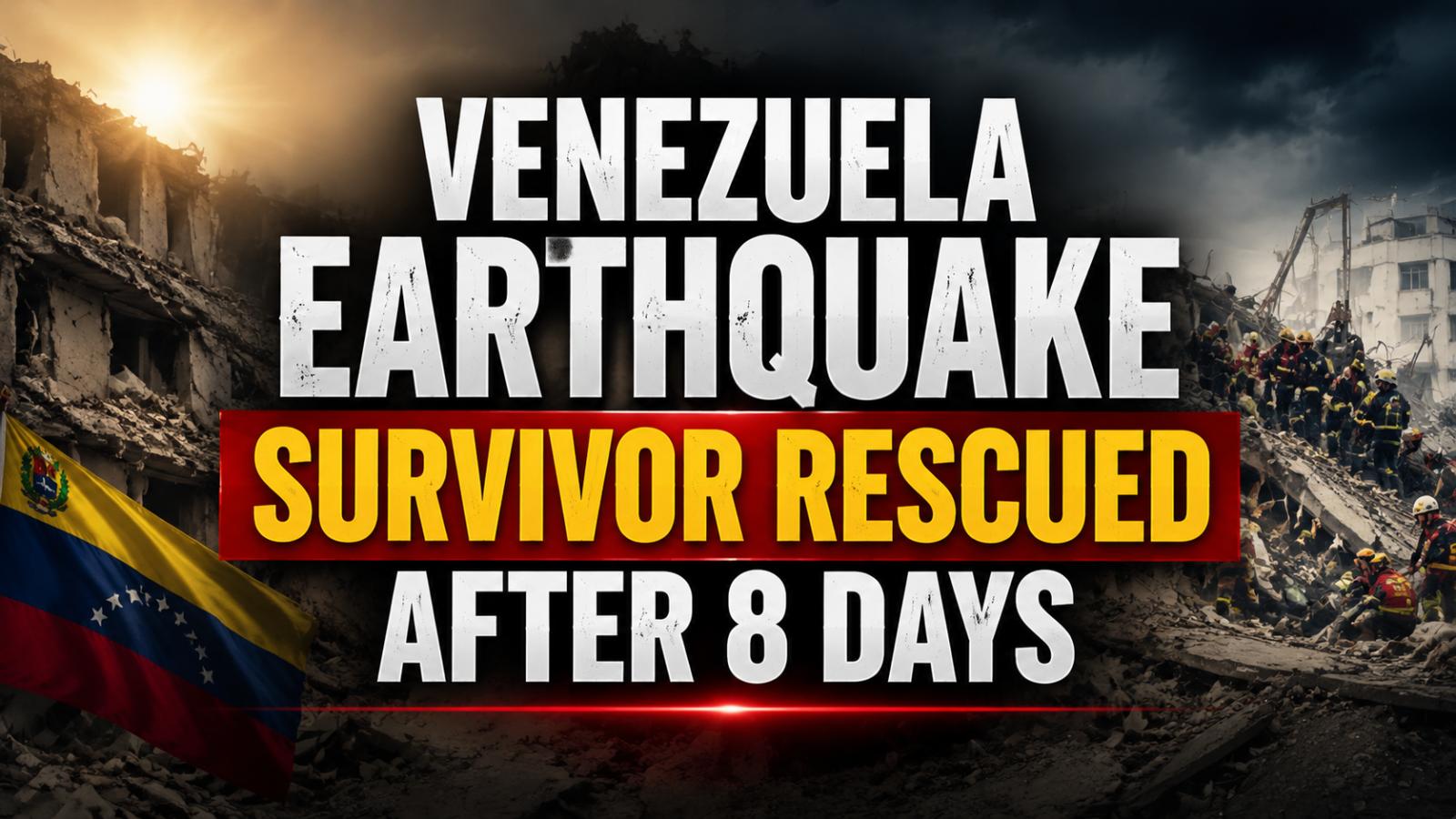
Venezuela earthquake survivor rescued after eight days trapped
Survivor pulled alive after eight days under rubble Rescue teams in Venezuela have pulled a man alive from the rubble of a collapsed nine-story structure in La Guaira, eight days after a series of powerful earthquakes devastated large parts of the country. The survivor’s rescue has been described by emergency officials as a rare moment of hope amid widespread destructio
Venezuela earthquake survivor rescued after eight days trapped
Survivor pulled alive after eight days under rubble Rescue teams in Venezuela have pulled a man alive from the rubble of a collapsed nine-story structure in La Guaira, eight days after a series of powerful earthquakes devastated large parts of the country. The survivor’s rescue has been described by emergency officials as a rare moment of hope amid widespread destructio
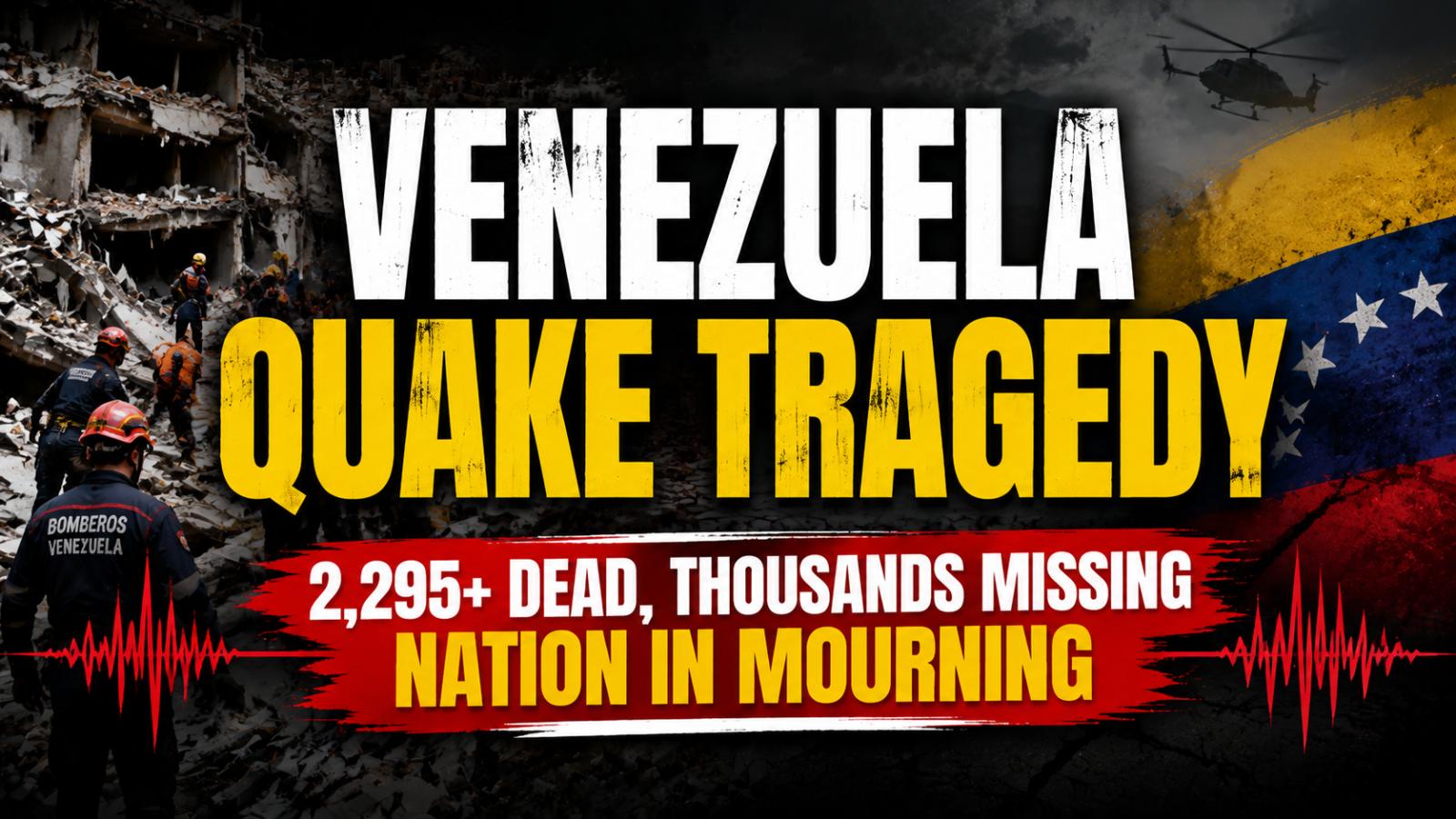
Venezuela declares national mourning after deadly earthquake disaster
National mourning declared amid rising devastation Venezuela has declared seven days of national mourning following last week’s powerful twin earthquakes that left the country facing one of its worst humanitarian disasters in recent history. Interim president Delcy Rodriguez announced the decision as the confirmed death toll climbed to at least 2,295, with thousands more injured and many still unaccounted for. Authorities say nearly 13,000 people have
Venezuela declares national mourning after deadly earthquake disaster
National mourning declared amid rising devastation Venezuela has declared seven days of national mourning following last week’s powerful twin earthquakes that left the country facing one of its worst humanitarian disasters in recent history. Interim president Delcy Rodriguez announced the decision as the confirmed death toll climbed to at least 2,295, with thousands more injured and many still unaccounted for. Authorities say nearly 13,000 people have
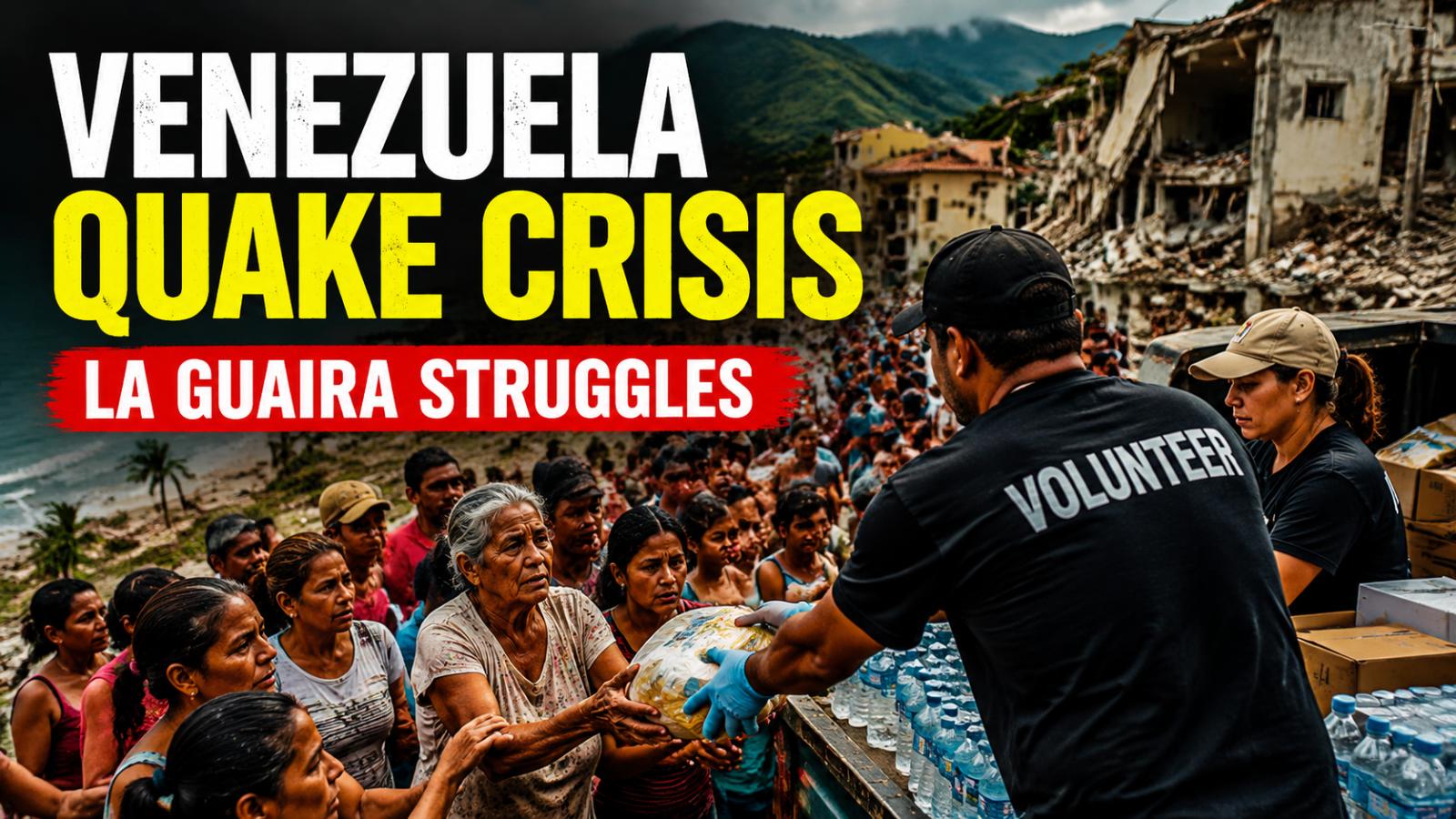
Venezuela quake crisis deepens as La Guaira struggles
Region under severe strain after twin quakes La Guaira is facing mounting pressure after successive earthquakes caused widespread disruption across coastal communities. Entire neighborhoods have been damaged, leaving thousands without stable housing. Emergency services are stretched thin as access roads remain partially blocked and essential infrastructure continues
Venezuela quake crisis deepens as La Guaira struggles
Region under severe strain after twin quakes La Guaira is facing mounting pressure after successive earthquakes caused widespread disruption across coastal communities. Entire neighborhoods have been damaged, leaving thousands without stable housing. Emergency services are stretched thin as access roads remain partially blocked and essential infrastructure continues
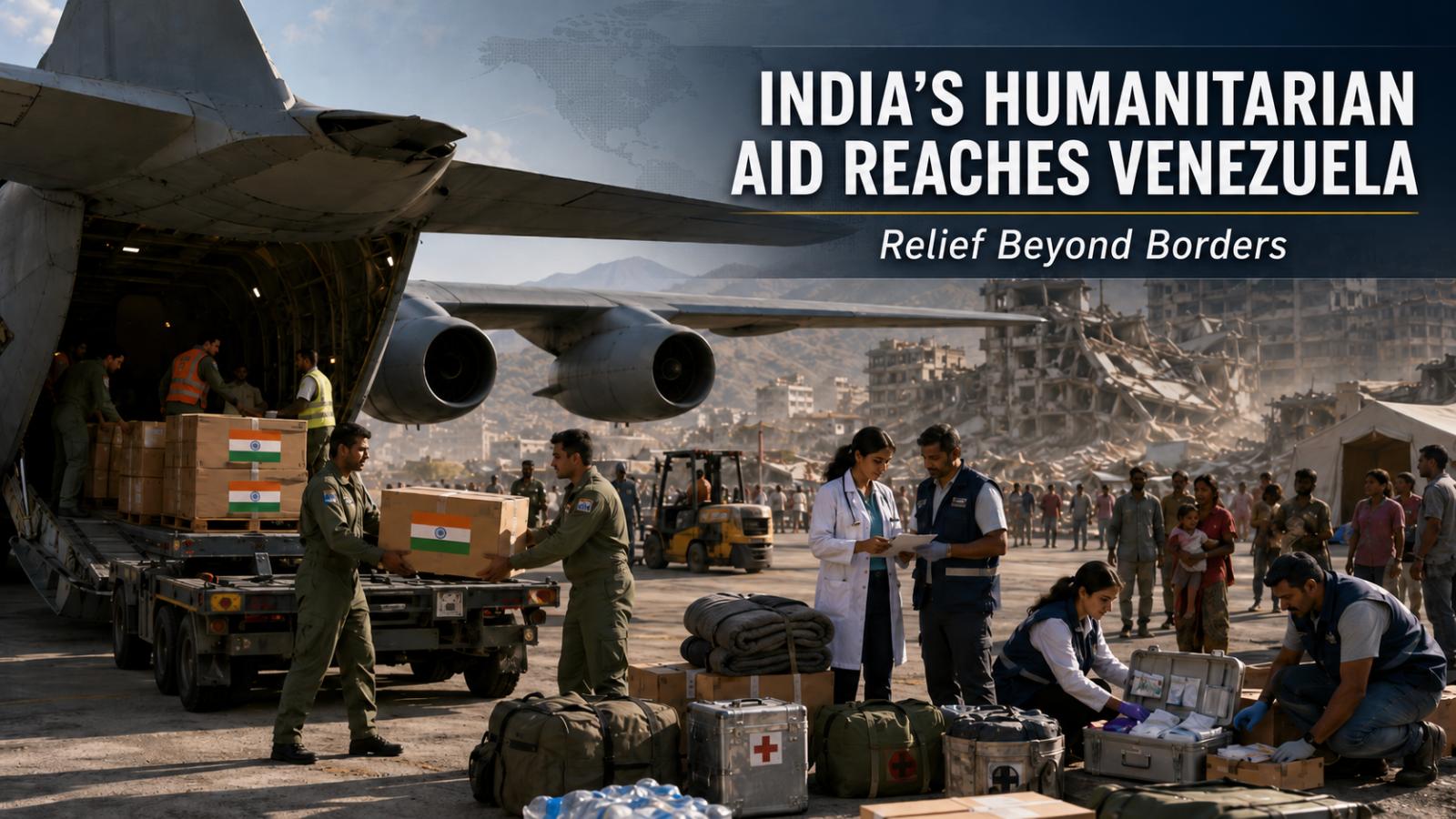
India Sends Venezuela Earthquake Aid, Extending Global Relief Record
India has sent humanitarian assistance to Venezuela after two powerful earthquakes struck west of Caracas on Wednesday, June 24, 2026. The response, called Operation Amistad, adds to a broader record of Indian disaster relief, medical support and emergency supplies delivered overseas. Under the mission, two Indian Air Force C-17 transport aircraft carried an Indian Army field hospital, two BHISHM emergency medical units, medicines, medical equipment and more than 35 tonnes of relief
India Sends Venezuela Earthquake Aid, Extending Global Relief Record
India has sent humanitarian assistance to Venezuela after two powerful earthquakes struck west of Caracas on Wednesday, June 24, 2026. The response, called Operation Amistad, adds to a broader record of Indian disaster relief, medical support and emergency supplies delivered overseas. Under the mission, two Indian Air Force C-17 transport aircraft carried an Indian Army field hospital, two BHISHM emergency medical units, medicines, medical equipment and more than 35 tonnes of relief
Venezuela quake toll rises as La Guaira rescue efforts continue
Venezuela is facing one of its worst natural disasters in recent years after two powerful earthquakes struck on June 24, causing widespread destruction and leaving thousands of families in distress. Officials said the death toll has risen to around 1,450, while more than 3,000 people have been injured and nearly 13,000 have been moved from unsafe areas. Rescue teams are still searching through collapsed buildings, damaged homes and broken streets as relatives wait for ne
Venezuela quake toll rises as La Guaira rescue efforts continue
Venezuela is facing one of its worst natural disasters in recent years after two powerful earthquakes struck on June 24, causing widespread destruction and leaving thousands of families in distress. Officials said the death toll has risen to around 1,450, while more than 3,000 people have been injured and nearly 13,000 have been moved from unsafe areas. Rescue teams are still searching through collapsed buildings, damaged homes and broken streets as relatives wait for ne
Foreign nationals among 1,430 killed in Venezuela earthquakes
Death toll rises after twin earthquakes The death toll from the twin earthquakes that struck Venezuela on Wednesday, June 24, has climbed to 1,430, as rescue teams continue searching through collapsed buildings and damaged neighborhoods. Authorities in several countries have confirmed that their citizens were among those killed, while many foreign nationals remain missing in the disaster-hit areas. The earthquakes have triggered a broad international respon
Foreign nationals among 1,430 killed in Venezuela earthquakes
Death toll rises after twin earthquakes The death toll from the twin earthquakes that struck Venezuela on Wednesday, June 24, has climbed to 1,430, as rescue teams continue searching through collapsed buildings and damaged neighborhoods. Authorities in several countries have confirmed that their citizens were among those killed, while many foreign nationals remain missing in the disaster-hit areas. The earthquakes have triggered a broad international respon
How to Enable Earthquake Alerts on Android in India
How to enable earthquake alerts on Android in India is a timely question after powerful earthquakes struck Venezuela on Wednesday, June 24, 2026. Android’s warning system can provide some users with seconds of notice after an earthquake begins, although alerts are not guaranteed. Magnitude 7.2 and 7.5 earthquakes struck western Venezuela at about 6:04 PM and 6:05 PM Venezuela time on Wednesday, June 24, 2026. Reuters reported that the confir
How to Enable Earthquake Alerts on Android in India
How to enable earthquake alerts on Android in India is a timely question after powerful earthquakes struck Venezuela on Wednesday, June 24, 2026. Android’s warning system can provide some users with seconds of notice after an earthquake begins, although alerts are not guaranteed. Magnitude 7.2 and 7.5 earthquakes struck western Venezuela at about 6:04 PM and 6:05 PM Venezuela time on Wednesday, June 24, 2026. Reuters reported that the confir
Venezuela earthquake 7.5 magnitude leaves 235 dead
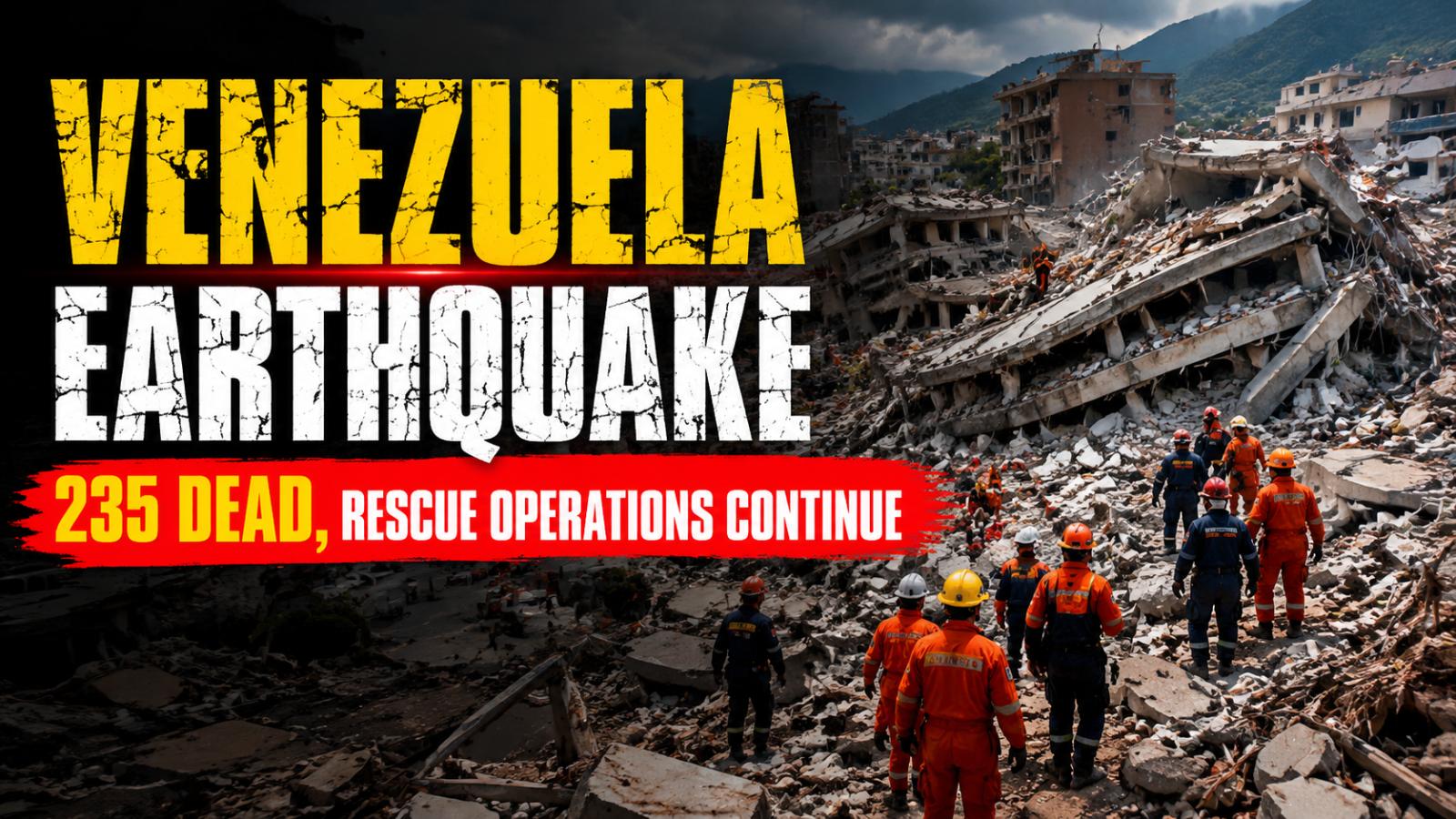
A major earthquake struck the northern coastline of Venezuela, causing severe destruction across coastal cities and leaving at least 235 people dead. The tremor, measured at magnitudes 7.2 to 7.5, hit suddenly and was felt across a wide stretch of the Caribbean region. Thousands of residents were forced out of their homes within minutes as buildings swayed and collapsed under the force of the shaking.
Venezuela earthquake 7.5 magnitude leaves 235 dead
A major earthquake struck the northern coastline of Venezuela, causing severe destruction across coastal cities and leaving at least 235 people dead. The tremor, measured at magnitudes 7.2 to 7.5, hit suddenly and was felt across a wide stretch of the Caribbean region. Thousands of residents were forced out of their homes within minutes as buildings swayed and collapsed under the force of the shaking.
Venezuela Earthquakes Kill Chaos as Japan Also Records Powerful Tremors
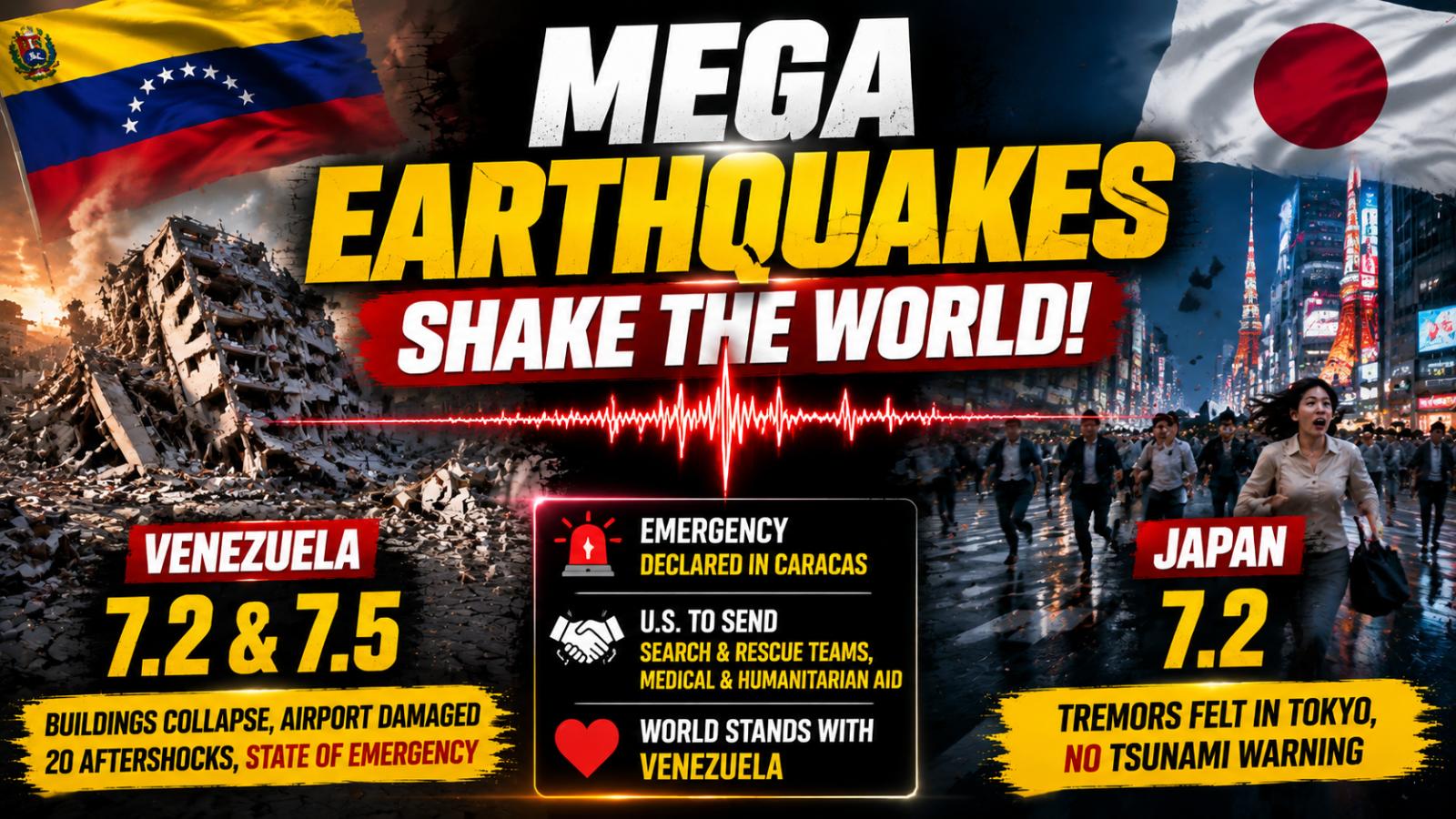
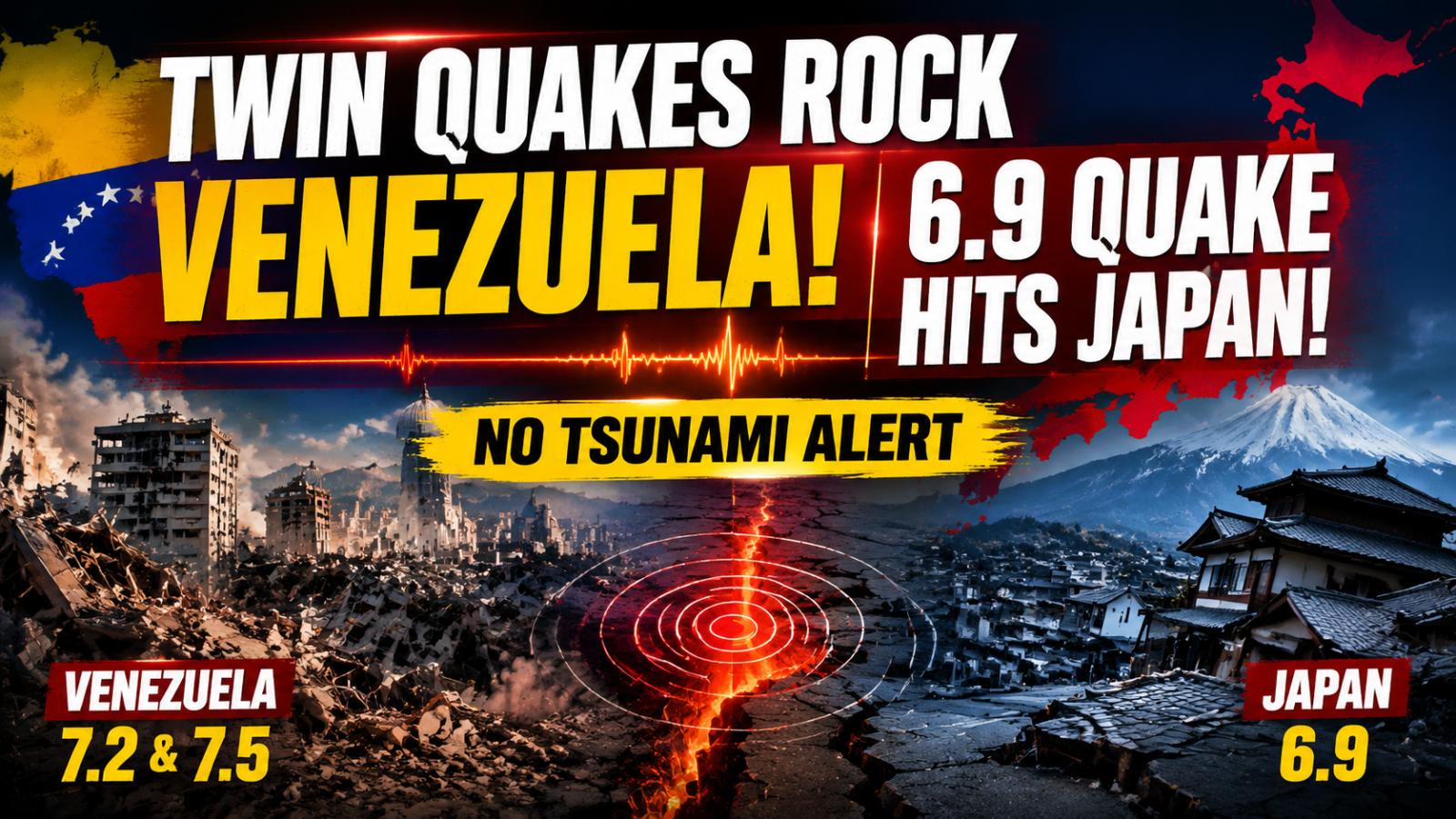
Powerful Earthquakes Shake Venezuela and Japan Two major earthquakes measuring magnitude 7.2 and 7.5 struck Venezuela on Wednesday evening, causing widespread destruction, infrastructure damage, and panic across affected regions. The tremors brought daily life to a standstill as roads cracked, buildings collapsed, and emergency services were deployed to assess the situ
Venezuela Earthquakes Kill Chaos as Japan Also Records Powerful Tremors
Powerful Earthquakes Shake Venezuela and Japan Two major earthquakes measuring magnitude 7.2 and 7.5 struck Venezuela on Wednesday evening, causing widespread destruction, infrastructure damage, and panic across affected regions. The tremors brought daily life to a standstill as roads cracked, buildings collapsed, and emergency services were deployed to assess the situ
Strong Earthquakes Hit Venezuela and Northern Japan, No Tsunami Alert Issued
Double Earthquake Sequence Strikes Venezuela Two strong earthquakes measuring magnitude 7.2 and 7.5 struck Venezuela on Wednesday evening,June 24th 2026 according to data released by the United States Geological Survey. The agency confirmed that the second quake, measured at magnitude 7.5, occurred just 39 seconds after the initial 7.2 tremor, forming what exper
Strong Earthquakes Hit Venezuela and Northern Japan, No Tsunami Alert Issued
Double Earthquake Sequence Strikes Venezuela Two strong earthquakes measuring magnitude 7.2 and 7.5 struck Venezuela on Wednesday evening,June 24th 2026 according to data released by the United States Geological Survey. The agency confirmed that the second quake, measured at magnitude 7.5, occurred just 39 seconds after the initial 7.2 tremor, forming what exper
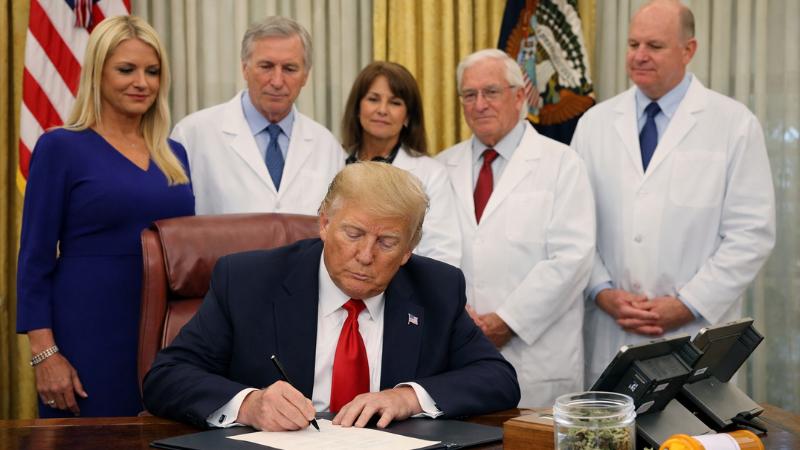
Trump Says US Strike Killed Tren de Aragua Leader
Strike Announcement US President Donald Trump said American forces killed Héctor Rusthenford Guerrero Flores, widely known as Niño Guerrero, in what he described as a “swift and lethal” military operation against the alleged leader of Venezuela’s Tren de Aragua gang. Trump said the strike was carried out by US Southern Command and coordinated with Venezuela, but officials had not immediately released
Trump Says US Strike Killed Tren de Aragua Leader
Strike Announcement US President Donald Trump said American forces killed Héctor Rusthenford Guerrero Flores, widely known as Niño Guerrero, in what he described as a “swift and lethal” military operation against the alleged leader of Venezuela’s Tren de Aragua gang. Trump said the strike was carried out by US Southern Command and coordinated with Venezuela, but officials had not immediately released
Venezuela Prison Protest Erupts as Barinas Inmates Allege Abuse and Demand Justice
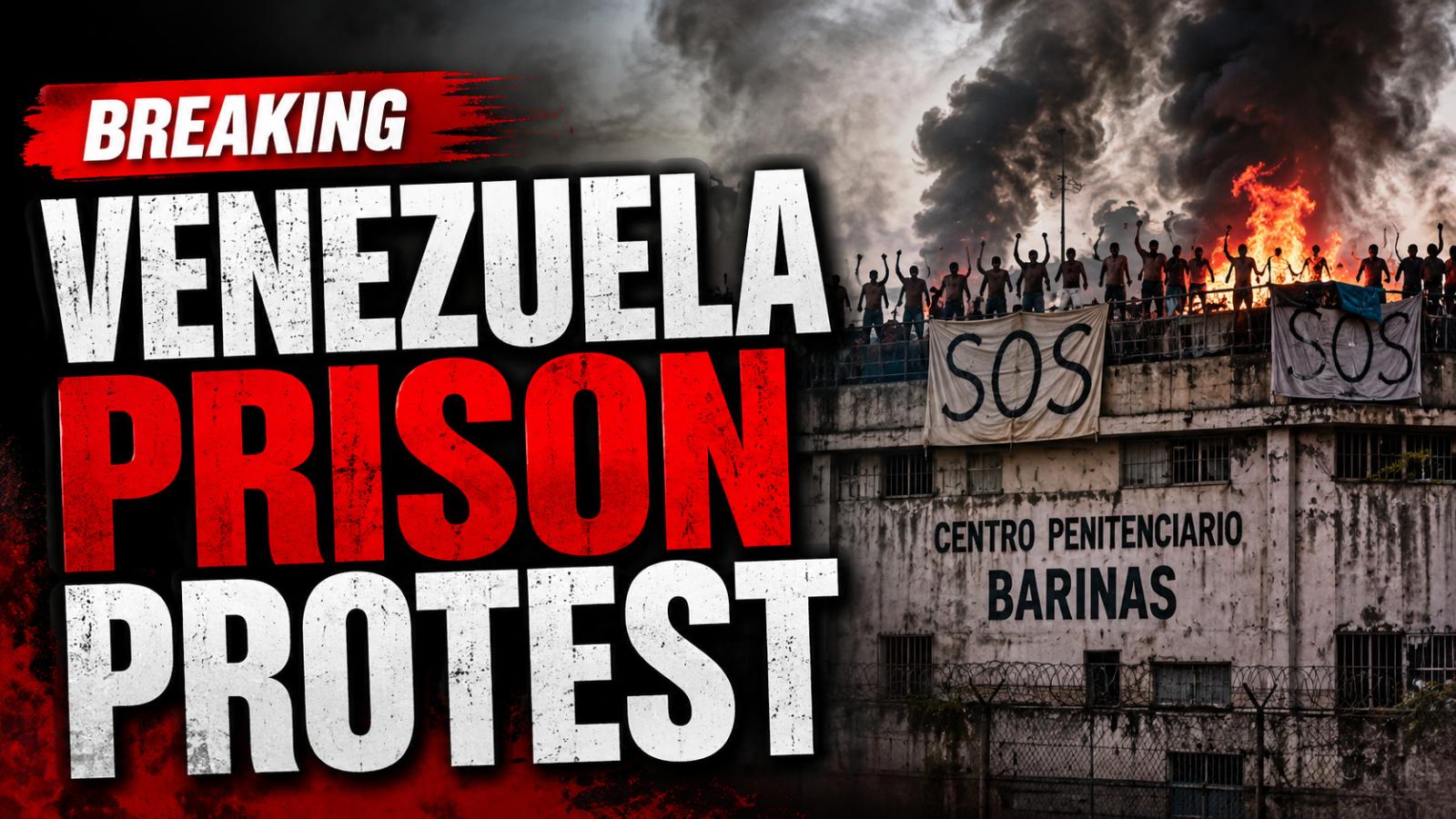
Inmates Take Protest to Prison Roof A major protest broke out at the Barinas Judicial Internment Centre in western Venezuela after inmates accused prison staff of abuse, violence and harsh treatment. Hundreds of prisoners climbed onto the roof of the facility, burned mattresses and sheets, and raised SOS banners asking for help. The protest created a tense scene inside the jail as thick smoke rose from the buildi
Venezuela Prison Protest Erupts as Barinas Inmates Allege Abuse and Demand Justice
Inmates Take Protest to Prison Roof A major protest broke out at the Barinas Judicial Internment Centre in western Venezuela after inmates accused prison staff of abuse, violence and harsh treatment. Hundreds of prisoners climbed onto the roof of the facility, burned mattresses and sheets, and raised SOS banners asking for help. The protest created a tense scene inside the jail as thick smoke rose from the buildi
Rubio Links Delcy Rodriguez India Visit to Venezuela Oil Talks
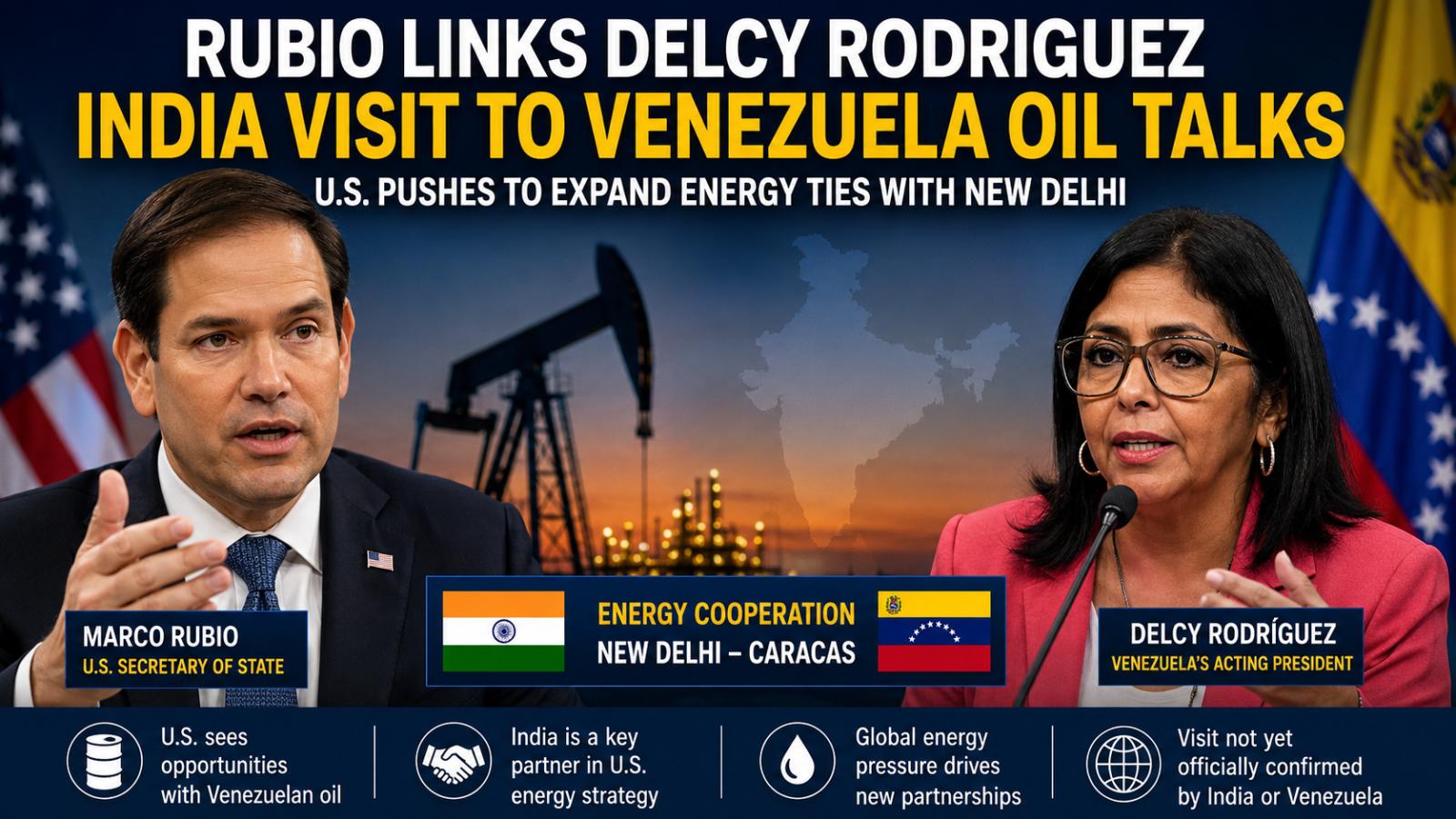
Rubio linked the expected Delcy Rodriguez India visit to possible Venezuela oil discussions as Washington pushes to expand energy cooperation with New Delhi. US Secretary of State Marco Rubio said on Thursday, May 21, 2026, that Venezuela’s acting President Delcy Rodriguez was expected to travel to India the following week. Speaking before his own India visit from Saturday, May 23, 2026, to Tuesday, May 26, 2026, Rubio said the United States wanted a larger role i
Rubio Links Delcy Rodriguez India Visit to Venezuela Oil Talks
Rubio linked the expected Delcy Rodriguez India visit to possible Venezuela oil discussions as Washington pushes to expand energy cooperation with New Delhi. US Secretary of State Marco Rubio said on Thursday, May 21, 2026, that Venezuela’s acting President Delcy Rodriguez was expected to travel to India the following week. Speaking before his own India visit from Saturday, May 23, 2026, to Tuesday, May 26, 2026, Rubio said the United States wanted a larger role i
Trump AI Iran Map Sparks Foreign Policy Debate
On May 17, 2026, US President Donald Trump posted a strong warning about Iran on Truth Social, saying that Iran needed to move fast toward an agreement and that time was running out. On May 18, 2026, another post featuring an AI-style map of West Asia gained attention because it showed arrows pointing toward Iran along with the American flag. The image quickly became a talking point because it appeared during a sensitive moment in US-Iran relations.
Trump AI Iran Map Sparks Foreign Policy Debate
On May 17, 2026, US President Donald Trump posted a strong warning about Iran on Truth Social, saying that Iran needed to move fast toward an agreement and that time was running out. On May 18, 2026, another post featuring an AI-style map of West Asia gained attention because it showed arrows pointing toward Iran along with the American flag. The image quickly became a talking point because it appeared during a sensitive moment in US-Iran relations.
US Expands Anti-Drug Campaign With New Pacific Strike
The United States military carried out another strike on a suspected drug-trafficking vessel in the Eastern Pacific, resulting in the deaths of three individuals, on Sunday (Apr 26), according to officials. The operation was conducted under the direction of US Southern Command, which stated that the vessel was operating along known narcotics trafficking routes and was actively engaged in il
US Expands Anti-Drug Campaign With New Pacific Strike
The United States military carried out another strike on a suspected drug-trafficking vessel in the Eastern Pacific, resulting in the deaths of three individuals, on Sunday (Apr 26), according to officials. The operation was conducted under the direction of US Southern Command, which stated that the vessel was operating along known narcotics trafficking routes and was actively engaged in il
Russia’s Lavrov accuses US of targeting oil resources in foreign policy
Russia’s foreign minister accuses the US of pursuing oil-driven interventions in Iran and Venezuela, raising concerns over global energy dominance and geopolitical tensions. Russian Foreign Minister Sergei Lavrov has accused the United States of pursuing foreign interventions to secure control over global oil and energy resources, escalating rhetoric between Moscow and
Russia’s Lavrov accuses US of targeting oil resources in foreign policy
Russia’s foreign minister accuses the US of pursuing oil-driven interventions in Iran and Venezuela, raising concerns over global energy dominance and geopolitical tensions. Russian Foreign Minister Sergei Lavrov has accused the United States of pursuing foreign interventions to secure control over global oil and energy resources, escalating rhetoric between Moscow and
Lavrov criticizes US foreign policy over oil and energy dominance
Russian Foreign Minister Sergei Lavrov has accused the United States of pursuing oil-driven policies in Iran and Venezuela, claiming that control over global energy resources is a central goal of Washington’s foreign strategy. Speaking in a televised interview, Lavrov said the US focuses primarily on its own interests and is willing to use extreme methods to secure access to oil and energy assets in resource-rich nations. Lavrov alleged that US actions in countries such as Iran and Venezuela are not hidden, but openly tied to securing influence over energy markets. According to him, Washington’s approach reflects a broader ambition to dominate global energy supply chains. He argued that such policies show a shift away from international legal norms, suggesting that decisions are increasingly shaped by power rather than agreed rules. The Russian minister also criticized the US for what he described as inconsistent diplomacy. He urged Washington to prioritize dialogue, stating that the US has a pattern of withdrawing from agreements instead of maintaining stable international commitments. His remarks come as American envoys prepare for discussions in Pakistan, signaling ongoing diplomatic engagement in the region. The White House has indicated openness to negotiations with Iran, while maintaining that it will not act under pressure. Meanwhile, Iran’s Foreign Minister Abbas Araghchi has begun a regional visit, adding to the ongoing diplomatic activity surrounding the issue. Lavrov further linked US foreign policy to developments in Europe, particularly in the context of the Ukraine conflict. He accused Washington of encouraging European nations to reduce dependence on Russian gas, framing this as part of a broader geopolitical strategy. According to Lavrov, such moves resemble attempts to reshape global energy dynamics in a way that benefits US interests, raising concerns about a return to power-based international relations.
Lavrov criticizes US foreign policy over oil and energy dominance
Russian Foreign Minister Sergei Lavrov has accused the United States of pursuing oil-driven policies in Iran and Venezuela, claiming that control over global energy resources is a central goal of Washington’s foreign strategy. Speaking in a televised interview, Lavrov said the US focuses primarily on its own interests and is willing to use extreme methods to secure access to oil and energy assets in resource-rich nations. Lavrov alleged that US actions in countries such as Iran and Venezuela are not hidden, but openly tied to securing influence over energy markets. According to him, Washington’s approach reflects a broader ambition to dominate global energy supply chains. He argued that such policies show a shift away from international legal norms, suggesting that decisions are increasingly shaped by power rather than agreed rules. The Russian minister also criticized the US for what he described as inconsistent diplomacy. He urged Washington to prioritize dialogue, stating that the US has a pattern of withdrawing from agreements instead of maintaining stable international commitments. His remarks come as American envoys prepare for discussions in Pakistan, signaling ongoing diplomatic engagement in the region. The White House has indicated openness to negotiations with Iran, while maintaining that it will not act under pressure. Meanwhile, Iran’s Foreign Minister Abbas Araghchi has begun a regional visit, adding to the ongoing diplomatic activity surrounding the issue. Lavrov further linked US foreign policy to developments in Europe, particularly in the context of the Ukraine conflict. He accused Washington of encouraging European nations to reduce dependence on Russian gas, framing this as part of a broader geopolitical strategy. According to Lavrov, such moves resemble attempts to reshape global energy dynamics in a way that benefits US interests, raising concerns about a return to power-based international relations.
Venezuela, Hormuz, Malacca: The US-China energy conflict intensifies in 2026
The geopolitical struggle for control over global oil supply routes escalated in early 2026, as the United States moved to strategically target key energy chokepoints in an attempt to disrupt China’s oil flow. With major oil reserves located in Venezuela, the strategic Strait of Hormuz, and the Malacca Strait, the US appears to be building a complex energy blockade aimed at China, using military force and economic pressure to shift the balance of power. In January 2026, the US took a bold step by moving its military presence to Venezuela, home to the world’s largest proven oil reserves. The operation involved an elite force that captured former Venezuelan President Nicolas Maduro, potentially altering the country’s political landscape and controlling access to its vast oil reserves. With an estimated 303 billion barrels of oil at stake, Venezuela became the first of many critical points in this evolving global energy chess game. The next move came in February 2026, when the US extended its reach into the Strait of Hormuz. This chokepoint, through which 20 to 25 percent of the world’s seaborne crude oil passes, became a target as the US launched air strikes on Iranian military and energy infrastructure. The subsequent blockade of Hormuz raised the stakes even higher, as China, a major oil importer, relies heavily on this route for its energy needs. Despite Trump’s assertion that the US no longer needed Hormuz oil due to domestic production, the global impact was undeniable, with oil prices rising sharply. By March 2026, the US had expanded its strategy to the Malacca Strait, one of the world’s busiest shipping lanes and a vital route for Chinese oil imports. Through a new deal with Indonesia, the US gained increased access to the region’s airspace, strengthening its surveillance and control capabilities. This move escalated the geopolitical pressure on China, which had already been preparing for such scenarios by building overland pipeline infrastructure to mitigate risks associated with maritime routes. China’s response to these strategic moves has been multifaceted. In Venezuela, it quickly adapted to the US military action, tapping into shadow fleets and using alternative routes to maintain its crude supply. Furthermore, China’s vast reserves, along with its investments in Russian and Iranian oil, have provided it with a buffer to withstand the pressure from the US blockade. With over 1.3 billion barrels in emergency reserves, China has the capacity to play the waiting game, absorbing the initial shocks to its oil supply. As the US tightens its grip on these strategic chokepoints, the geopolitical chessboard continues to shift. China’s ability to reroute oil through its vast pipeline network and shadow tanker fleet provides a buffer, but it remains to be seen which side will blink first in this high-stakes game. While the US hopes to achieve its goals through escalating energy denial, China’s resilience and strategic planning indicate that this global oil conflict is far from over. The Malacca Strait, a vital point in this strategic maneuvering, serves as the final battleground. With its ability to influence both regional and global shipping routes, the US’s efforts to control this chokepoint may prove pivotal. However, China’s efforts to secure alternative oil sources and protect its interests in the region suggest that the true outcome of this energy conflict will depend on the endurance and tactical flexibility of both superpowers.
Venezuela, Hormuz, Malacca: The US-China energy conflict intensifies in 2026
The geopolitical struggle for control over global oil supply routes escalated in early 2026, as the United States moved to strategically target key energy chokepoints in an attempt to disrupt China’s oil flow. With major oil reserves located in Venezuela, the strategic Strait of Hormuz, and the Malacca Strait, the US appears to be building a complex energy blockade aimed at China, using military force and economic pressure to shift the balance of power. In January 2026, the US took a bold step by moving its military presence to Venezuela, home to the world’s largest proven oil reserves. The operation involved an elite force that captured former Venezuelan President Nicolas Maduro, potentially altering the country’s political landscape and controlling access to its vast oil reserves. With an estimated 303 billion barrels of oil at stake, Venezuela became the first of many critical points in this evolving global energy chess game. The next move came in February 2026, when the US extended its reach into the Strait of Hormuz. This chokepoint, through which 20 to 25 percent of the world’s seaborne crude oil passes, became a target as the US launched air strikes on Iranian military and energy infrastructure. The subsequent blockade of Hormuz raised the stakes even higher, as China, a major oil importer, relies heavily on this route for its energy needs. Despite Trump’s assertion that the US no longer needed Hormuz oil due to domestic production, the global impact was undeniable, with oil prices rising sharply. By March 2026, the US had expanded its strategy to the Malacca Strait, one of the world’s busiest shipping lanes and a vital route for Chinese oil imports. Through a new deal with Indonesia, the US gained increased access to the region’s airspace, strengthening its surveillance and control capabilities. This move escalated the geopolitical pressure on China, which had already been preparing for such scenarios by building overland pipeline infrastructure to mitigate risks associated with maritime routes. China’s response to these strategic moves has been multifaceted. In Venezuela, it quickly adapted to the US military action, tapping into shadow fleets and using alternative routes to maintain its crude supply. Furthermore, China’s vast reserves, along with its investments in Russian and Iranian oil, have provided it with a buffer to withstand the pressure from the US blockade. With over 1.3 billion barrels in emergency reserves, China has the capacity to play the waiting game, absorbing the initial shocks to its oil supply. As the US tightens its grip on these strategic chokepoints, the geopolitical chessboard continues to shift. China’s ability to reroute oil through its vast pipeline network and shadow tanker fleet provides a buffer, but it remains to be seen which side will blink first in this high-stakes game. While the US hopes to achieve its goals through escalating energy denial, China’s resilience and strategic planning indicate that this global oil conflict is far from over. The Malacca Strait, a vital point in this strategic maneuvering, serves as the final battleground. With its ability to influence both regional and global shipping routes, the US’s efforts to control this chokepoint may prove pivotal. However, China’s efforts to secure alternative oil sources and protect its interests in the region suggest that the true outcome of this energy conflict will depend on the endurance and tactical flexibility of both superpowers.
US lifts sanctions on Venezuela’s interim leader Delcy Rodríguez
The United States has lifted sanctions on Venezuela’s interim president Delcy Rodríguez, signaling a significant shift in diplomatic relations between the two countries. The decision follows a series of developments after US forces removed former leader Nicolás Maduro from power in a military operation in Caracas and brought him to New York to face drug trafficking charges. Rodríguez, a longtime ally of Maduro and former vice president, had been under US sanctions since 2018 ov
US lifts sanctions on Venezuela’s interim leader Delcy Rodríguez
The United States has lifted sanctions on Venezuela’s interim president Delcy Rodríguez, signaling a significant shift in diplomatic relations between the two countries. The decision follows a series of developments after US forces removed former leader Nicolás Maduro from power in a military operation in Caracas and brought him to New York to face drug trafficking charges. Rodríguez, a longtime ally of Maduro and former vice president, had been under US sanctions since 2018 ov


