The ISS Zvezda module air leak is drawing renewed attention to the challenge of maintaining aging spacecraft hardware in low-Earth orbit.
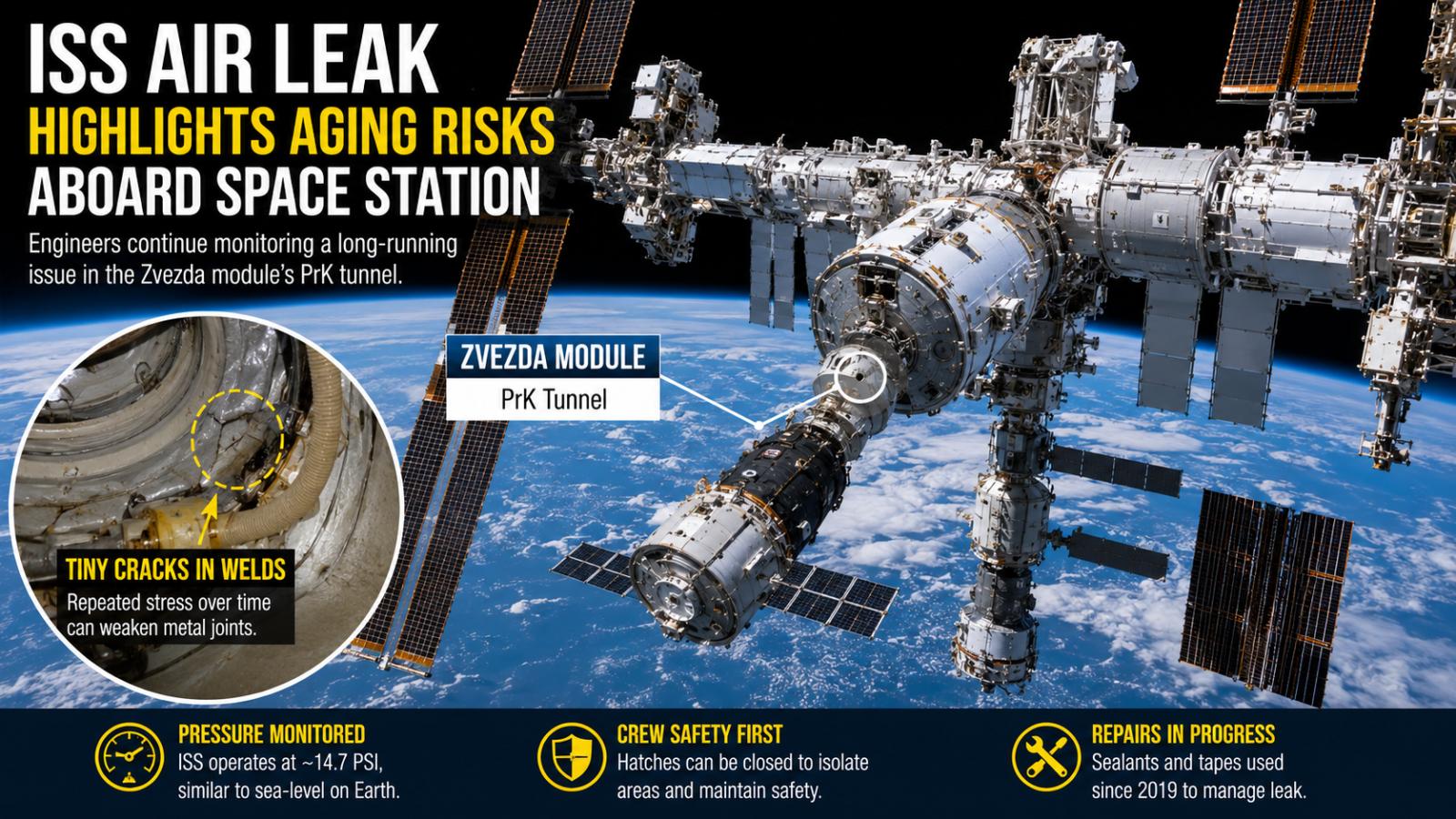
NASA and Roscosmos continue to manage the long-running issue inside the International Space Station’s Zvezda service module, where small cracks have been linked to the PrK tunnel.
ISS Zvezda Module Air Leak Remains Under Monitoring
The Zvezda module, launched in July 2000, provides living space and life-support functions for Russian cosmonauts aboard the International Space Station. The leak has been connected to tiny cracks in metal welds inside the PrK tunnel, an area where metal sections are joined together.
Over time, those joints can weaken because of repeated stress. The station regularly moves between sunlight and shadow during orbit, creating temperature changes that cause metal to expand and contract. Long-term vibration from onboard systems can add to that stress.
Why the PrK Tunnel Leak Matters
Although the term “air leak” may sound alarming, the situation is being managed through monitoring and isolation procedures. The ISS normally operates at about 14.7 pounds per square inch, similar to sea-level pressure on Earth. When air escapes into space, sensors can detect gradual pressure changes.
Crew safety procedures include closing the hatch between the affected section and the rest of the station. This segment isolation process allows astronauts and cosmonauts to continue their work while engineers study pressure behavior and repair performance.
Repairs Offer Lessons for Future Space Stations
Since 2019, cosmonauts have used sealants and heavy-duty tapes to reduce or stop the leak. Those repairs can remain effective for months, but aging metal may develop new fissures over time.
The reported leak rates are manageable and do not indicate an immediate threat. Still, the issue highlights the difficulty of operating a 420-ton orbital laboratory beyond its original design life.
As NASA, Roscosmos and other partners plan for the ISS to be retired around 2030, the Zvezda leak is offering important lessons. Understanding how space structures age in orbit could help future commercial space stations and deep-space missions improve pressure control, repair planning and crew safety.