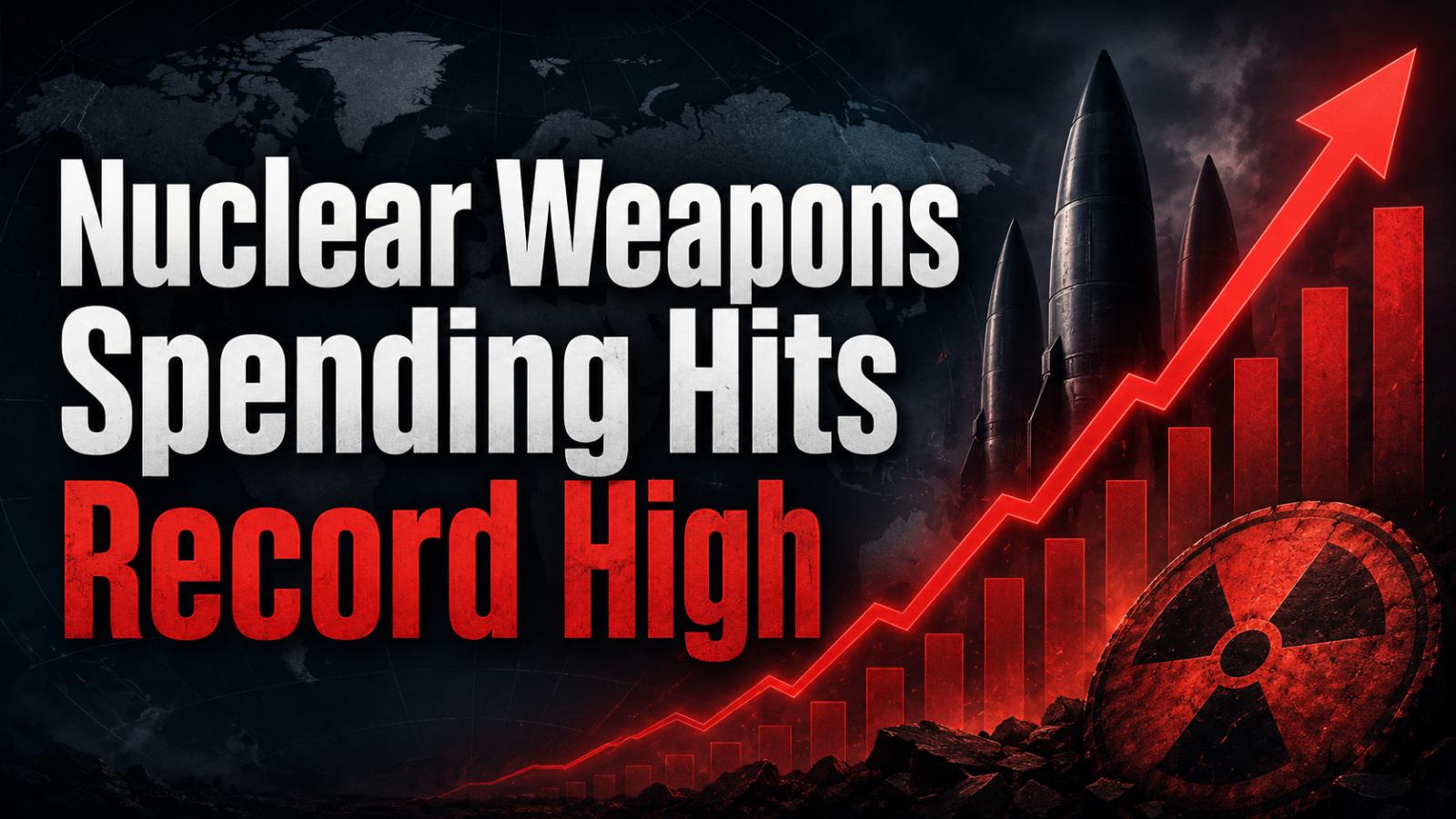
The world spent more money on nuclear weapons in 2025 than at any time in recent years, raising fresh concern about where global security is heading. According to the International Campaign to Abolish Nuclear Weapons, nine nuclear-armed countries together spent about $119 billion on nuclear weapons in 2025.
This was not a small increase. ICAN said nuclear weapons spending rose by around 19 percent in just one year. At a time when many countries are facing pressure on food, healthcare, education and humanitarian programs, the sharp rise in atomic weapon budgets is being seen as a serious warning sign.
The countries included in the report are the United States, Russia, China, Britain, France, India, Pakistan, Israel and North Korea. All nine increased spending, showing that nuclear weapons are again becoming a major part of national security planning.
United States Remains the Biggest Nuclear Spender
The United States spent the most on nuclear weapons in 2025. Its nuclear weapons budget reached about $69.2 billion, which is more than all the other nuclear-armed countries combined.
This makes the US the clear leader in nuclear arms spending. The increase also shows how much money is being directed toward maintaining, upgrading and modernizing nuclear systems.
China was the second-biggest spender with about $13.5 billion. Britain followed with around $12.6 billion, while Russia spent about $9.5 billion. France allocated about $7.7 billion.
These numbers show that nuclear weapons cost is not only about keeping old weapons ready. Many countries are investing in newer systems, advanced delivery methods and long-term nuclear modernization plans.
India, Pakistan and Other Nuclear States Also Increased Spending
The ICAN nuclear report also highlights spending by smaller nuclear-armed states. India spent around $2.8 billion on nuclear weapons in 2025, while Pakistan spent about $1.5 billion. Israel’s nuclear weapons spending was estimated at about $1.2 billion, and North Korea’s spending was estimated at around $656 million.
For South Asia, the India-Pakistan angle is especially important. Both countries have a history of military tension, and any increase in nuclear spending can raise concerns about regional stability.
China’s rising nuclear spending also matters for India and the wider Indo-Pacific region. As China expands its military and nuclear capabilities, neighboring countries may feel pressure to strengthen their own defense systems.
Why the New Nuclear Arms Race Worries Experts
The biggest concern is not only the money being spent. The larger issue is the direction in which the world is moving.
For several decades, many global leaders spoke about reducing nuclear risks and controlling arms competition. But current spending patterns suggest the opposite. Countries are not just maintaining their nuclear arsenals. They are preparing to keep them active and modern for many years.
This is why ICAN and other security experts warn that a new nuclear arms race may already be taking shape. When one country increases its nuclear capability, rival countries often respond with their own upgrades. This cycle can make the world less safe, not more secure.
Nuclear Weapons Cost Comes at a Human Price
The record spending also raises a difficult question: what else could this money have done?
Billions of dollars spent on nuclear weapons could have supported food security, healthcare, climate action, education and humanitarian relief. ICAN has argued that the money used for nuclear weapons could have helped millions of people facing basic survival challenges.
This point is important because nuclear weapons are not ordinary defense tools. Their use would cause mass destruction, long-term radiation damage and humanitarian disaster. Spending more on such weapons while essential public needs remain underfunded creates a serious moral and political debate.
AI Adds a New Risk to Nuclear Decision-Making
Another growing concern is the role of artificial intelligence in military systems. As countries modernize their defense technology, AI may become part of early warning, surveillance, targeting or decision-support systems.
The danger is that nuclear decisions could become faster and more complex. In a crisis, leaders may have less time to verify information or understand whether a threat is real. A false alarm, technical error or misread signal could become more dangerous if machines speed up the decision-making process.
This does not mean AI will automatically cause nuclear war. But combining nuclear weapons, global tension and faster military technology increases the risk of miscalculation.
Global Nuclear Risk Is Moving in the Wrong Direction
The latest spending figures show a clear pattern. Nuclear-armed countries are putting more money into weapons that the world cannot afford to use.
For the United States, China, Russia and Britain, nuclear weapons remain tied to global power and military strategy. For India, Pakistan, Israel and North Korea, nuclear weapons are linked to regional security and survival calculations.
But the result is the same: more money, more modernization and more risk.
ICAN’s warning is not just about budgets. It is about the future direction of global security. If nuclear weapons spending continues to rise, the world may enter a period where arms control becomes weaker, trust between nations becomes lower and the possibility of a nuclear crisis becomes harder to ignore.
Frequently Asked Questions
How much did the world spend on nuclear weapons in 2025?
The world’s nine nuclear-armed countries spent about $119 billion on nuclear weapons in 2025, according to ICAN.
Which country spent the most on nuclear weapons?
The United States spent the most, with about $69.2 billion allocated to nuclear weapons in 2025.
How much did India spend on nuclear weapons in 2025?
India spent around $2.8 billion on nuclear weapons in 2025.
Why is nuclear weapons spending increasing?
Nuclear weapons spending is rising because countries are modernizing their arsenals, responding to geopolitical tensions and investing in long-term military deterrence.
Why is ICAN concerned about nuclear weapons spending?
ICAN is concerned because rising nuclear weapons spending increases global nuclear risk and diverts money from urgent humanitarian needs.