Why Cows Chew Their Food Twice: The Stomach That Can Hold More Than an SUV Tank
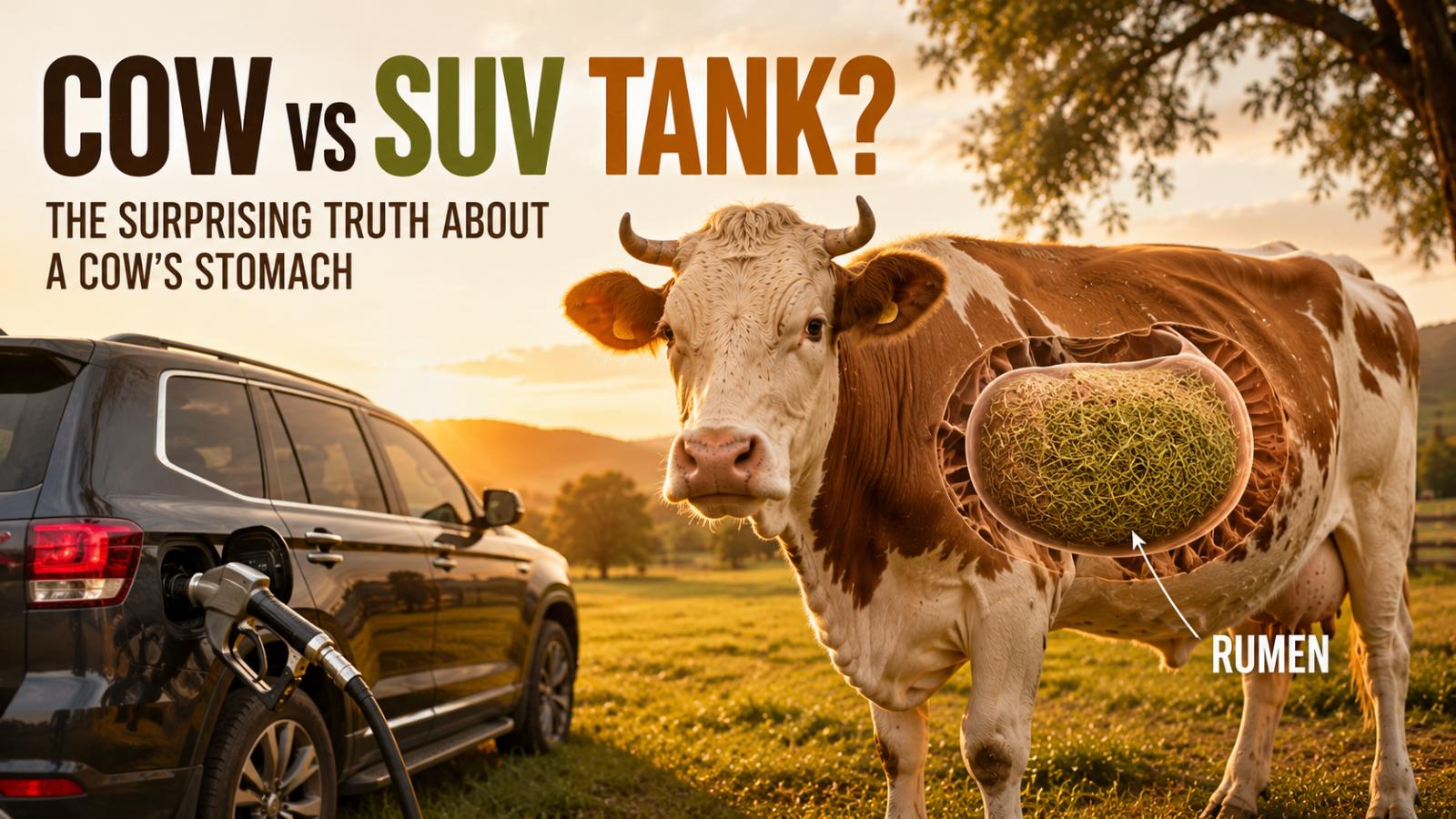
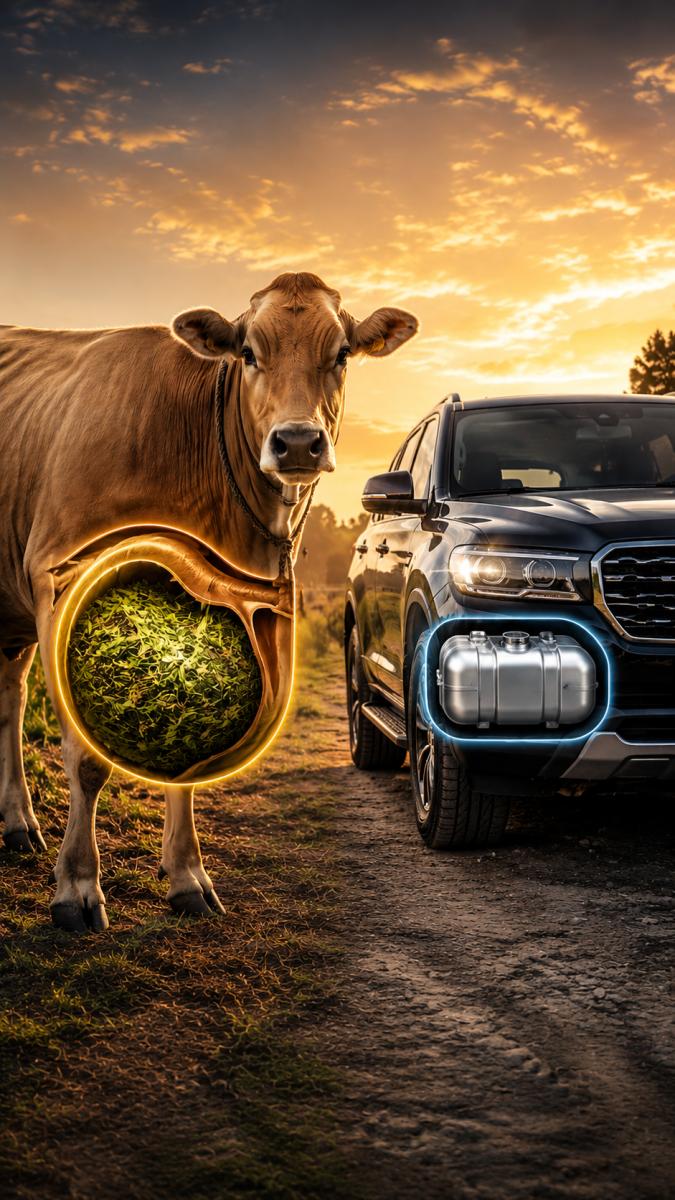
A cow’s rumen capacity is one of nature’s most surprising designs. In an adult cow, this large stomach chamber can hold enough food and liquid to compare with — or even exceed — the fuel tank of many heavy SUVs.
But the real story is not just size. It is how cows turn tough grass into energy.
Watch our Instagram reel explaining this surprising cow fact: Cow vs SUV Tank — Why Cows Chew Food Twice
Cow Rumen Capacity: How Big Is It?
Cows are ruminants, meaning they have a specialized digestive system built for breaking down grass and other fibrous plants. The rumen is the largest chamber of that system. University of Minnesota Extension says the rumen can hold 25 gallons or more, depending on the cow’s size. Mississippi State Extension notes that the rumen can hold up to 40 gallons in a mature cow.
That works out to roughly 95 to 150 liters, which is why the comparison with a large SUV fuel tank catches attention. For example, Toyota India lists the Land Cruiser 300 fuel tank at 80 liters, while some auto specification listings describe other versions at around 110 liters.
Why Do Cows Chew Their Food Twice?
Cows do not fully chew every bite when they first eat. While grazing, they swallow grass quickly. That food enters the rumen, where microbes begin breaking it down.
Later, the cow brings some of that food back into its mouth and chews it again. This is called chewing the cud, or rumination. The process helps break tough plant material into smaller pieces and supports better digestion. The University of Kentucky notes that cud chewing also increases saliva, which helps buffer the rumen and supports digestion.
Is a Cow Storing Food for Days?
No. The rumen is not a long-term food storage tank. It works more like a living fermentation chamber. Food is constantly mixed, broken down and moved through the digestive system.
That is why cows still need fresh food every day. The rumen’s size helps them process grass efficiently, but it does not mean they can stop eating for days.
Why This Matters
The cow’s digestive system is a powerful example of natural engineering. A chamber that can hold around 100 liters or more, microbes that break down grass, and the ability to chew food twice all work together in one living system.
Nature turned a cow’s stomach into a food-processing factory — truly, a wonderful creation.