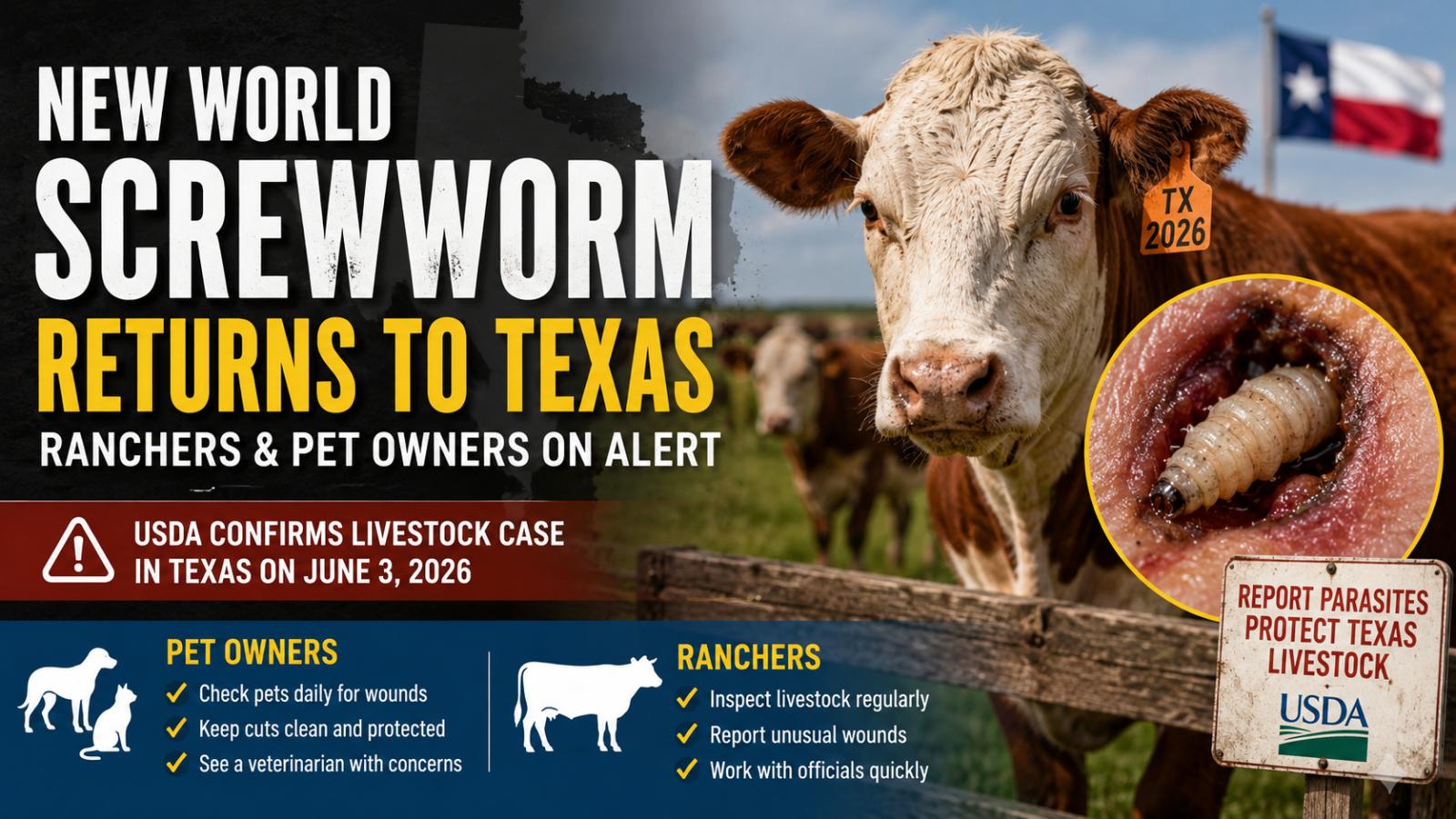
New World screwworm in Texas is raising concern among ranchers, veterinarians and pet owners after federal animal-health officials confirmed the parasite’s return in U.S. animals.
The threat is serious because New World screwworm larvae can infest living tissue in cattle, pets, wildlife and, less commonly, people. But officials and experts also stress that the United States has defeated this pest before.
New World screwworm in Texas: what officials confirmed
USDA’s Animal and Plant Health Inspection Service confirmed New World screwworm in a bovine in Zavala County, Texas, on Wednesday, June 3, 2026. APHIS said containment, surveillance and sterile fly releases were underway to protect livestock and wildlife.
The outbreak has moved north through Central America and Mexico since 2023, according to the CDC. The agency says no locally acquired human infestations have been reported in the United States.
Why ranchers and pet owners are concerned
Texas A&M AgriLife says the New World screwworm is a parasitic fly that lays eggs in fresh wounds on warm-blooded animals. After the eggs hatch, larvae feed on living tissue, causing a condition known as myiasis.
Cattle remain a major concern for ranchers, but pets can also be affected if cuts, scratches or open wounds are left untreated. A dog from Lea County, New Mexico, was later identified as that state’s first confirmed case after being examined by a Texas veterinarian.
Sterile flies remain the key response
The United States eradicated New World screwworm in 1966 using sterile insect technique. The strategy releases sterile male flies so females, which generally mate once, cannot produce viable offspring.
USDA Secretary Brooke Rollins said crews released 8 million sterile flies over a South Texas ranch soon after the first livestock case was confirmed. APHIS says it continues to track cases and affected species.
For pet owners, the practical advice is simple: check animals for wounds, keep injuries clean and contact a veterinarian if a wound looks unusual, worsens or attracts insects. For ranchers, rapid reporting and monitoring remain critical.
For more on the federal response and cattle industry concerns, see our related report: Texas Screwworm Cases Put USDA and Cattle Ranchers on Alert.
The return of New World screwworm matters because it is both an animal-health threat and an economic risk. Proven tools exist, but early detection will determine how quickly officials can contain the parasite.