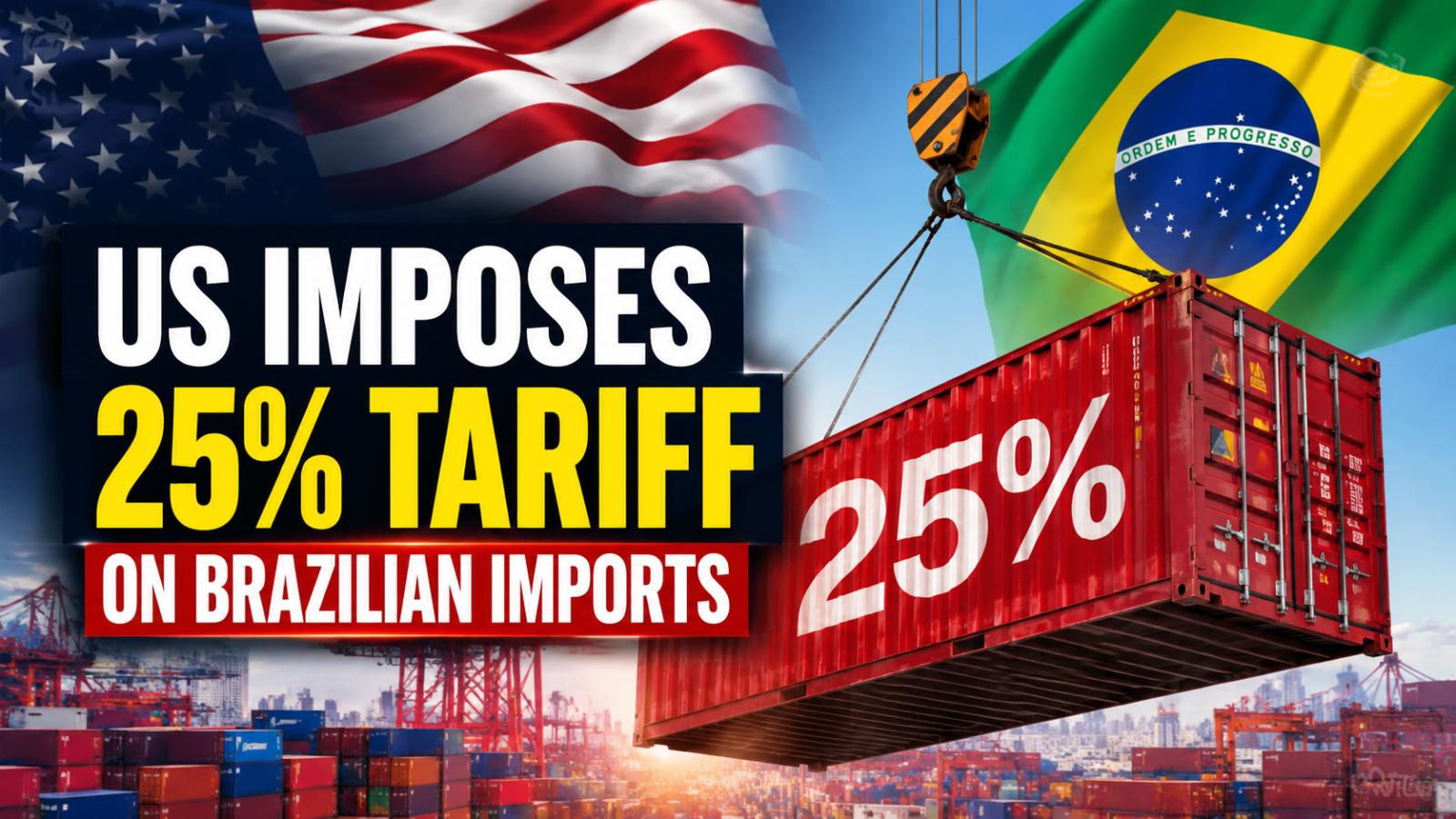
The United States will impose a 25% tariff on Brazilian imports following a year-long USTR Section 301 investigation. The action covers most Brazilian goods but includes tariff exemptions for selected products that could affect domestic supplies or cause wider economic disruption.
Brazil Trade Tariff Covers Most Imported Goods
The United States has announced a 25% additional tariff on goods imported from Brazil after concluding that several Brazilian policies burden or restrict American commerce. The Office of the United States Trade Representative issued the final notice on July 15, 2026, following an investigation launched exactly one year earlier.
The additional import duties will apply to covered products entered for consumption, or withdrawn from warehouses for consumption, from 12:01 a.m. Eastern Time on July 22, 2026. Although early descriptions referred to tariffs on “some” Brazilian imports, the official notice states that the action applies to all Brazilian goods except products included in specified exemption lists.
US Trade Representative Jamieson Greer said the investigation found that certain Brazilian acts, policies and practices were unreasonable or discriminatory. USTR determined that these measures affected American businesses, exporters and broader US commercial interests.
USTR Section 301 Investigation Identifies Six Areas
The USTR Section 301 investigation examined Brazil’s treatment of digital trade and electronic payment services, preferential tariffs, anti-corruption enforcement, intellectual property protection, ethanol market access and illegal deforestation.
According to the official determination, some digital trade practices placed US technology and electronic payment companies at a disadvantage. Investigators also raised concerns that Brazil offered lower preferential tariffs to selected major trading partners in sectors where American exporters compete.
The review further examined barriers affecting US ethanol entering the Brazilian market. Brazil had restored an ethanol tariff after temporarily removing it, creating concerns about unequal market access for American producers. USTR also assessed intellectual property enforcement and policies connected to illegal deforestation as part of the wider trade investigation.
Digital Trade Practices and Ethanol Market Access
The tariff action is intended to pressure Brazil to remove or revise the practices identified by the investigation. USTR said consultations with the Brazilian government had continued but had not resolved US concerns satisfactorily before the statutory deadline.
The decision followed a public review process that included written submissions and hearings. USTR received testimony from more than 30 witnesses and reviewed over 295 comments and rebuttal comments before reaching its determination.
The dispute could affect companies that rely on Brazilian agricultural goods, industrial materials and manufactured products. Importers may face higher costs unless their products qualify for an exemption. However, the final commercial impact will depend on the detailed tariff classifications, supply contracts and ability of businesses to obtain goods from alternative markets.
Tariff Exemptions Aim to Limit Economic Disruption
The administration excluded certain goods after considering possible harm to the US economy. The exemption criteria include raw materials that may not be sufficiently available domestically, products that could create economy-wide disruption, and goods that cannot be produced in adequate quantities or obtained at reasonable prices from other sources.
Products may also receive exemptions when imposing tariffs would not materially help eliminate the Brazilian practices identified in the investigation. USTR said the exclusions balance the effectiveness of the trade action against potential economic damage to US businesses and consumers.
The 25% Brazil trade tariff marks a significant escalation in US-Brazil trade relations. Further negotiations could still change the measure if Brazil addresses the concerns raised by USTR. Until then, American importers should review the official exemption annexes and prepare for the additional duties taking effect on July 22.