
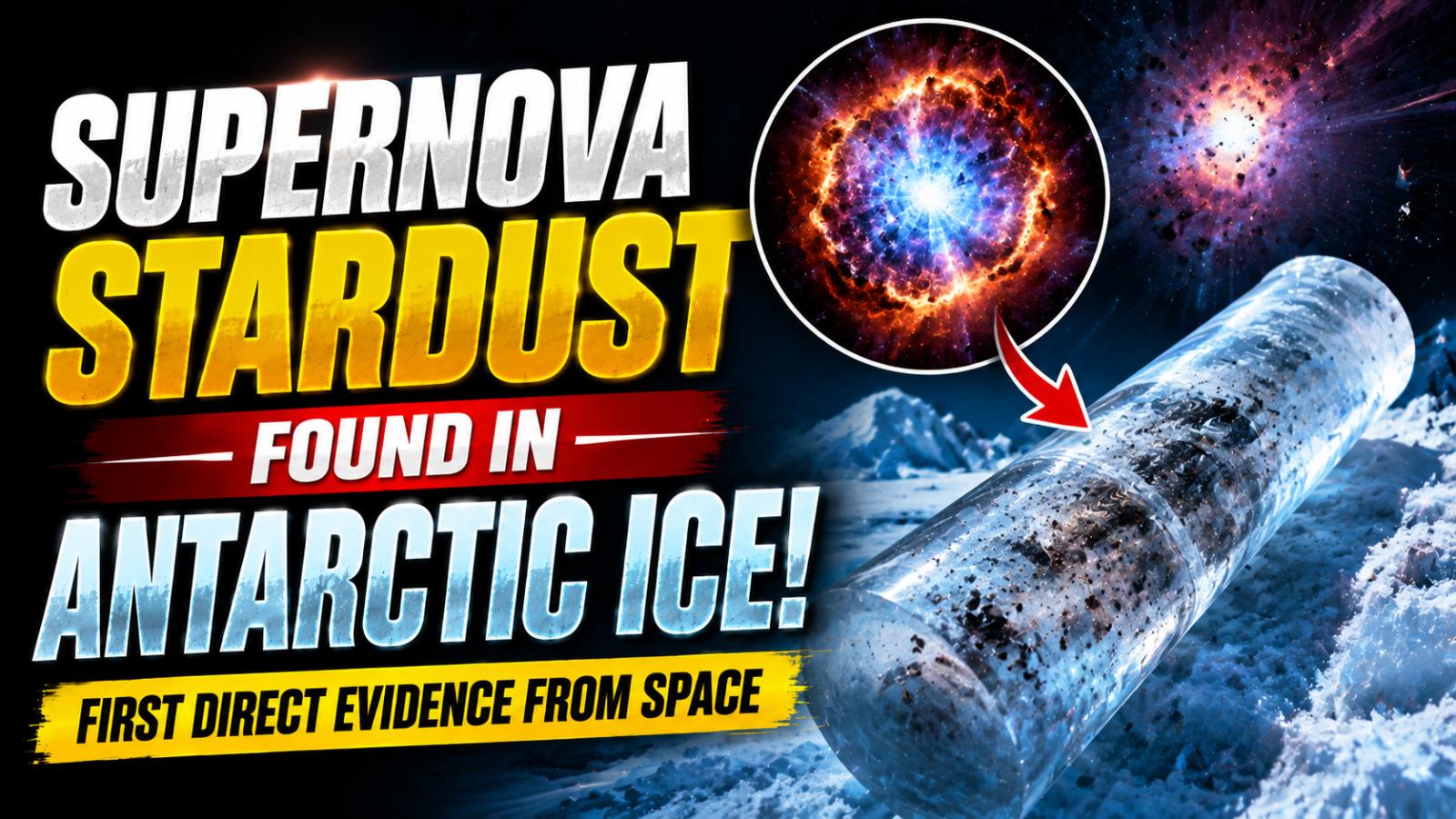












Cosmic Origins Written in Ice Scientists have identified direct physical traces of stardust preserved in Antarctic ice, offering rare confirmation that material forged in supernova explosions has reached Earth in measurable quantities. The discovery provides new insight into how elements created in distant stellar deaths are distributed across interstellar space and eventually incorporated into planetary environments. Supernova Dust and th
A Planet That Should Not Exist in This Orbit Astronomers have long believed that planets orbiting close to a star cannot survive its transformation into a red giant and eventual collapse into a white dwarf. However, the discovery of WD 1856b has challenged that assumption. The Jupiter-sized planet orbits its dead star at an extremely close distance, completing a full orbit in just over a day, defying traditional models of stellar evolution and planetary survival.