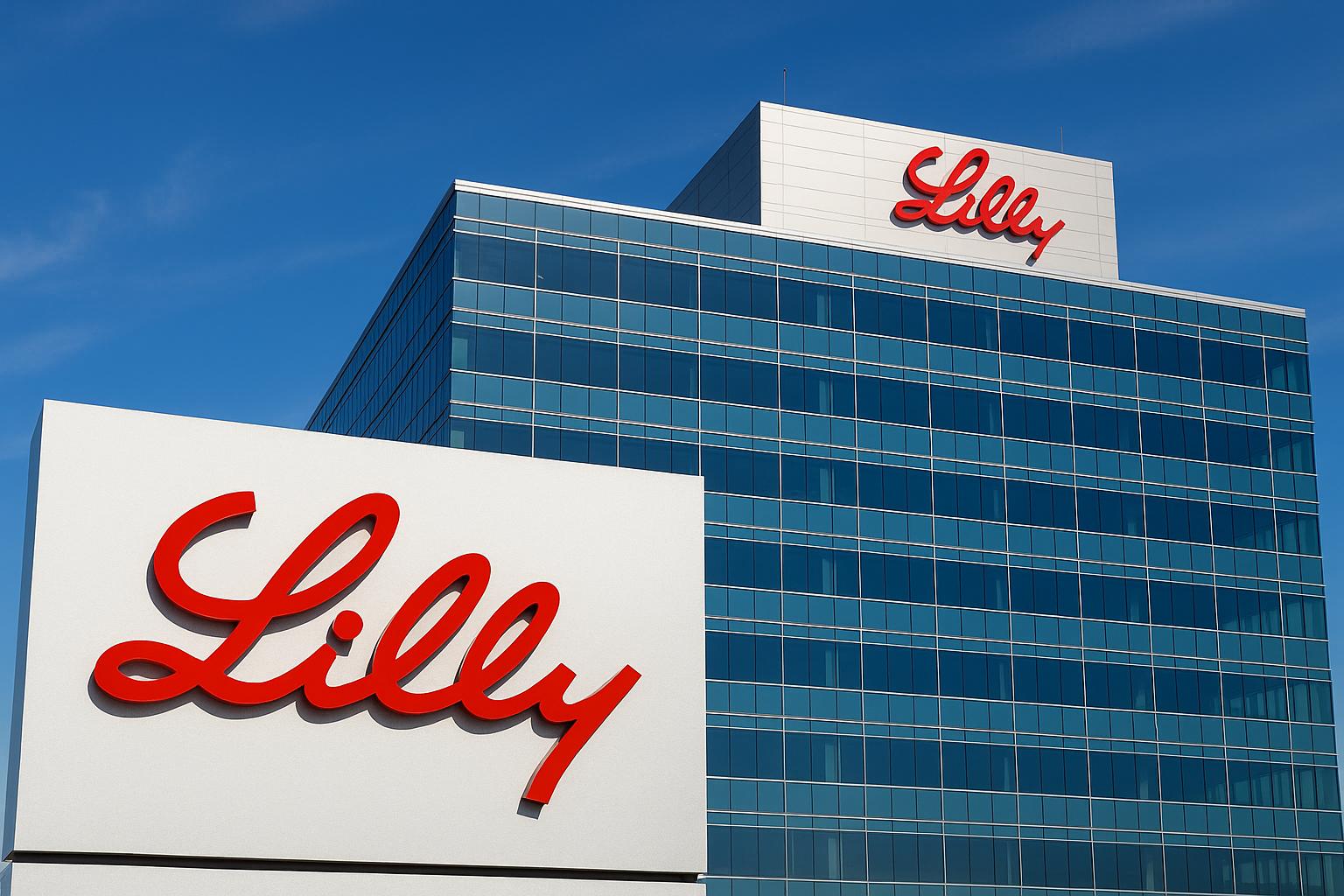
Eli Lilly reached a historic milestone on Friday when it briefly surpassed a $1 trillion market capitalization, becoming the first health-care company in the world to enter a territory long dominated by technology giants. The company’s stock hovered near $1,048 per share during morning trading, touching the trillion-dollar threshold before pulling back slightly. It is only the second nontechnology business in the United States to reach this valuation, following Berkshire Hathaway’s climb to the mark.
The latest surge in Eli Lilly’s valuation reflects extraordinary investor confidence in its expanding portfolio of GLP-1 medications, which have reshaped both the diabetes and weight-management markets over the past two years. The Indianapolis-based manufacturer has posted significant gains throughout the year, fueled largely by the runaway success of its weight loss injection Zepbound and its diabetes therapy Mounjaro. Both drugs, based on the active compound tirzepatide, have rapidly become essential products in a market that analysts believe could grow to more than $150 billion by the early 2030s.
In its most recent quarterly report, Eli Lilly stated that Mounjaro generated $6.52 billion in revenue, marking a 109 percent increase from the same period a year earlier. Zepbound, which received approval as an obesity treatment in late 2023, delivered $3.59 billion in sales—an even sharper rise of 184 percent year over year. The strong performance of these medicines has established Eli Lilly as a global leader in the increasingly competitive GLP-1 space, where demand continues to outpace supply.
Analysts expect that demand will keep accelerating as regulatory approvals broaden, insurers extend coverage, and new forms of the medications reach the market. Lilly is preparing to introduce an oral version of its treatments next year, a move that could substantially expand access by offering patients a more convenient alternative to injections. This shift would also simplify production, potentially reducing supply constraints that have challenged the company over the past year.
Even as Eli Lilly strengthens its position, competition remains intense. Novo Nordisk, despite internal challenges and shifts in leadership, continues to be a dominant force in the sector with its semaglutide-based therapies Ozempic and Wegovy. Meanwhile, Pfizer has reentered the obesity-drug race, securing a $10 billion acquisition of Metsera earlier this month, signaling that the market will only grow more competitive as pharmaceutical companies vie for leadership.
Eli Lilly’s rapid ascent builds on a long history of innovation. Founded in 1876 by Civil War veteran and pharmaceutical chemist Eli Lilly, the company introduced the world’s first commercial insulin in 1923 and later became known for breakthrough treatments such as Prozac and the earliest polio vaccine. The approval of tirzepatide in 2022 marked another major turning point, transforming the company’s trajectory and reshaping global expectations for metabolic disease treatment.
By 2024, the company’s flagship medicines continued to deliver substantial financial returns. Mounjaro reached $11.54 billion in annual sales, while Zepbound generated $4.93 billion. With its expanding product pipeline and accelerating global demand, Eli Lilly’s brief rise into the trillion-dollar tier signals not only investor enthusiasm but a wider shift in how the pharmaceutical industry is shaping the future of chronic disease management.