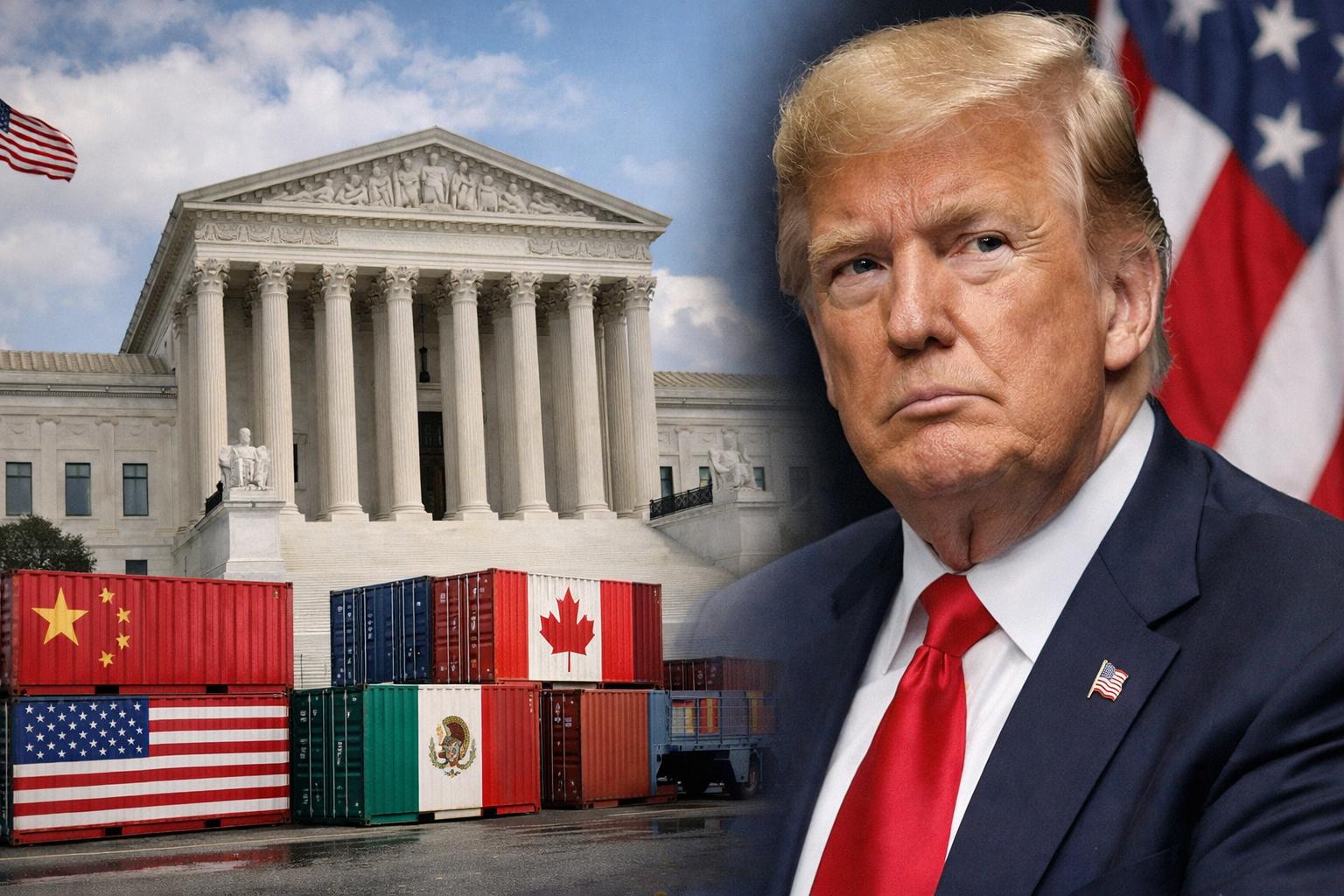
In a 6–3 ruling, the court’s majority concluded that the International Emergency Economic Powers Act (IEEPA), the statute relied upon by the Trump administration, does not authorize the imposition of tariffs. Chief Justice John Roberts delivered the opinion of the court, while Justices Clarence Thomas, Samuel Alito, and Brett Kavanaugh dissented.
Since returning to the White House, Trump had aggressively reshaped longstanding trade relationships by introducing a wide range of import duties affecting nearly every country. Many of these tariffs were justified under a novel interpretation of IEEPA, including the administration’s near-global “reciprocal” tariffs and additional duties tied to allegations involving the trafficking of fentanyl into the United States.
IEEPA allows the president to regulate certain foreign economic transactions after declaring a national emergency to address “unusual and extraordinary” threats. However, the statute does not explicitly reference tariffs. The administration argued that the authority to regulate importation implicitly included the power to impose duties on foreign goods. Critics, including several legal experts and trade groups, countered that the law was never intended to permit broad tariff actions without congressional approval.
Lower courts had previously sided with the challengers. Both a federal trade court and a federal appeals court ruled that the IEEPA-based tariffs were unlawful, setting the stage for the Supreme Court review. According to government data, a majority of U.S. tariff revenue collected last year was tied to the disputed measures.
Trump first unveiled his expansive reciprocal tariff plan during a high-profile White House event he described as “Liberation Day.” The announcement triggered volatility in financial markets, prompting the administration to pause and later repeatedly modify the tariffs. The shifting policy created uncertainty among businesses and trading partners.
Additional IEEPA-linked tariffs targeted imports from Mexico, Canada, and China, with the administration citing concerns that those countries had allowed fentanyl to enter the U.S. Trump has consistently defended tariffs as both a powerful negotiating tool and a significant source of federal revenue. He has also argued that foreign exporters ultimately bear the cost, although administration officials have acknowledged that U.S. importers technically pay the duties.
In recent months, Trump suggested that tariff revenue could eventually replace income tax collections and even floated the idea of issuing $2,000 “tariff dividend” payments to Americans. In a social media post, he claimed the government had taken in more than $600 billion from tariffs. Independent estimates, however, have been lower. The Bipartisan Policy Center projected roughly $289 billion in gross tariff revenue for 2025, while U.S. Customs and Border Protection reported collecting about $200 billion between January 20 and December 15. Of that amount, approximately $129 billion was attributed specifically to the IEEPA-based duties.
Ahead of the ruling, Trump warned of severe consequences if the Supreme Court curtailed the policy. Administration officials, including Treasury Secretary Scott Bessent, had expressed confidence that the court would uphold what they described as a cornerstone of the president’s economic strategy.
The court’s decision now raises significant questions about the future of the contested tariffs and the broader scope of executive authority in trade matters. Legal analysts expect further policy adjustments and potential congressional involvement as the administration evaluates its next steps.