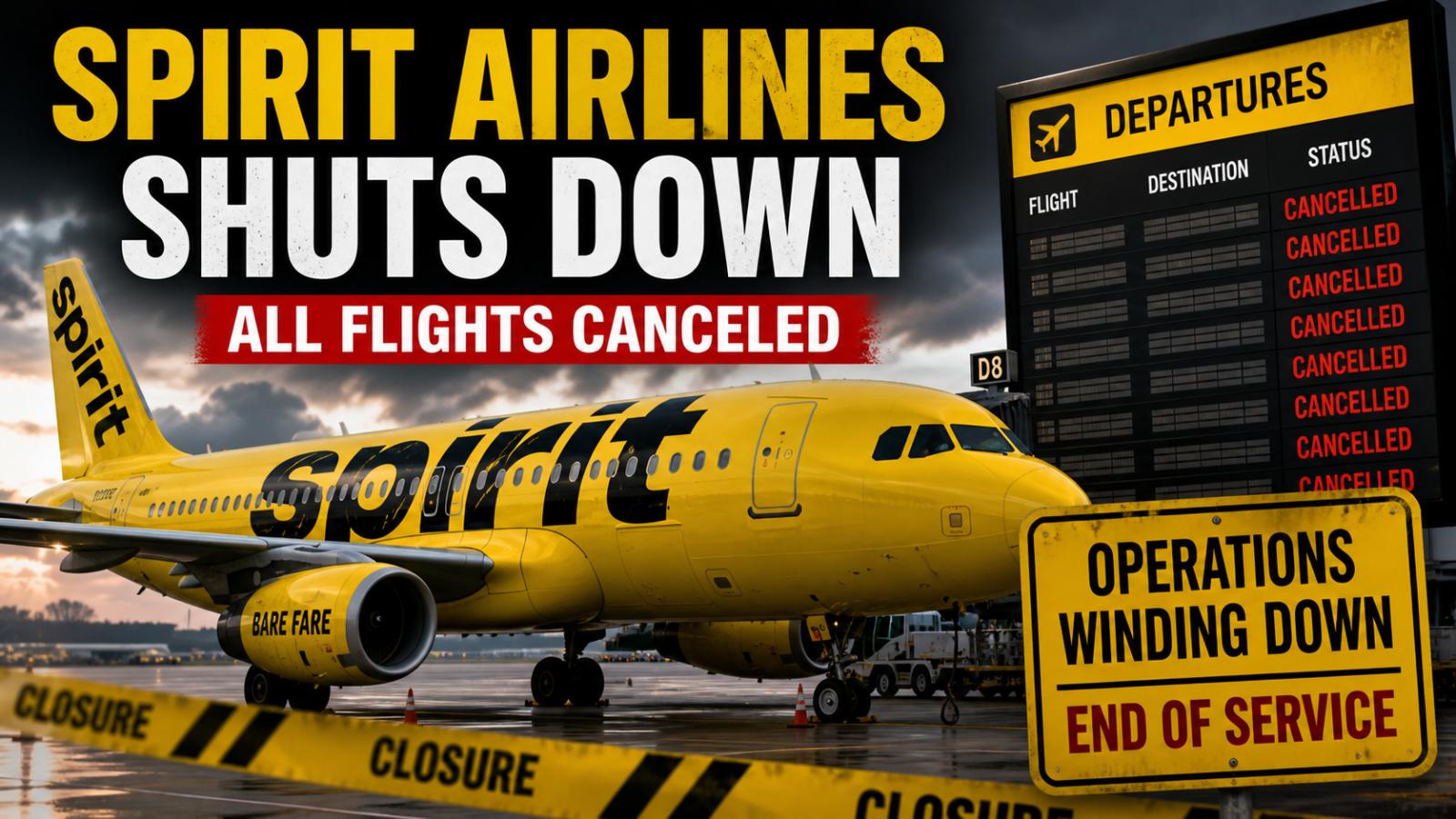
Spirit Airlines shuts down after failed bailout deal as the low-cost U.S. carrier began an immediate wind-down of operations on Saturday, May 2, 2026, after rescue talks failed and rising fuel prices deepened its financial crisis. The airline canceled all flights and warned passengers with existing tickets not to go to the airport, saying refunds would be issued but rebooking support through other carriers would not be provided.
Spirit Aviation Holdings, the parent company of Spirit Airlines, said the decision followed failed efforts to secure the liquidity needed to continue flying. Chief Executive Officer Dave Davis said the airline had reached a restructuring path but could not withstand the sudden and sustained increase in fuel costs. He said keeping the business alive would have required hundreds of millions of dollars the company did not have and could not obtain.
The shutdown marks a dramatic end for one of America’s best-known ultra-low-cost airlines, long associated with cheap fares and add-on fees. Spirit had struggled since the COVID-19 pandemic, facing weak demand, heavy debt, rising operating costs and bankruptcy filings. Its collapse is expected to hit budget travelers especially hard in major leisure markets where the airline had a strong presence.
The failed bailout discussions added a political dimension to the airline’s closure. President Donald Trump had said the administration was reviewing possible federal support, but only under terms favorable to taxpayers. Lawmakers were divided, with some warning against using public money to rescue a private airline while labor groups pushed for worker protections.
For passengers, the immediate concern is refunds and replacement travel. Travelers who booked directly with Spirit are expected to receive refunds, while those needing urgent alternatives may face higher fares and limited availability. The closure also raises broader questions about airline competition, ticket prices and the future of low-cost air travel in the United States.