Last Updated: July 18, 2026
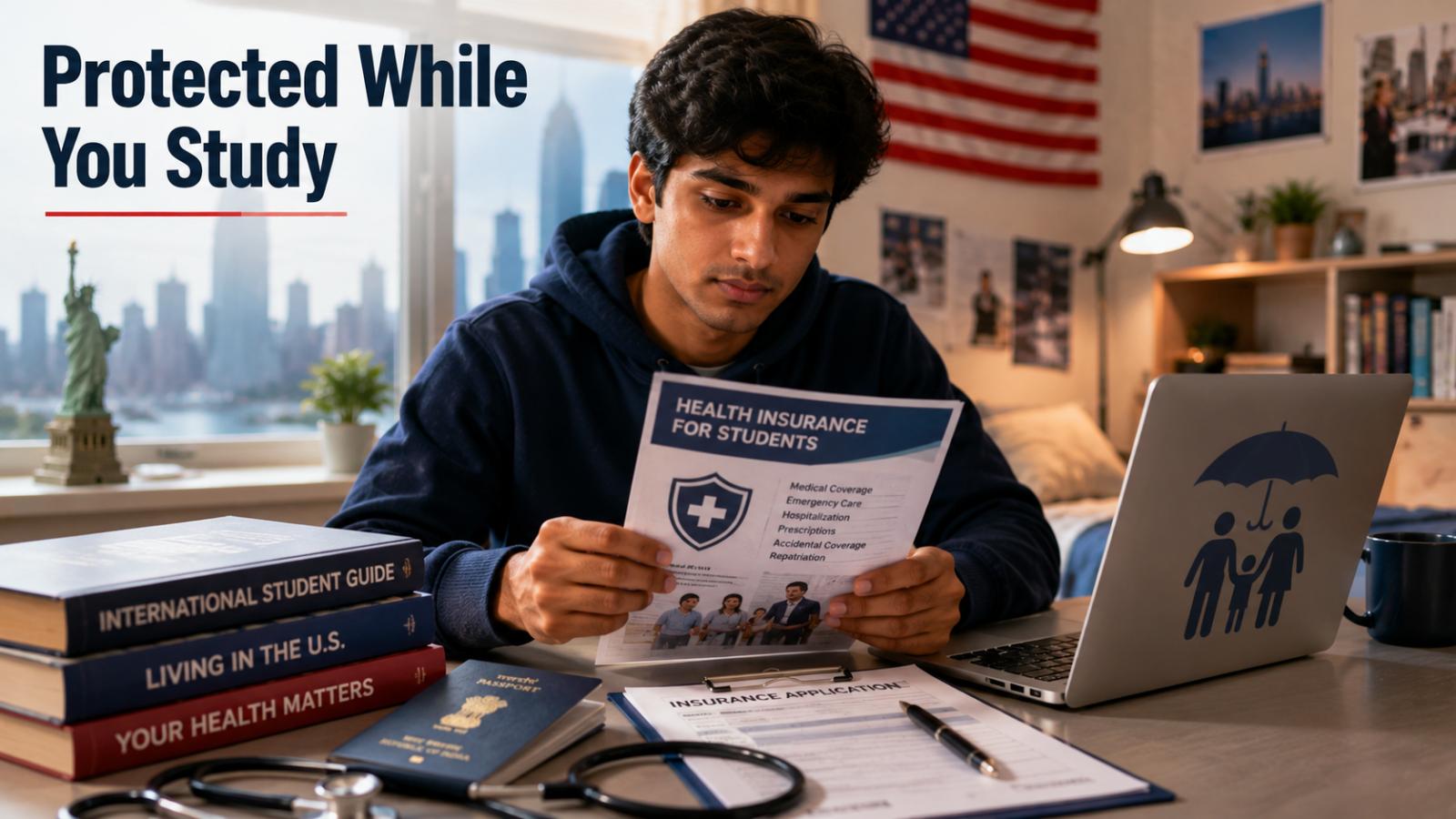
Most Indian students studying in the United States have some form of insurance, but the type and coverage vary. This guide explains university health insurance, private insurance, travel insurance, accidental death benefits, repatriation coverage and the protection students should consider before arriving in the U.S.
Most Indian students studying in the United States have health insurance, but not everyone has the same level of protection. Insurance requirements vary by university, and students may also purchase private or travel insurance. Understanding what each policy covers is important before an emergency occurs.
University Health Insurance
In the event of a fatal accident, families should understand what happens when an Indian student dies in a U.S. car crash, including the legal, medical and administrative procedures that follow
Many U.S. colleges and universities require international students on F-1 visas to maintain health insurance throughout their studies. Some institutions automatically enroll students in a university-sponsored plan, while others allow private insurance that meets specific coverage standards.
These plans generally help cover doctor visits, hospitalization, emergency treatment, surgery, laboratory tests and prescription medicines.
Private and Travel Insurance
Some students choose private international student insurance instead of a university plan if the institution permits it. Others purchase travel insurance before leaving India, but travel policies are usually designed for short-term protection and may expire after the initial weeks or months of arrival.
Students should verify whether their policy remains valid after beginning their academic program.
Does Insurance Cover Death or Repatriation?
Insurance policies vary widely, so it's important to know whether student insurance covers repatriation to India before assuming transportation costs will be covered.
Not every health insurance plan includes accidental death benefits or repatriation of remains. Those benefits are often available only through separate travel insurance, international student insurance or optional accidental death coverage.
Students planning to rent a vehicle should also read the rental car insurance guide for Indian students in the U.S. before driving.
Families should carefully review the policy documents instead of assuming these benefits are included.
What Insurance Should Every Student Consider?
Students should understand whether they have:
- Health insurance
- Emergency medical coverage
- Accidental death benefits
- Repatriation of remains coverage
- Personal liability insurance, if applicable
- Auto insurance before driving a vehicle in the United States
Knowing these details before an emergency can prevent unexpected financial hardship.
Students planning to rent a vehicle should also read the rental car insurance guide for Indian students in the U.S. before driving.
Why Checking the Policy Matters
Insurance is one of the most important financial protections for international students. Before traveling to the United States, students and their families should review the policy's benefits, exclusions, coverage limits and emergency contact information.
If an investigation later determines that the student caused the collision, insurance and legal responsibility follow a different process. Read who pays after an international student causes a fatal U.S. crash to understand how liability and estate claims are handled.
Understanding the insurance plan in advance can help students make informed decisions and reduce confusion during a medical emergency or other unexpected event.