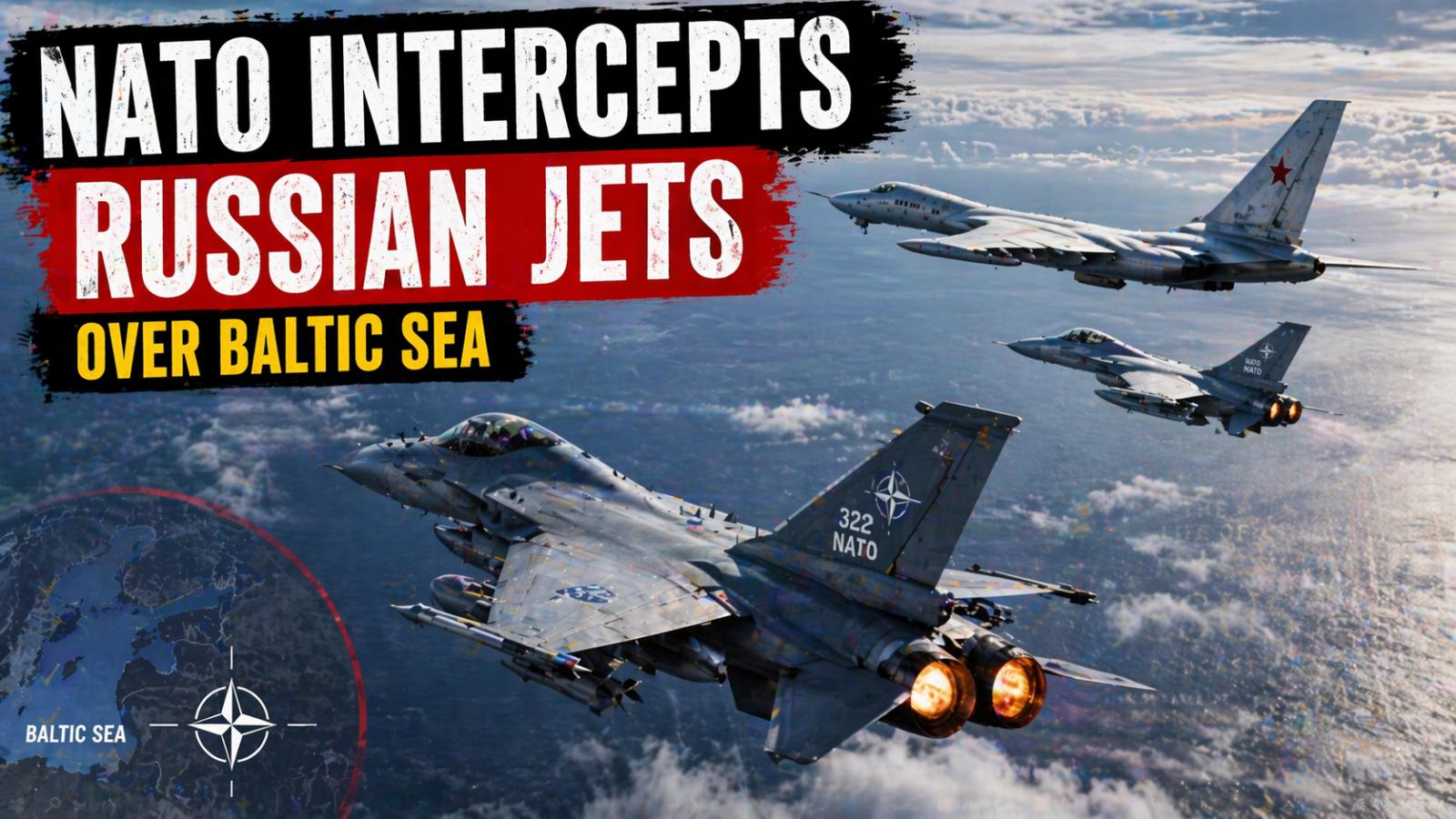
The NATO intercept Russian jets Baltic Sea incident has once again highlighted rising military tensions in Europe. Fighter jets from multiple NATO nations were scrambled to monitor Russian aircraft, signaling a strong show of force along the alliance’s eastern flank.
What happened and why it matters
On April 22, 2026, NATO forces launched a coordinated response after Russian military aircraft, including strategic bombers and fighter jets, flew over the Baltic Sea. French Rafale fighter jets stationed in Lithuania took off alongside aircraft from Sweden, Finland, Poland, Denmark, and Romania. The mission was to intercept, identify, and monitor the Russian planes as they operated near NATO airspace. The Russian formation reportedly included Tu-22M3 strategic bombers escorted by SU-30 and SU-35 fighter jets. NATO confirmed that the aircraft were flying over international waters but raised concerns over flight safety due to lack of communication and inactive transponders.
Why this matters globally
This development is significant because it reflects growing geopolitical tensions between NATO and Russia. The Baltic region has become a sensitive zone, especially after ongoing conflicts in Eastern Europe. Frequent military encounters increase the risk of miscalculation, which could escalate into a larger conflict. For global markets and governments, such incidents signal instability in a critical region that affects trade routes, defense strategies, and international relations.
Key details and background
NATO has maintained a Baltic air policing mission since 2004, when Lithuania, Latvia, and Estonia joined the alliance. The mission ensures continuous surveillance and quick response to any unusual or unidentified aircraft activity. Russian flights in the region are not new. NATO has reported intercepting Russian aircraft hundreds of times each year, often due to planes flying without flight plans or communication with air traffic control. In recent years, the Baltic Sea has also seen incidents involving suspected sabotage of underwater cables, adding to regional tensions. Close encounters between US and Russian aircraft have occurred in the past, with jets flying dangerously close to each other in international airspace.
What happens next
NATO is expected to continue its air policing operations with heightened vigilance. Member nations may increase patrol frequency and coordination to ensure regional security. Russia, on the other hand, maintains that its flights comply with international airspace regulations and are part of routine military exercises. As both sides continue to assert their presence, the likelihood of further interceptions remains high.
Expert insight
From a broader perspective, this situation reflects a strategic power balance rather than immediate conflict. Both NATO and Russia are demonstrating military readiness without crossing into direct confrontation. However, repeated encounters in shared airspace increase the chances of unintended escalation, making communication and protocols more important than ever. The NATO intercept Russian jets Baltic Sea incident underscores the fragile balance of power in Europe. While both sides operate within international norms, the frequency of such encounters highlights ongoing tensions. As the situation develops, the world will be watching closely to see whether diplomacy or military posturing shapes the future of the region.