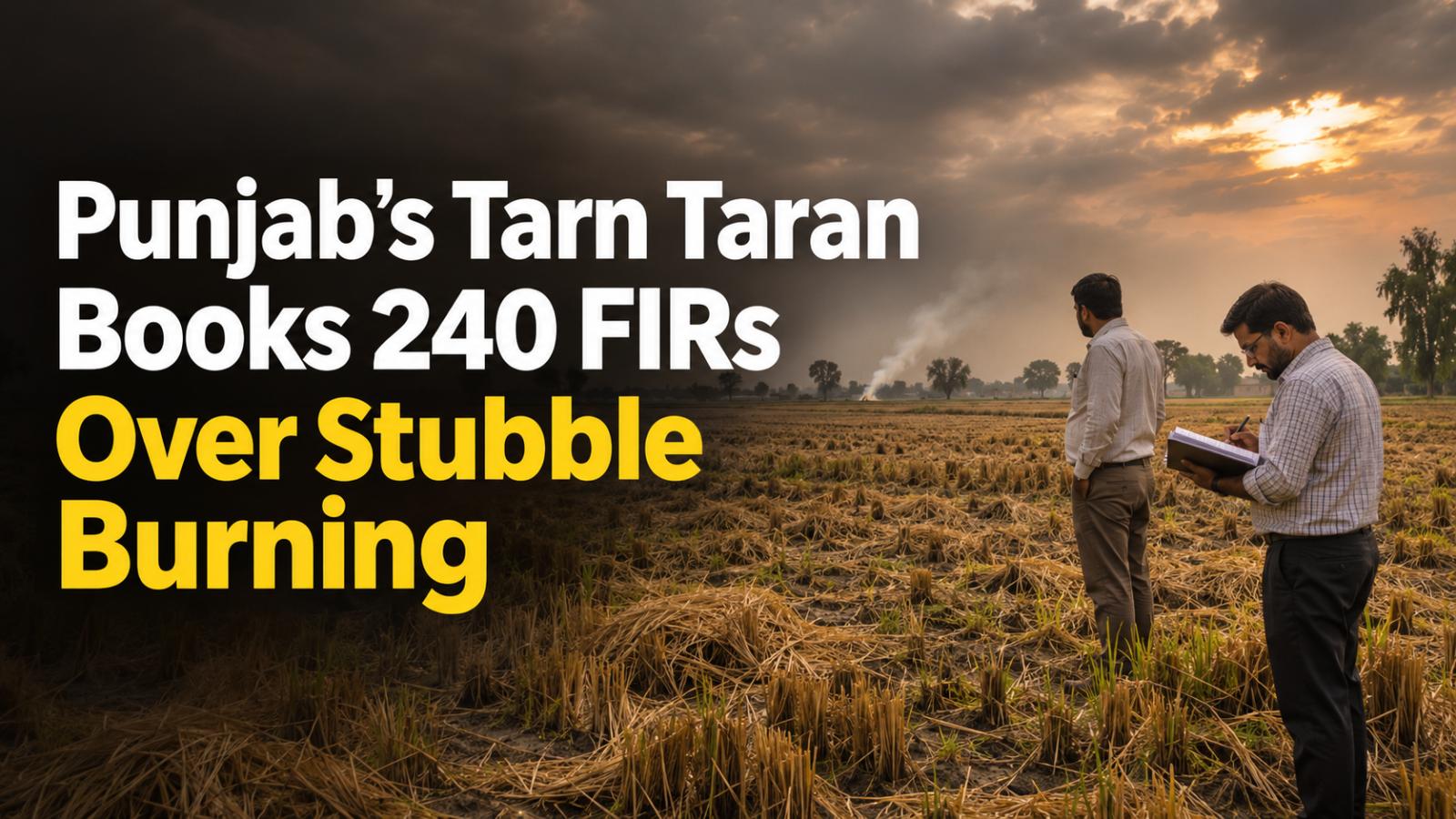
Authorities in Punjab’s Tarn Taran district have stepped up action against stubble burning, reporting 240 FIRs, fines of about ₹12 lakh and red entries in the land records of 240 fields. The campaign also uses satellite monitoring and village outreach to promote alternatives to burning crop residue.
Satellite Monitoring Guides Field Checks
With stubble-burning incidents continuing despite appeals to farmers, the district has intensified surveillance. District Agriculture Officer Tejbir Singh Bhangu said satellite monitoring was being used to identify suspected fire locations. Agriculture department teams then visited flagged sites to check reports and verify whether crop residue had been burned. Officials say enforcement is being directed at cases confirmed through field inspections.
FIRs, Fines and Land Record Entries
Police have registered 240 FIRs against farmers in connection with stubble burning this season, while authorities have imposed penalties totalling around ₹12 lakh, according to the report. The revenue department has also marked 240 fields with red entries in land records. These entries can affect the records associated with the landowners. Officials say action is being taken where inspections confirm that crop residue was set on fire. The measures are intended to deter further incidents and hold violators accountable.
Awareness Drive Promotes Alternatives
Alongside enforcement, the administration is running an awareness campaign to encourage farmers to manage crop residue without burning it. Special teams are visiting villages to explain the environmental harm caused by stubble fires and share alternative crop residue management methods. The agriculture department is urging farmers to adopt these practices and avoid setting fire to fields after harvest.
Balancing Enforcement and Farmer Support
Tarn Taran’s approach combines satellite-led surveillance, on-ground verification, penalties and education. The administration aims to respond to confirmed incidents while persuading farmers to adopt alternatives. It is continuing to appeal for cooperation with crop residue management efforts as teams monitor fields across the district. Fines and land record entries form part of the enforcement drive, while village visits are intended to build awareness and encourage changes in post-harvest practices.