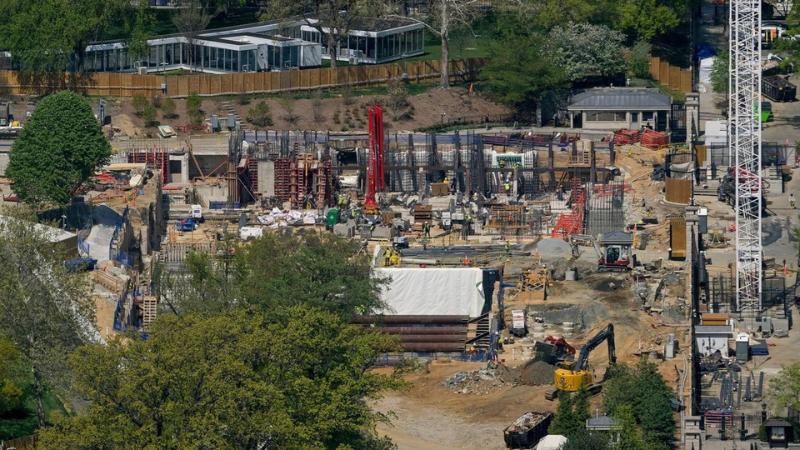
In a significant legal development, a United States appeals court has ruled that construction work on a proposed ballroom project linked to Donald Trump at the White House can continue for the time being. The decision comes amid an ongoing legal dispute over the expansion plans, which have sparked debate over government property use, historical preservation, and executive authority.
The ruling by the United States Court of Appeals does not represent a final verdict on the legality of the project but allows construction activities to proceed temporarily while the broader case is reviewed. This interim decision has been closely watched by legal experts, policymakers, and the public, as it reflects the balance courts often attempt to strike between allowing projects to move forward and ensuring proper judicial oversight.
The ballroom project, which has been discussed in political and administrative circles for some time, aims to expand event hosting capabilities within the White House complex. Supporters argue that such an addition could enhance the functionality of the historic residence by accommodating larger gatherings and official events. However, critics have raised concerns about altering the architectural integrity of one of the most iconic buildings in the United States. Questions have also been raised about funding, approval processes, and whether such changes align with long-standing preservation norms.
Legal And Political Debate Intensifies
The court’s decision highlights the ongoing tension between development ambitions and regulatory scrutiny. Opponents of the project had sought to halt construction, arguing that proceeding without a final legal resolution could lead to irreversible changes. They emphasized the need for strict adherence to preservation laws and proper authorization channels when dealing with nationally significant landmarks.
On the other hand, those backing the project welcomed the ruling, viewing it as a step forward that prevents unnecessary delays. They argue that the project has followed required procedures and that halting construction could lead to financial losses and administrative complications. The appeals court’s decision to allow work to continue temporarily suggests that it found sufficient grounds to avoid an immediate halt., while still keeping the legal questions open for further examination.
What Lies Ahead For The Project
The future of the ballroom project remains uncertain as the legal process continues. The appeals court is expected to review additional arguments and evidence before delivering a final judgment. Until then, construction can move ahead under the current ruling, though it may still face potential interruptions depending on future court orders.
This case underscores the broader challenges of balancing modernization with preservation, especially when it involves historically and politically significant sites. It also reflects how legal systems manage disputes involving high-profile figures and government properties. As proceedings continue, the outcome could set an important precedent for how similar projects are evaluated in the future.
For now, all eyes remain on the courts and the developments surrounding the White House project, as stakeholders await clarity on whether the ballroom will ultimately become a permanent addition or remain a subject of legal contention.