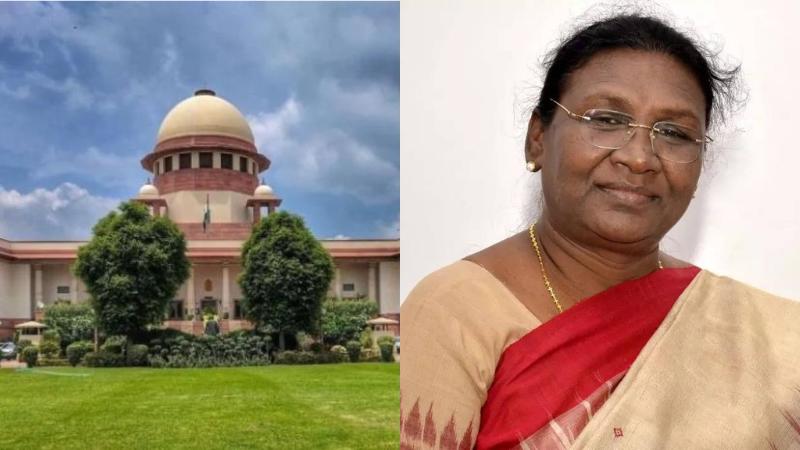
In a rare and potentially historic clash between two of India's highest constitutional offices, President Droupadi Murmu has openly questioned a recent Supreme Court ruling that mandates timelines for approving bills passed by legislatures. This bold move marks the first time in independent India’s history that a sitting President has directly contested a decision made by the apex court, highlighting a deepening constitutional debate over the separation of powers.
The Supreme Court had recently delivered a verdict aimed at streamlining legislative processes. In its ruling, the court stated that both the President and state Governors must act within a defined timeframe to either grant or reject assent to bills passed by Parliament or state assemblies. The court emphasized that undue delay in the assent process undermines democratic function and can paralyze governance.
The intent of the judgment, according to legal analysts, was to bring about procedural clarity and eliminate bureaucratic bottlenecks that have often stalled crucial legislation for months, sometimes even years. The ruling further hinted at the possibility of judicial intervention in cases of prolonged delays a step that has never before been taken in Indian legislative history.
However, President Murmu responded sharply, expressing discomfort over what she views as judicial overreach. According to highly placed sources, the President issued a 13-point questionnaire to the Supreme Court, challenging the legitimacy and constitutional basis of the court’s directive. In one of the pointed questions reportedly posed by her office, she asked, “How can you set a deadline for the President to approve bills? Doesn’t this infringe upon the legal jurisdiction of the President and Governors? Doesn’t deemed assent amount to curbing our constitutional rights and duties?”
This exchange has stirred legal and political circles alike. While the Indian Constitution provides a clear demarcation of powers among the executive, legislature, and judiciary, it also leaves room for interpretative challenges in areas such as the timeline for presidential or gubernatorial assent. Traditionally, the President acts on the advice of the Council of Ministers, but the Constitution does not prescribe a rigid timeframe for such assent. Legal scholars are divided on the issue. Some argue that the court's intervention promotes transparency and efficiency in governance, while others believe that such directives could undermine the autonomy and discretion constitutionally granted to the executive branch.
Political reactions have also started to emerge, with some parties supporting the President’s stance as a defense of executive independence, and others urging a cooperative approach to resolve the matter amicably. The matter is now expected to be deliberated in constitutional forums and legal panels at the highest level, possibly requiring reinterpretation of constitutional conventions.
This evolving confrontation between Rashtrapati Bhavan and the judiciary is being closely monitored, not just for its legal implications, but also for its long-term impact on the balance of power in Indian democracy. Whether it ends in a legal standoff or sets a new constitutional precedent remains to be seen. What is certain, however, is that it has opened up a significant conversation about the boundaries of institutional authority in the world's largest democracy.