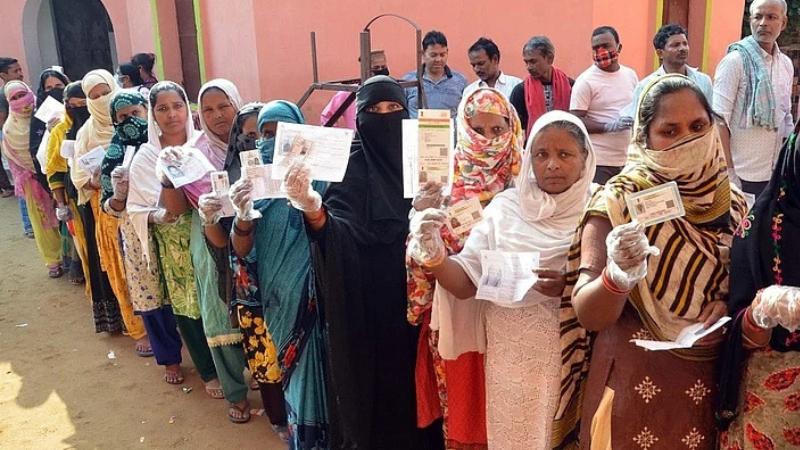
The Supreme Court of India has upheld the constitutional mandate of the Election Commission (EC) to revise electoral rolls in Bihar but raised serious concerns over the timing of the Special Intensive Revision (SIR) exercise. With Assembly elections looming in the state, the top court emphasized that while cleaning up the voter list was necessary, executing the exercise just months before the elections raised valid questions.
A bench comprising Justices Sudhanshu Dhulia and Joymalya Bagchi acknowledged that the EC’s decision had logic, especially since it was the first such revision after the computerisation of electoral records. However, the court remarked, “Your exercise is not the problem, it is the timing.”
The EC’s move, announced last month, aims to address large-scale discrepancies and possible duplicate entries accumulated over two decades. However, opposition parties, including the Congress and RJD, have slammed the timing as politically motivated.
Petitioners, represented by advocates Sankarnarayanan and Abhishek Manu Singhvi, questioned the selective screening and the criteria used for verifying citizenship. Singhvi specifically objected to the exclusion of Aadhaar from the list of accepted documents, stating that it amounted to “citizenship screening.” The court also grilled the EC on the Aadhaar exclusion, to which the poll body responded that Aadhaar is not a citizenship document, a matter under the Home Ministry’s purview.
The EC counsel assured the court that the revised voter list would be submitted for judicial review before being finalized and requested that the process not be halted prematurely. The case highlights the legal and political complexities of updating electoral rolls in a democratic setup, particularly when identity verification and timing intersect with election cycles.