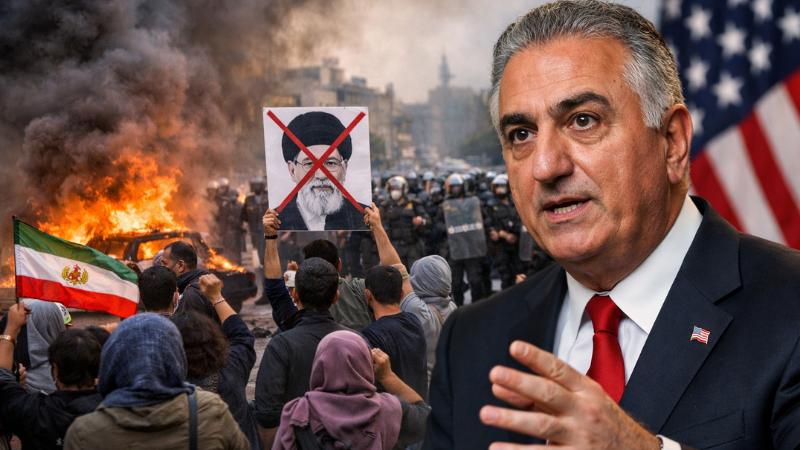
Iran’s exiled crown prince Reza Pahlavi has intensified his appeal to former United States president Donald Trump, urging immediate action against Iran’s leadership as nationwide protests continue to grip the country and reports of fatalities mount. In a series of statements issued on Monday, Pahlavi portrayed the Iranian government as severely weakened and argued that decisive international support could help protesters bring an end to the current political system.
Pahlavi sought to contrast Trump’s approach with that of previous US administrations, asserting that Trump’s public expressions of support for Iranian protesters demonstrated a readiness to act. Describing Trump as both a leader willing to take action and one seeking peace, the exiled royal argued that intervention aimed at undermining Iran’s ruling establishment could, in his view, lead to long-term regional stability. He claimed that backing the protest movement would ultimately save lives and help prevent further violence.
Emphasizing what he described as the fragile state of the Iranian regime, Pahlavi said protesters were prepared to push for change without the presence of foreign troops. He maintained that Iranians required only political and moral support from global powers, particularly the United States, to succeed. According to his statements, renewed negotiations with Iran’s current leadership would be ineffective, as he accused the authorities of continuing to threaten the United States while suppressing dissent at home.
Pahlavi’s comments echoed arguments made by a senior Republican lawmaker who has publicly called for stronger US involvement in Iran. That position holds that Washington bears a responsibility to act after encouraging demonstrators who have risked their lives during weeks of unrest. By aligning himself with this view, Pahlavi suggested that decisive action on Iran could define Trump’s legacy on foreign policy and human rights.
The remarks come as protests in Iran have entered a third consecutive week, marked by widespread demonstrations and clashes with security forces. US officials have issued repeated warnings to Iranian authorities, cautioning against the use of excessive force and signaling potential consequences if protesters are killed. The rhetoric has underscored growing international concern over the situation, even as tensions between Washington and Tehran remain high.
Human rights groups monitoring events inside Iran have reported a rising death toll linked to the crackdown on demonstrations. A US-based monitoring organization stated that nearly 490 people have been killed so far, including dozens of members of security forces. Activists warn that the number of casualties is expected to increase as confrontations continue and security operations intensify across several regions.
Reza Pahlavi, the son of Iran’s last monarch who was overthrown in the 1979 revolution, has emerged as one of the most prominent opposition figures among Iranians living abroad. In recent days, he has urged workers in critical sectors of the economy, particularly oil, gas, and energy, to begin coordinated nationwide strikes. He argued that disrupting key financial lifelines would significantly weaken the state’s ability to sustain its security apparatus.
According to Pahlavi, combining sustained street protests with economic pressure could push the Iranian government to a breaking point. He described the current system as worn down and increasingly incapable of maintaining control, asserting that targeted civil resistance would accelerate its collapse. As protests persist, his calls reflect a broader effort by opposition figures to rally international backing and increase pressure on Iran’s leadership during a volatile and uncertain period.