Chemical Tank Rupture Hits Washington Mill
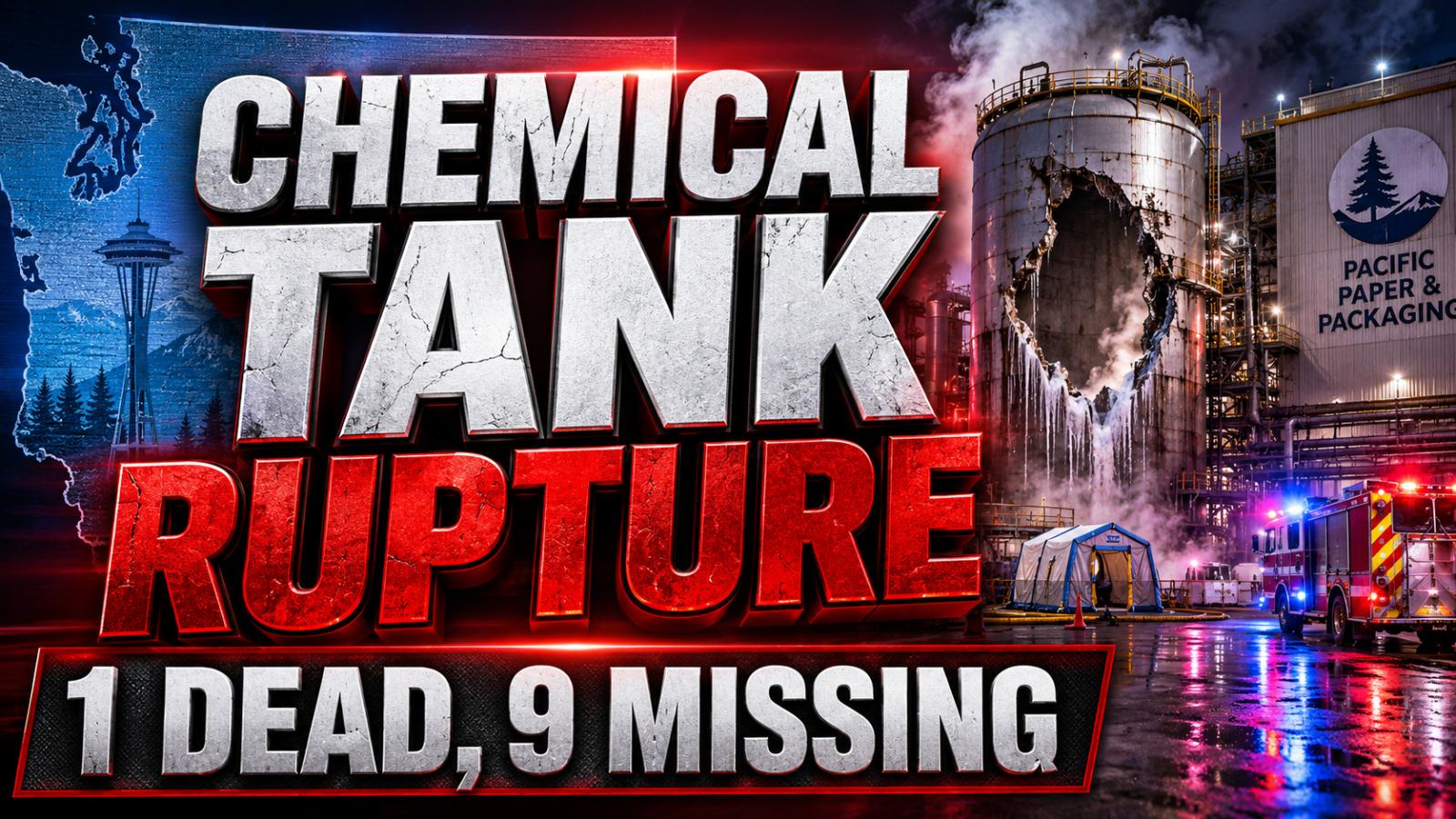
At least one person has died, nine people were injured and nine employees remain unaccounted for after a chemical tank ruptured at a paper and packaging facility in Longview, Washington. The incident occurred Tuesday morning at the Nippon Dynawave Packaging Co. facility, where a tank containing white liquor, a hazardous chemical mixture used in the paper-making process, failed. Fire officials said there was no immediate threat to the surrounding community, but residents were advised to avoid the area while emergency operations continued.
Recovery Efforts Remain Dangerous
Officials said the scene remains active and extremely complex because the damaged tank is unstable and hazardous material may still be present. The injured included eight employees and one firefighter, who was treated and released. Some victims suffered chemical burns or inhalation-related injuries, with conditions ranging from minor to critical. Families of the nine missing employees have been notified as responders work to stabilize the site before expanding recovery operations.
Tank Held Large Volume Of Material
Authorities initially described the tank as having a smaller capacity, but later said it contained approximately 900,000 gallons of white liquor before the rupture. Officials estimated that about 90,000 gallons of material may still remain inside the damaged structure. White liquor is commonly used in pulp and paper production and includes corrosive chemicals such as sodium hydroxide and sodium sulfide. The cause of the rupture has not yet been determined, and environmental crews are assessing the impact of the spill.
Industrial Safety Concerns Grow
The Longview accident follows other serious incidents at industrial facilities involving hazardous chemicals in recent months. The latest rupture is likely to increase scrutiny of chemical storage, worker safety and emergency response procedures at mills, plants and packaging facilities. For now, the priority remains rescue, recovery and stabilization at the site while officials determine how the tank failed and whether additional risks remain for workers or responders.