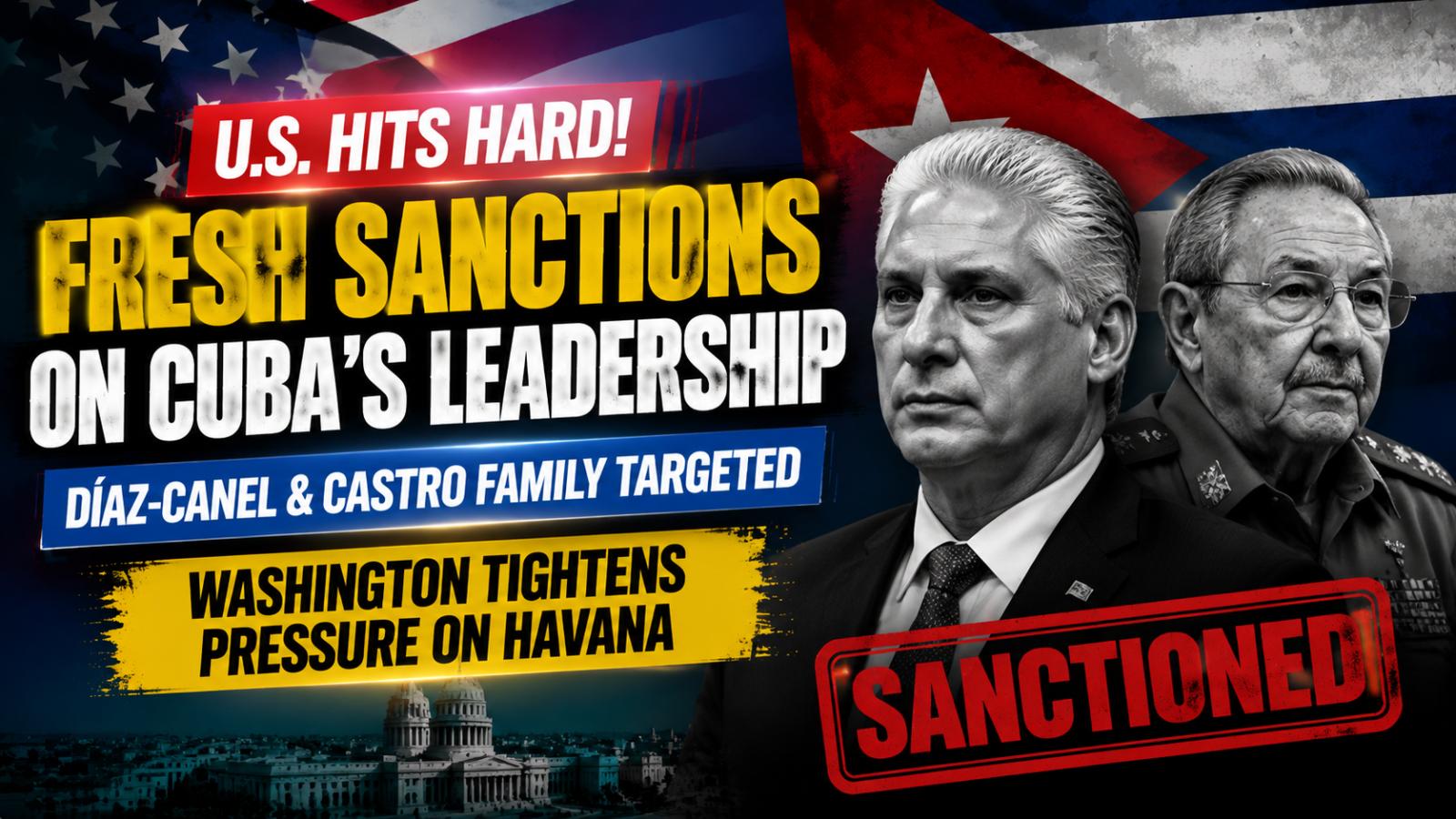
US Imposes Sanctions on Cuban President
The United States on Thursday (June 4) imposed fresh sanctions on Cuban President Miguel Díaz‑Canel and several close associates, including members of the Castro family. The actions, announced by the U.S. Treasury Department, are part of a broader effort by Washington to intensify pressure on Cuba’s communist leadership and state institutions, targeting both individuals and entities linked to the regime.
Expanded Target List Covers Key Figures and Institutions
Among those sanctioned are Díaz‑Canel’s wife Lis Cuesta Peraza, his stepson, and Alejandro Castro Espín, son of former Cuban leader Raúl Castro. In addition to individuals, the sanctions extend to Cuba’s Ministry of the Revolutionary Armed Forces and other agencies tied to governmental authority. These designations generally freeze any assets under U.S. jurisdiction and prohibit transactions by U.S. persons, complicating financial operations for those on the blacklist.
Part of Broader Pressure Campaign
The latest sanctions come amid continued tensions between Washington and Havana, following previous rounds of restrictions and criminal charges against Raúl Castro linked to a decades‑old incident. The Trump administration has maintained a strategy of maximum pressure, combining economic sanctions with visa restrictions and other measures aimed at curbing Cuba’s economic resilience. Analysts note that intensified sanctions have coincided with Cuba’s deepening economic and energy challenges, including limited foreign investment and disruptions in international payment systems.
The measures reflect Washington’s ongoing use of sanctions as a tool of foreign policy and highlight the widening scope of pressure on Cuba’s top leadership and key institutions. The move is likely to further strain U.S.–Cuba relations and may influence future diplomatic and economic engagement between the two countries.