- datacompass
- 30 Jun 2026
- #US News #ai #anthopic #openai #usa #security #technology #gpt #models #whitehouse #cia
US Eases Restrictions on Advanced AI Models
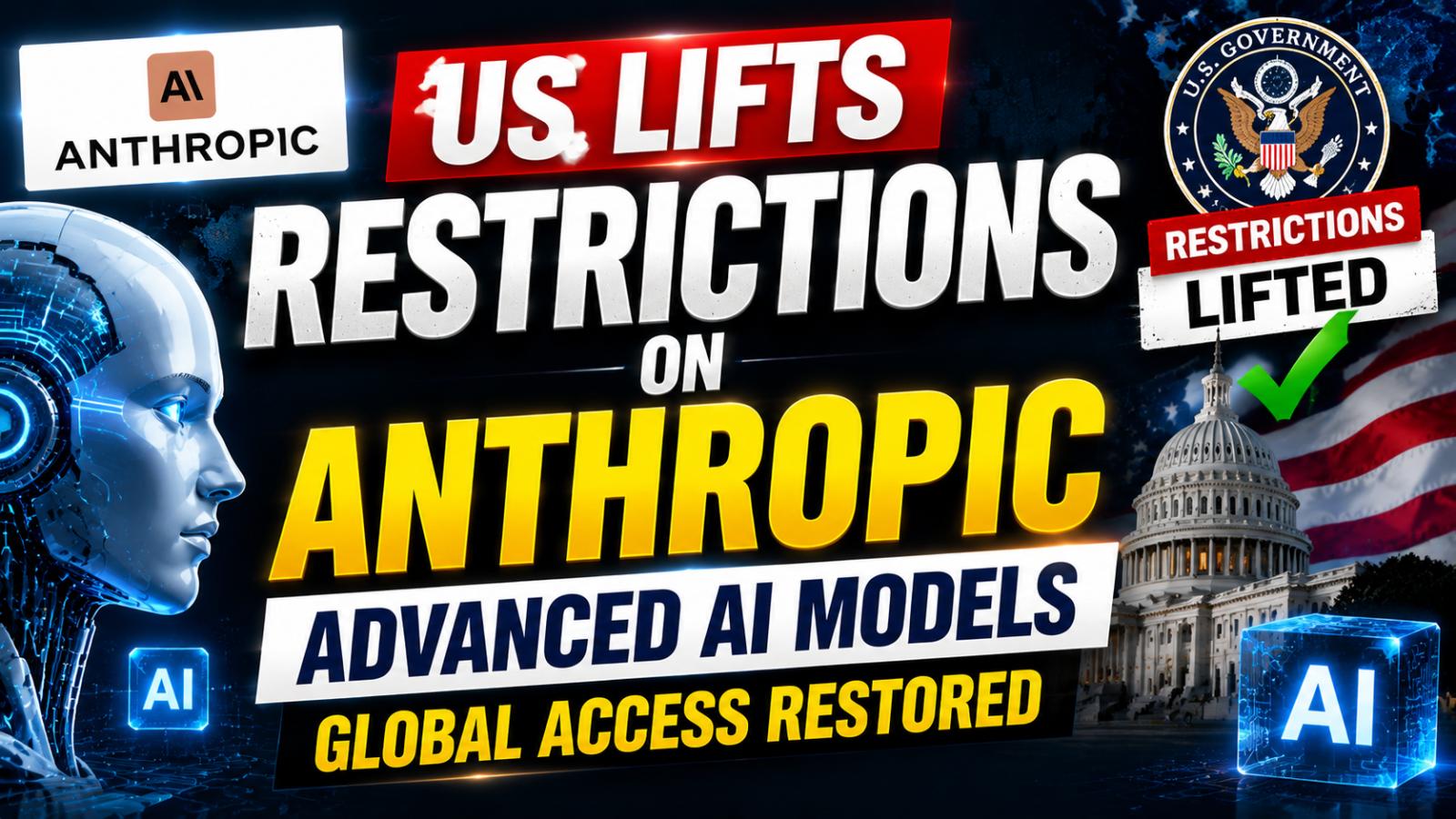
The United States government has lifted export restrictions on Anthropic’s most advanced artificial intelligence systems, reversing limitations imposed just weeks earlier over national security concerns. The decision allows the company to restore global access to its flagship AI models, Fable 5 and Mythos 5, marking a notable shift in regulatory posture toward frontier AI technologies.
Restoration of Global AI Access
Anthropic confirmed that international access to its models will begin resuming from Wednesday, following the removal of restrictions that had previously limited deployment. The earlier directive, issued on June 12, required the company to restrict availability amid concerns that highly capable AI systems could be misused by foreign military or intelligence actors.
With the updated guidance, Anthropic is preparing a phased restoration of access for users worldwide, signaling a partial easing of constraints that had temporarily slowed deployment of its most advanced systems.
Wider Industry Compliance and Regulatory Pressure
Other major AI developers have also adjusted their rollout strategies in response to government engagement. OpenAI has reportedly limited access to its latest model, GPT 5.6, to select approved partners following discussions with US authorities.
OpenAI CEO Sam Altman noted publicly that the current approval process is not ideal, highlighting ongoing tension between rapid AI innovation and regulatory oversight. The situation underscores the broader challenge facing AI companies as governments increasingly intervene in model deployment decisions.
National Security Concerns Driving Policy
US intelligence and security officials continue to raise concerns about the potential misuse of frontier AI systems. CIA Director John Ratcliffe recently compared the capabilities of advanced AI models to nuclear weapons, emphasizing their potential strategic impact in geopolitical and defense contexts.
The comparison reflects growing attention within US policy circles to the dual-use nature of artificial intelligence, particularly as models become more capable of reasoning, planning, and generating complex outputs.
Government Oversight and Industry Cooperation
The White House has introduced an executive framework encouraging voluntary national security reviews of advanced AI systems before public release. Officials say the initiative is designed to improve coordination between government agencies and private companies while avoiding overly restrictive regulatory barriers.
White House representatives have also acknowledged cooperation from technology firms in implementing safeguards, including model testing, access controls, and security evaluations. As AI capabilities continue to evolve rapidly, the balance between innovation and national security oversight is expected to remain a central policy challenge in the months ahead.