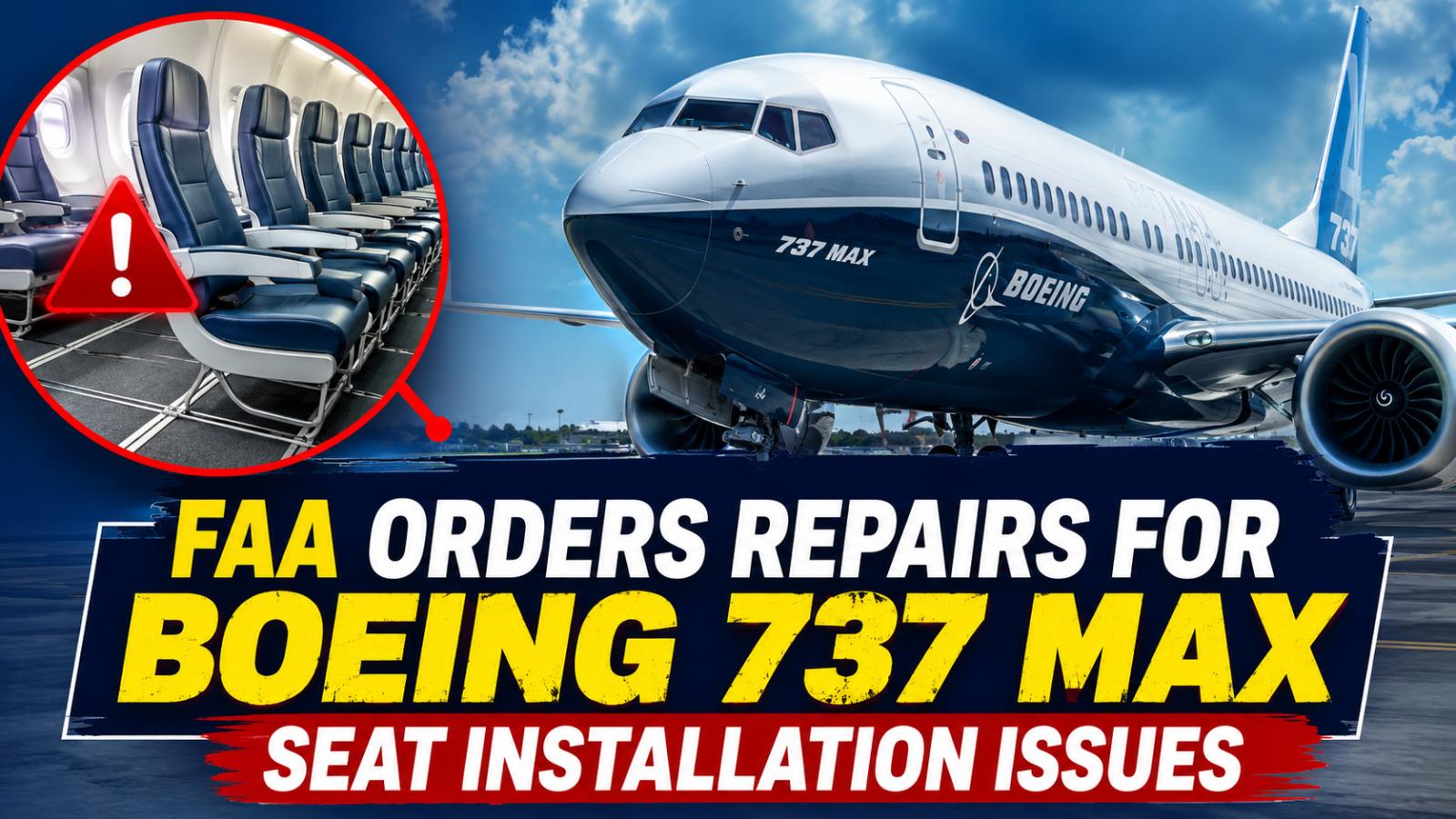
The US Federal Aviation Administration has proposed a new airworthiness directive after discovering that passenger seats on hundreds of Boeing 737 MAX aircraft were installed incorrectly. The directive affects 453 US-registered aircraft and warns that improperly secured seats could increase the risk of passenger injuries during an emergency landing. The announcement highlights another safety-focused review involving the Boeing 737 MAX fleet and underscores the FAA's continued oversight of commercial aviation safety.
Seat installation concerns
According to the FAA, the agency received a report indicating that certain passenger seat assemblies were not correctly installed in their seat tracks. These seats are mounted directly to floor tracks, and incorrect installation could reduce their ability to remain securely attached during severe landing conditions or other high-impact events.
Each affected aircraft may contain up to 69 passenger seat assemblies requiring inspection and possible correction. The FAA estimates that each repair would take approximately one work hour per seat assembly. Although the repair itself is relatively straightforward, the total maintenance effort could be significant for airlines operating multiple affected aircraft.
The proposed airworthiness directive does not identify a deadline for completing the repairs. Airlines will be expected to follow the FAA's final compliance requirements once the directive is formally adopted. As is common with FAA safety directives, operators outside the United States may also implement the recommended inspections through their own aviation regulators if applicable.
Passenger seats and airline response
The FAA emphasized that the concern is preventive and relates to passenger safety during emergency situations rather than routine flight operations. The agency noted that improperly installed seats could increase the likelihood of injuries if an aircraft experiences an emergency landing or another event involving sudden forces.
Boeing had not issued a public response at the time the FAA released the proposed directive. The manufacturer is expected to work with airlines and regulators as operators begin evaluating affected aircraft. Airlines have also not announced whether the inspections will impact scheduled flights, though maintenance can often be coordinated during existing service intervals.
Emergency landing safety
The latest directive demonstrates the FAA's ongoing focus on ensuring aircraft meet strict safety standards before potential issues develop into operational risks. Airworthiness directives are issued when regulators identify conditions that could affect the safe operation of an aircraft and require corrective action.
The FAA's proposal specifically addresses passenger seat installation rather than broader aircraft systems, but it serves as another reminder that even seemingly minor maintenance issues can have important safety implications. Aviation experts generally consider proper seat attachment essential because passenger seats are designed to absorb crash forces and help protect occupants during abnormal landings.
The information in this report is based on the FAA's proposed airworthiness directive. Additional guidance, including compliance timelines and any operational requirements, is expected once the agency completes the directive process. Airlines operating affected Boeing 737 MAX aircraft will then begin the required inspections and repairs in accordance with FAA regulations.