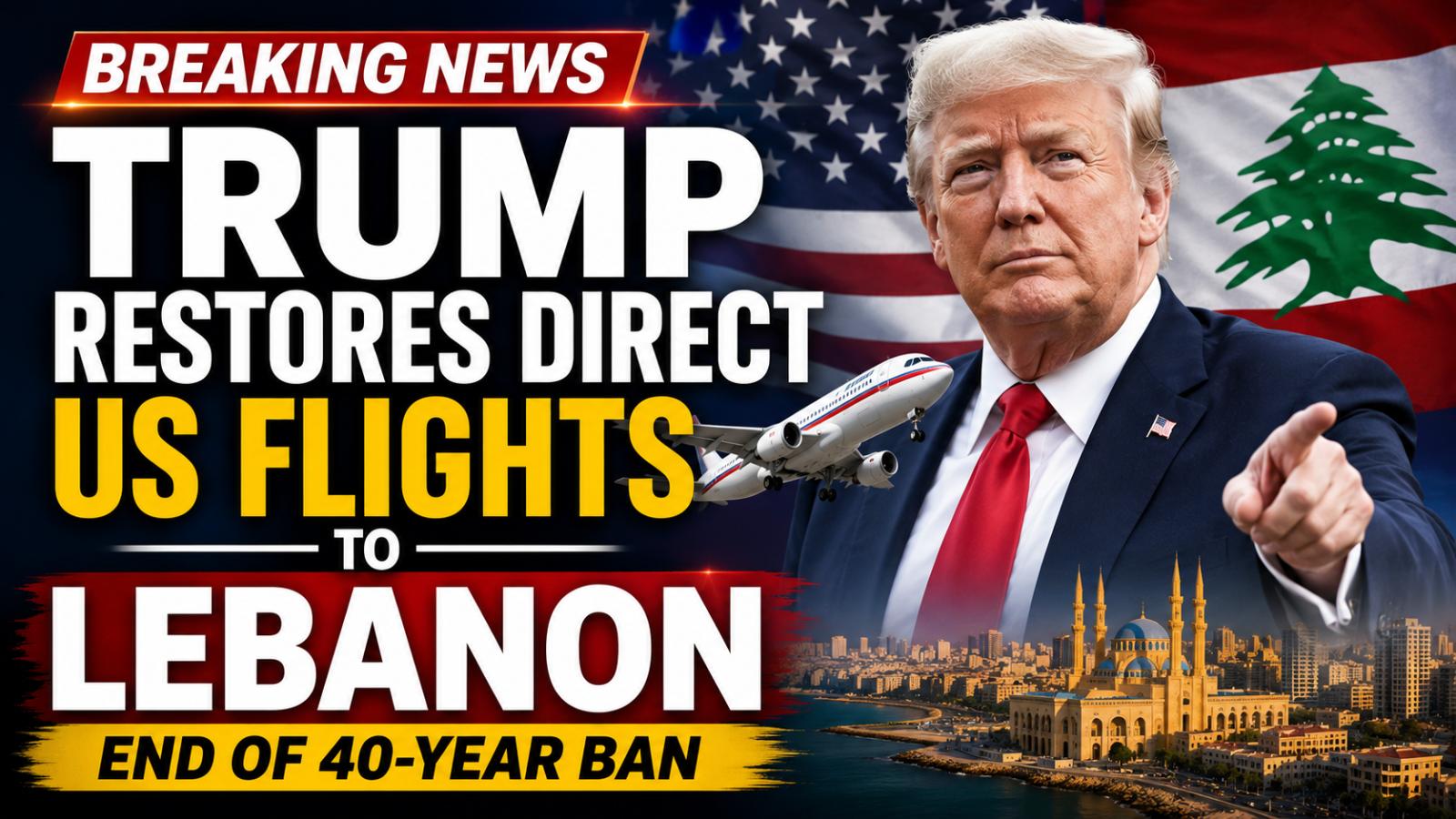
Trump restores direct US flights to Lebanon after more than four decades, marking a major policy shift during Lebanese President Joseph Aoun's White House visit. The announcement comes amid discussions on regional security, Israeli troop withdrawal, Hezbollah, and stronger US support for Lebanon's stability.
Trump Restores Direct US Flights to Lebanon After 40 Years
Joseph Aoun Visits the White House
US President Donald Trump announced that American airlines will once again be permitted to operate direct flights to Lebanon, ending a suspension that has remained in place since 1985. The decision was announced following Trump's meeting with Lebanese President Joseph Aoun at the White House, where both leaders discussed regional security, Lebanon's future stability and closer cooperation between Washington and Beirut.
The visit marked Aoun's first official trip to Washington since taking office and the first visit by a Lebanese president to the White House since 2009. During his four-day visit to the United States, Aoun is seeking greater American support for Lebanon's armed forces while urging continued diplomatic efforts to secure a complete Israeli withdrawal from southern Lebanon.
Direct US Lebanon Flights Return
Trump announced the policy change through his official social media account, stating that he had directed his administration to allow all US airline carriers to resume direct services to Lebanon.
He said the move would allow Americans to visit Lebanon more easily and described the country as a beautiful destination that had faced difficult circumstances for many years. Direct commercial flights between the United States and Lebanon were suspended in 1985 after the hijacking of TWA Flight 847 during the Reagan administration. The latest decision represents one of the most significant changes in US-Lebanon civil aviation policy in decades.
Although Trump announced the reopening of direct air travel, his administration did not immediately provide a timeline for when airlines would begin operating the new routes or which carriers would receive approval first.
Regional Security and Hezbollah Discussions
Beyond aviation, the meeting focused heavily on regional security. Washington continues to support diplomatic efforts aimed at preserving stability in Lebanon following months of conflict involving Israel and the Iran-backed Hezbollah group.
Lebanese officials are seeking increased international backing for the Lebanese Armed Forces so they can expand their role in southern Lebanon, particularly in areas where Hezbollah has maintained significant influence. Beirut also hopes negotiations with Washington will help encourage the withdrawal of Israeli troops still positioned in parts of southern Lebanon.
When asked whether Israeli forces would fully leave the region, Trump said they were already in the process of redeploying but did not provide additional details. He also acknowledged that Hezbollah remains a major challenge for Lebanon, suggesting he could personally engage with the group if requested by Aoun. Trump again mentioned the possibility of Syria taking action against Hezbollah but stopped short of announcing any specific policy.
Trump Signals Continued US Support
During their joint appearance, Aoun praised Trump's diplomatic efforts, describing his vision as one focused on peace. Trump responded with humor while reaffirming that the United States wants to help Lebanon recover from years of political instability, economic hardship and regional conflict.
Despite the positive tone, neither leader announced a new military assistance package or broader economic initiative. However, the reopening of direct flights is expected to strengthen business, tourism and family travel between the two countries while improving connectivity for the large Lebanese-American community.
According to statements released by the White House and public remarks made during the meeting, discussions centered on security cooperation, regional diplomacy and long-term stability. The announcement also reflects Washington's continued engagement in Middle East diplomacy as tensions remain elevated across the region.
The restoration of direct air links is likely to be welcomed by travelers and businesses, but broader political issues involving Hezbollah, Israeli troop deployments and Lebanon's economic recovery remain unresolved. The success of future diplomatic efforts will largely depend on continued cooperation between regional governments and international partners.
Information in this article is based on official public statements made by the White House, President Donald Trump and Lebanese President Joseph Aoun during their meeting in Washington.