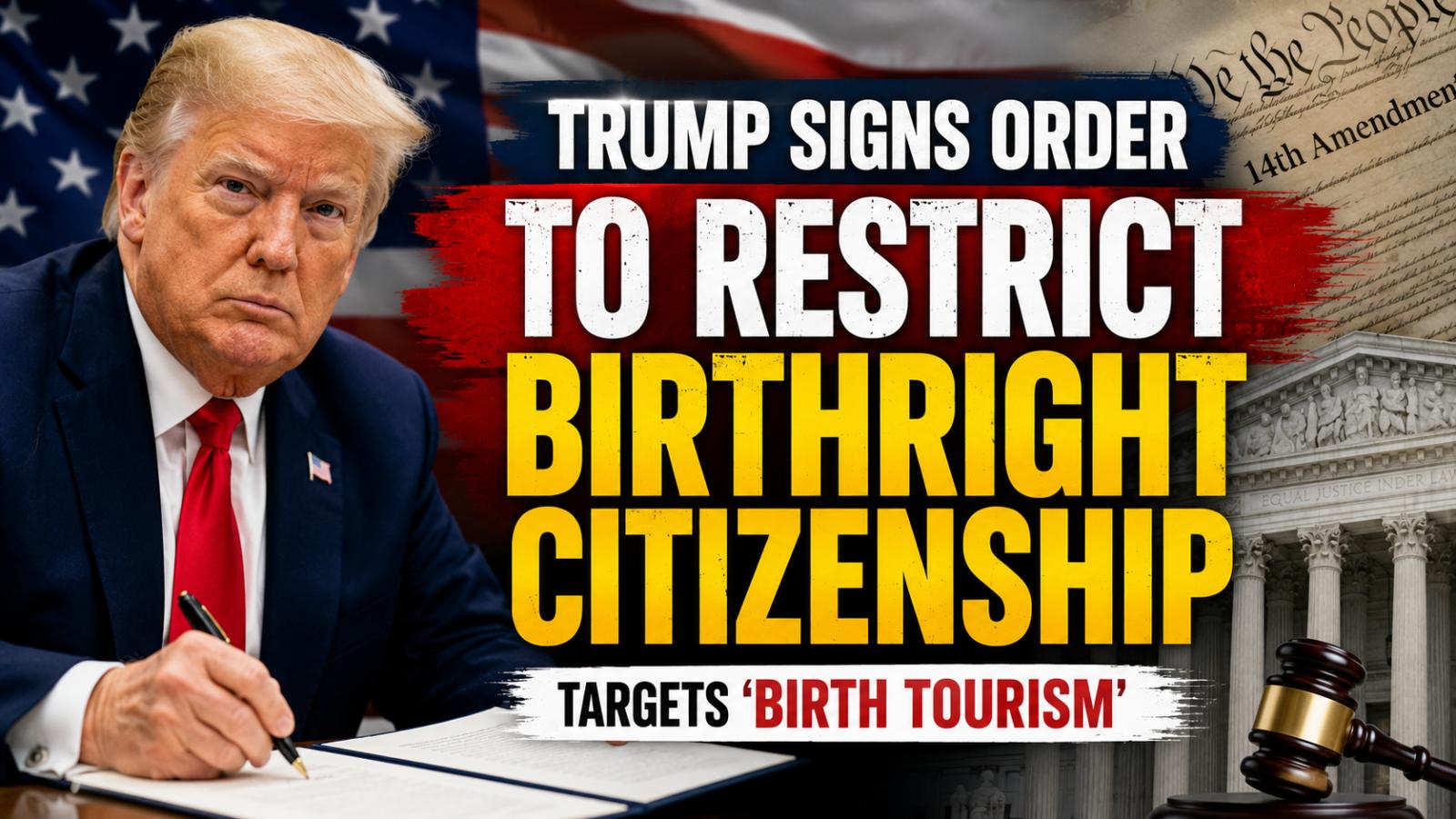
US President Donald Trump has launched another attempt to narrow birthright citizenship, signing new executive orders that target birth tourism and several categories of foreign nationals. The move comes after the Supreme Court rejected his broader effort to deny automatic citizenship to children born to undocumented migrants and temporary residents.
Trump birthright order targets birth tourism
Trump signed the new measures at the White House on Thursday, August 6, arguing that the current system has been exploited by foreign nationals who travel to the United States primarily to give birth.
“They've taken birthright citizenship, and they've made a joke out of it,” Trump told reporters, adding that his administration was making changes because he considered the existing system unfair.
White House Deputy Chief of Staff Stephen Miller said one of the orders targets birth tourism, where foreign nationals enter the country with the primary purpose of giving birth so their child obtains US citizenship.
The US already has measures aimed at birth tourism. State Department rules introduced in 2020 allow consular officers to deny certain visitor visas when they determine that an applicant’s primary purpose is giving birth in the United States.
Citizenship rules expand to other foreign nationals
The administration is also attempting to broaden categories of people whose US-born children would not receive automatic citizenship.
Miller said the measures address children of people classified as “alien enemies,” including members of designated foreign terrorist organisations, as well as certain people working for foreign governments.
Children born in the United States to accredited foreign diplomats already fall outside the usual birthright citizenship rule because their parents are not considered subject to US jurisdiction in the same way as most people living in the country.
The new orders attempt to extend that reasoning further. Their scope and constitutionality are likely to face close legal scrutiny because the Supreme Court has already rejected the administration’s broader interpretation of the Citizenship Clause.
Supreme Court upheld birthright citizenship
The legal landscape changed significantly on June 30 when the Supreme Court ruled in Trump v. Barbara that children born in the United States to parents who are unlawfully or temporarily present are “subject to the jurisdiction” of the country and therefore citizens at birth under the 14th Amendment.
The ruling directly rejected the administration’s attempt to exclude those children from automatic citizenship.
Trump described the decision as “very unfortunate,” while his administration continued looking for narrower ways to restrict eligibility without directly repeating the policy struck down by the court.
The Citizenship Clause of the 14th Amendment states that people born or naturalised in the United States and subject to its jurisdiction are US citizens.
New Trump orders likely to face legal challenges
The latest Trump birthright citizenship order is therefore likely to open another major legal battle over how far presidential authority can extend when defining exceptions to the constitutional guarantee.
The key question is no longer simply whether children of undocumented migrants or temporary visa holders receive citizenship. The Supreme Court has answered that question in their favour. The new dispute concerns whether the administration can lawfully expand historically narrow exceptions to additional categories of foreign nationals.
Immigration and civil rights groups are expected to challenge the measures, while the administration argues that it is acting within the constitutional framework established by the Supreme Court.
For immigrant families, tourists and temporary visa holders, the practical impact will depend on how federal agencies implement the orders and how quickly courts respond to expected challenges. The latest action ensures that birthright citizenship will remain one of the most closely watched immigration and constitutional issues of Trump’s second term.