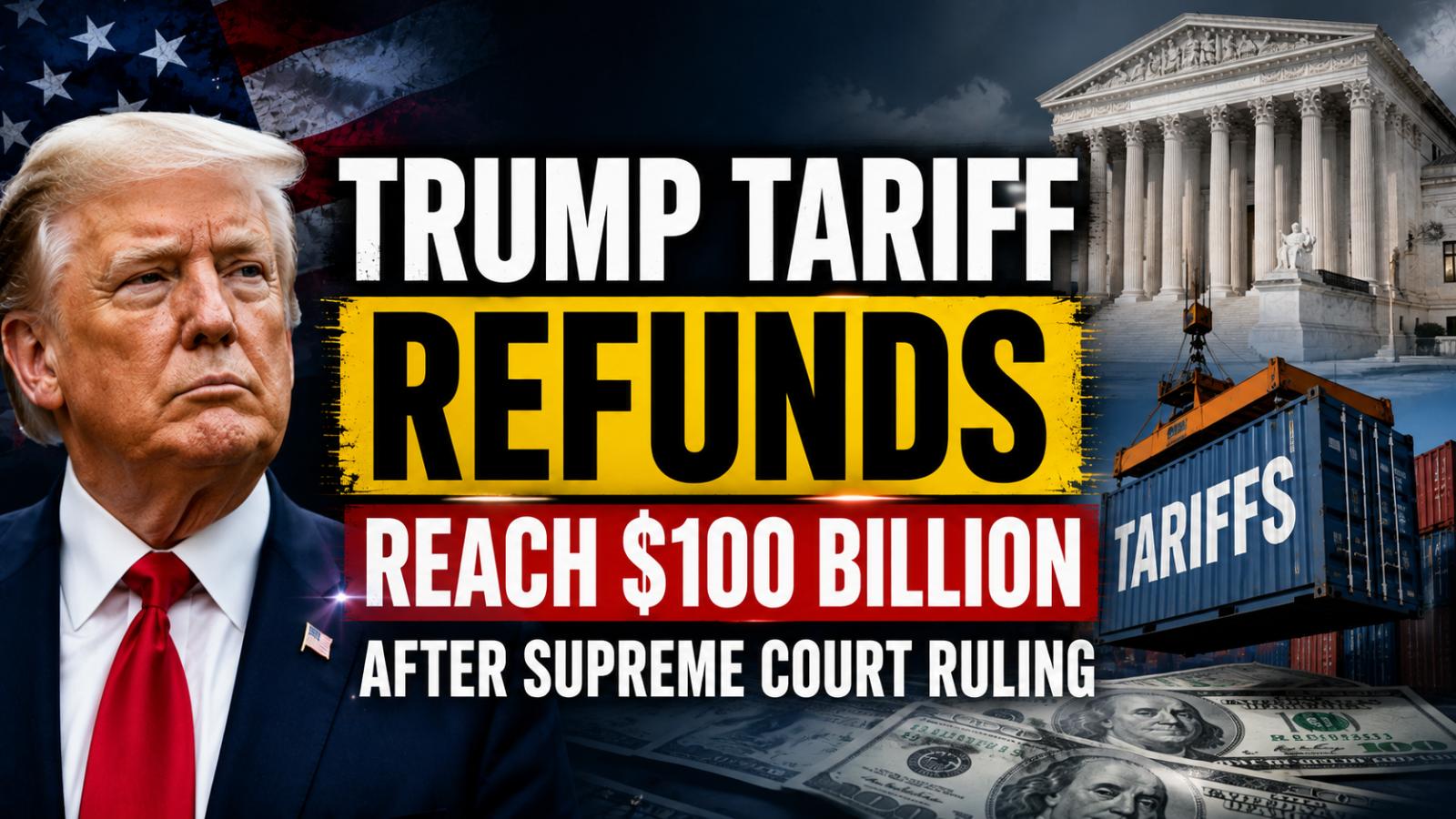
Trump tariff refunds have reached about $100 billion after the Supreme Court rejected the president’s use of emergency powers to impose sweeping import duties. The repayments are helping importers recover IEEPA charges while opening a new legal battle over replacement tariffs.
Trump Tariff Refunds Reach $100 Billion
The Trump administration has processed approximately $100 billion in refunds for importers that paid tariffs imposed under the International Emergency Economic Powers Act, according to a federal court filing submitted on August 4, 2026.
The amount represents about 60% of the roughly $166 billion collected through the invalidated duties. As of July 31, US Customs and Border Protection had accepted approximately $128.68 billion in potential and certified refund claims for processing. About $100 billion had been approved and forwarded to the Treasury Department for payment, while the remaining claims were still moving through the system.
CBP created its Consolidated Administration and Processing of Entries portal after the courts ordered the agency to recalculate qualifying imports without the IEEPA duties. The system allows importers of record to submit declarations, monitor claims and receive approved payments through the Treasury.
Supreme Court Rejects IEEPA Tariff Authority
The Supreme Court ruled on February 20, 2026, that IEEPA does not authorize a president to impose tariffs. The decision dealt a major setback to Donald Trump’s trade strategy, which had used declared national emergencies to place broad duties on imports from numerous trading partners.
The Court did not rule that presidents lack all power to regulate imports during emergencies. It concluded that the language of IEEPA did not give the executive branch the specific authority to levy tariffs, a power closely tied to Congress’s constitutional role over taxation and foreign commerce.
The ruling created a legal obligation to repay affected businesses and importers in the United States and Puerto Rico. The Bureau of Economic Analysis estimated the principal refund liability at approximately $166 billion, excluding interest.
Sector-Specific Tariffs Remain in Force
The decision did not eliminate every tariff introduced or maintained by the Trump administration. Duties imposed through separate laws, including Section 232 national-security tariffs and Section 301 trade-remedy measures, were not directly invalidated by the IEEPA judgment.
Following the ruling, Treasury Secretary Scott Bessent said the administration would rely on Sections 122, 232 and 301 to replace revenue previously generated by the emergency tariffs. Those laws contain different procedures and legal standards, making them separate from the authority rejected by the Supreme Court.
Importers must therefore examine each shipment carefully. A company may qualify for a refund on an IEEPA duty while still owing another tariff imposed on the same product under a different statute.
New Trump Tariffs Face Legal Challenges
The administration has since announced replacement trade measures through alternative legal mechanisms. Those actions have already produced new lawsuits questioning whether the government is using other statutes to recreate the broad tariff programme struck down by the Court.
The disputes will test how far presidents can go when imposing wide-ranging trade restrictions without new legislation from Congress. They could also create additional uncertainty for companies deciding where to source goods, how to price imported products and whether to challenge future customs payments.
The refunds provide immediate financial relief to eligible importers, but they do not automatically reimburse consumers who paid higher retail prices. Tariffs are collected from importing businesses, and companies decide whether to absorb those costs or pass them through the supply chain.
The $100 billion repayment therefore marks more than a large administrative exercise. It demonstrates the financial consequences of imposing nationwide trade duties under authority that the courts later reject—and confirms that the legal fight over presidential tariff power is far from over.