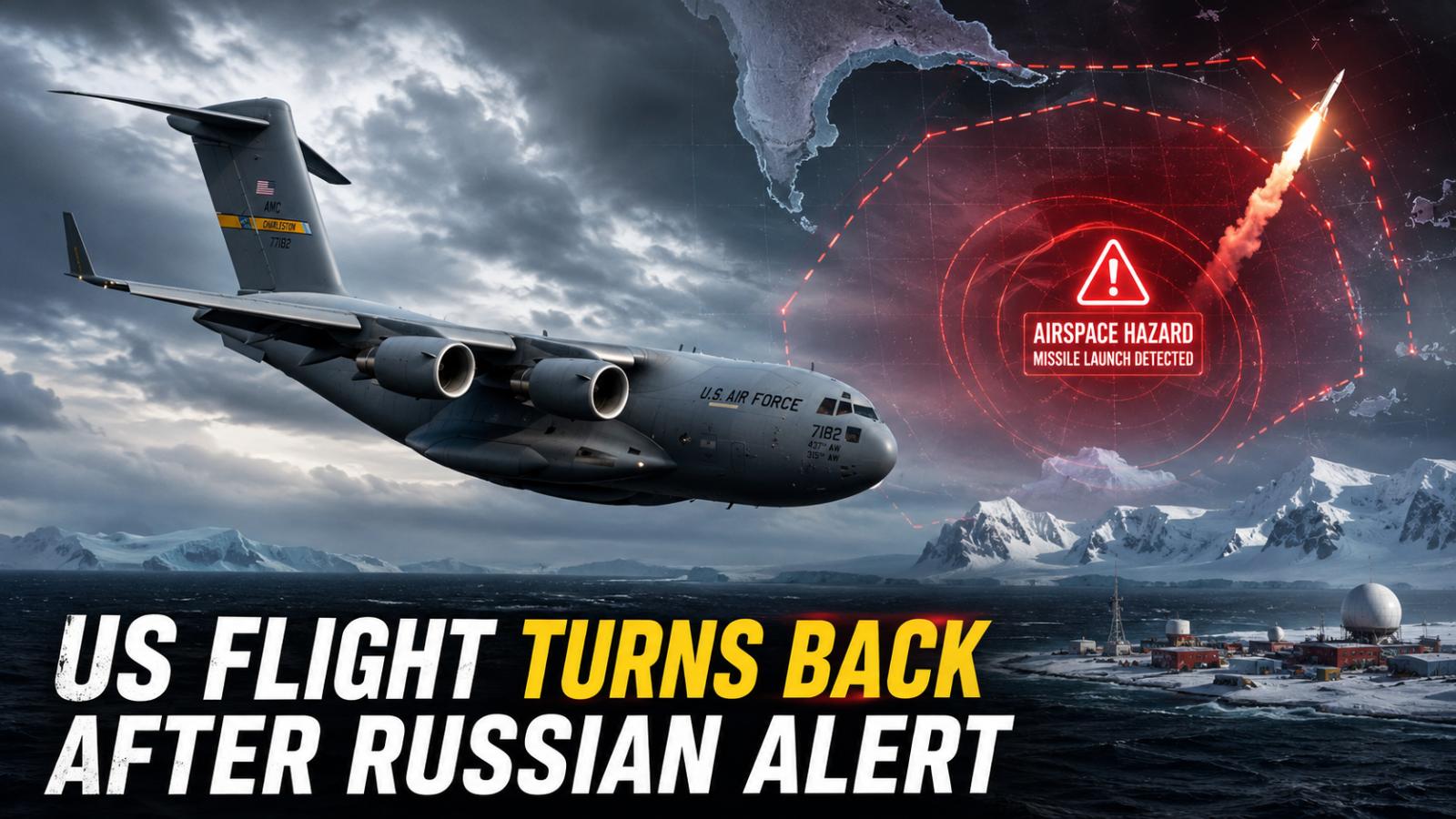
A US Antarctic C17 mission turned back to New Zealand after a Russia alert prompted aviation authorities to warn of potentially hazardous activity over the Southern Ocean. The C17 return disrupted a WINFLY mission to McMurdo Station while New Zealand established a temporary NZ danger area.
Russia alert triggers C-17 return
A US Air Force C-17 Globemaster III flying from Christchurch to Antarctica returned to New Zealand on Tuesday, August 18, after aviation authorities issued a warning linked to a planned Russian missile launch. The aircraft, operating under the call sign ICE28, departed Christchurch at about 9 a.m. local time before reversing course and landing back at the airport at 11:29 a.m.
New Zealand's Civil Aviation Authority said Russia's State Air Traffic Management Corporation had notified it about the planned launch and a potential hazard to international airspace within the Auckland Oceanic Flight Information Region. That information led authorities to issue a Notice to Airmen, or NOTAM, warning aircraft operators of the risk.
NZ danger area issued over oceanic airspace
The CAA said it established a temporary danger area so pilots and operators could factor the reported activity into their flight planning. Importantly, the notice did not automatically close the airspace or prohibit aircraft from entering it. Operators remained responsible for deciding whether a flight could safely continue.
New Zealand manages a huge expanse of oceanic airspace extending far into the South Pacific and toward Antarctica. Much of that region lies over international waters, limiting New Zealand's ability to control activities occurring there even though it provides air traffic services within the flight information region.
The widely reported 30-million-square-kilometre figure should be treated carefully. That number is commonly associated with New Zealand's broader search-and-rescue region, which extends from the Tasman Sea toward South America and from Antarctica almost to the Equator. It should not automatically be interpreted as the precise size of the temporary missile danger area.
WINFLY mission to McMurdo interrupted
ICE28 was operating as part of the annual Winter Fly-In, commonly known as WINFLY, which supports the transition from the Antarctic winter period toward the busier research season. Flights from Christchurch deliver personnel, equipment and supplies to McMurdo Station and support wider Antarctic operations, including nearby New Zealand activities.
Christchurch serves as a major international gateway to Antarctica. C-17 Globemaster aircraft are among the largest aircraft operating between the city and the ice, carrying heavy cargo and large groups of passengers on missions supporting Antarctic science and logistics.
McMurdo flight highlights unusual aviation risk
The incident did not involve an attack on the C-17 or evidence that the aircraft itself had been specifically targeted. Instead, the crew appears to have made a precautionary operational decision after receiving information about a hazard potentially affecting its route.
That distinction is important. Missile and space-launch notices can create temporary aviation hazards because falling stages, debris or other launch-related activity may intersect with international flight corridors. NOTAMs give operators time to reroute or delay flights rather than taking unnecessary risks.
For Antarctic aviation, where routes are already long and operating conditions can be demanding, the event shows how activity thousands of kilometres from a destination can disrupt tightly planned logistics. The immediate priority was safety, and ICE28 returned to Christchurch without continuing toward McMurdo.