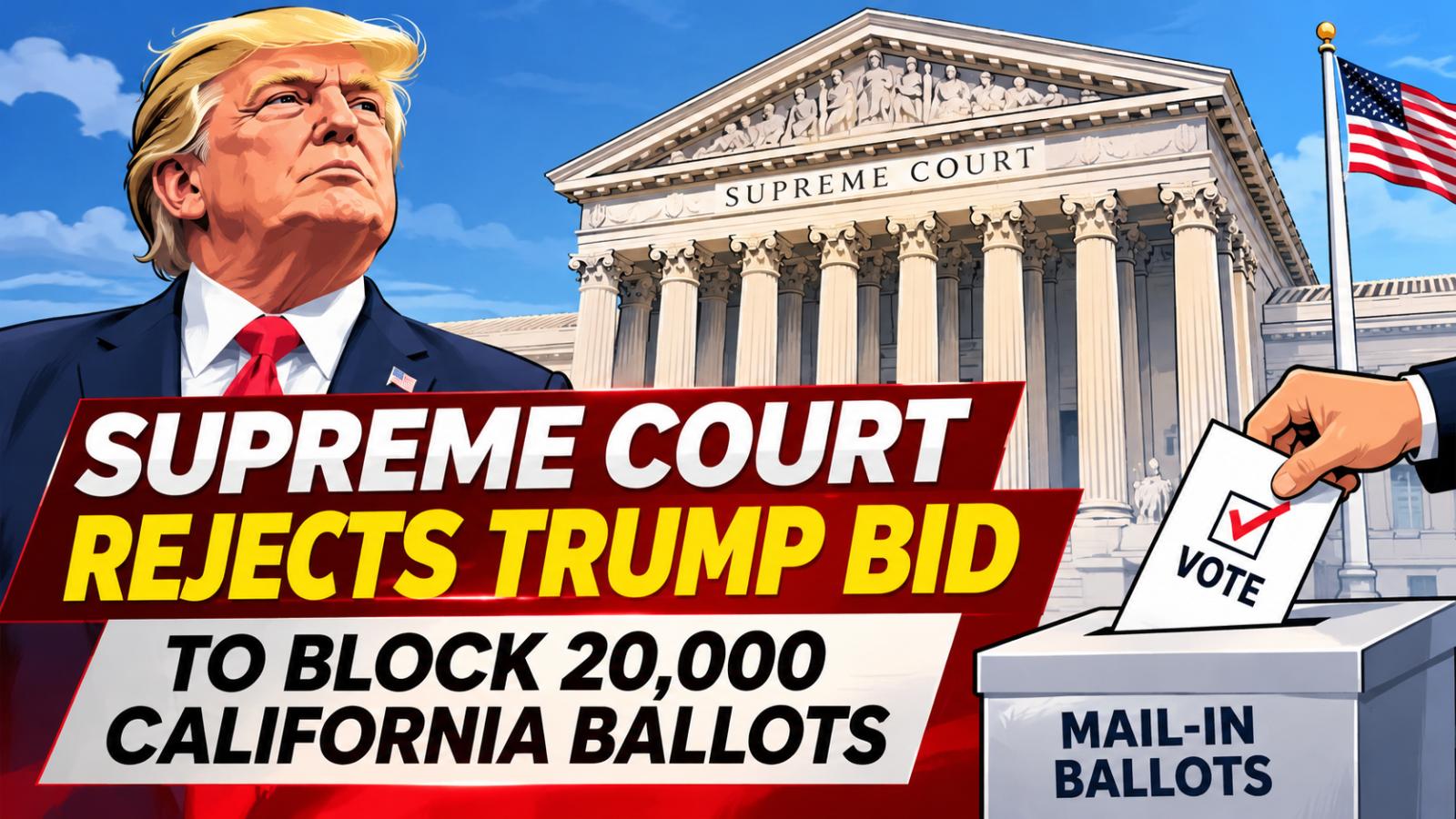
The US Supreme Court rejected Trump's emergency request to block California mail-in ballots linked to over 20,000 voters whose citizenship was questioned. The ruling allows ballot counting to proceed ahead of the November 3, 2026, midterm elections.
Supreme Court Rejects Trump Bid to Block 20,000 California Ballots
The US Supreme Court rejected President Donald Trump's emergency attempt to stop California from counting mail-in ballots linked to more than 20,000 voters whose citizenship federal officials questioned. The November 2 decision allows ballot counting to proceed ahead of the 2026 midterm elections.
Supreme Court California Ballot Ruling
On November 2, 2026, the Supreme Court denied the Justice Department's request to force California election officials to separate certain mail-in ballots and withhold them from the count until voters' citizenship could be verified.
The justices issued a brief order without explaining their reasoning or recording a public dissent. The decision leaves California's existing election procedures in place ahead of the November 3 vote.
Trump Administration Emergency Appeal
Federal lawyers argued that mixing disputed ballots with other votes could make them impossible to identify and remove later. They requested immediate restrictions while the legal challenge continued.
The Justice Department filed its lawsuit in October after federal officials supplied a list identifying more than 20,000 people they suspected were noncitizens. However, the allegations did not establish that those individuals had illegally voted.
California Voter Citizenship Dispute
California officials challenged the reliability of the federal list, warning that blocking ballots without sufficient evidence could prevent eligible citizens from voting.
California Attorney General Rob Bonta welcomed the ruling and defended the state's election safeguards. Officials maintain that voter eligibility must be determined through reliable evidence and established legal procedures, rather than unverified allegations.
Ninth Circuit Election Ruling
The Supreme Court decision followed several legal setbacks for the Trump administration.
A federal district judge rejected the requested restrictions, while the Ninth US Circuit Court of Appeals denied another emergency request on October 30.
The appeals court expressed concern that last-minute changes could disrupt election administration and risk excluding eligible voters. The dispute also raised questions about federal intervention in state-managed elections.
2026 US Midterm Election Implications
The ruling came one day before the November 3 midterm elections, when Americans would determine control of Congress.
California holds more US House seats than any other state, making its election procedures politically significant.
The immediate outcome allows California to continue counting ballots without the restrictions requested by federal officials. However, questions about individual voter eligibility remain subject to evidence and lawful verification.
The case highlights the continuing debate over election integrity, federal authority and protecting eligible Americans' voting rights.