Trump OPT Proposal Could Cost Indian Students $100,000
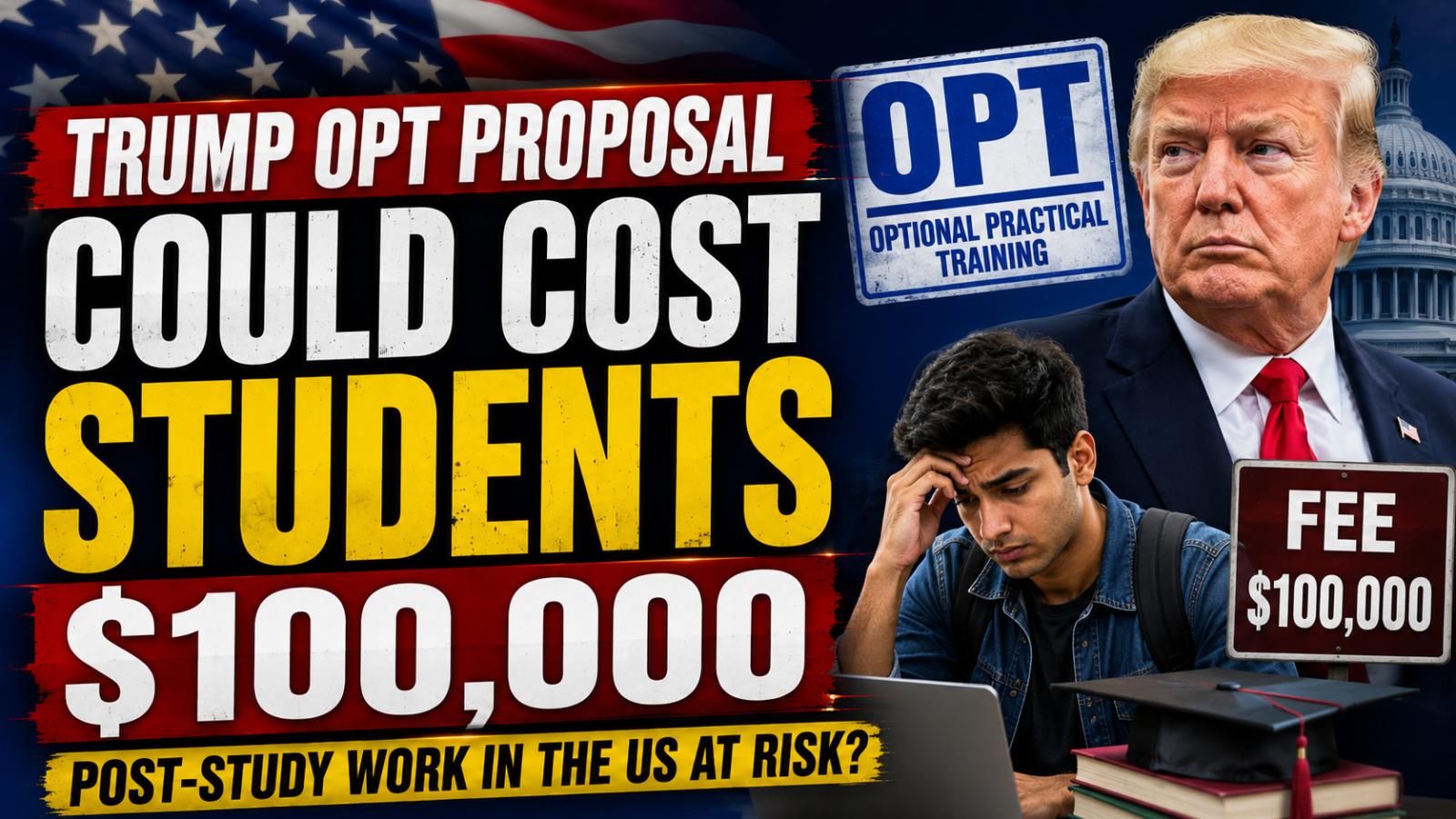
The Trump OPT proposal could dramatically increase the cost of studying in the United States by introducing a reported $100,000 fee for post-study work authorization. While the proposal has not been officially announced, it has raised concerns among Indian students, universities and employers because of the OPT programme's importance.
US OPT Programme Faces Major Proposed Change
The Trump administration is reportedly considering a proposal that would require international graduates to pay up to $100,000 for access to the Optional Practical Training (OPT) programme after completing their studies in the United States. According to a report by The Wall Street Journal, the administration is evaluating the idea as part of a broader review of immigration and employment policies.
No official announcement has been made by the White House or the US Department of Homeland Security, and the proposal remains under discussion. Even so, the reported plan has already generated widespread concern because OPT serves as the primary pathway for many international students to gain professional experience after graduation.
If implemented, the proposal would fundamentally change the financial equation for students planning to study in America. Universities, employers and immigration experts warn that such a significant increase in post-study costs could reduce the country's attractiveness as a destination for global talent.
Indian Students in US Could Be Most Affected
Indian students would likely face the biggest impact because they represent the largest international student population in the United States. According to the Institute of International Education's Open Doors 2025 Report, India sent 363,019 students to the US during the 2024-25 academic year, overtaking China for the first time.
The report also shows that nearly 39 percent of Indian students were participating in the Optional Practical Training programme. That means approximately 140,000 Indian graduates were using OPT to gain work experience after completing their degrees.
For many Indian families, studying in the US already requires a substantial financial commitment covering tuition fees, accommodation, insurance and living expenses. An additional $100,000 fee—roughly ₹95 lakh at current exchange rates—could place post-study employment beyond the reach of many students.
The change may also encourage prospective students to consider destinations such as Canada, Australia, the United Kingdom or Germany, where post-study work pathways generally involve lower costs and fewer financial barriers.
F-1 Visa Work Permit and H-1B Pathway
The Optional Practical Training programme allows students on F-1 visas to work in jobs related to their academic field after graduation. Most graduates qualify for up to 12 months of employment, while students completing STEM degrees may receive a 24-month extension, allowing a total of three years of work authorization.
For many international graduates, OPT is much more than temporary employment. It provides valuable US work experience and gives employers time to sponsor skilled workers through the H-1B visa programme.
Official figures cited in the Wall Street Journal indicate that around 419,000 international graduates were working through OPT during 2024. Any significant increase in programme costs could reduce participation and affect employers that rely on highly skilled international graduates.
US Universities and Employers Could Feel the Impact
The proposed fee would not affect students alone. American universities depend heavily on international students, many of whom pay full tuition without receiving government financial assistance. A decline in overseas enrolment could create financial pressure for institutions that rely on international education revenue.
Technology companies, engineering firms, healthcare organizations and financial institutions also recruit thousands of graduates through OPT before sponsoring H-1B visas. A smaller pool of international talent could make recruitment more difficult, particularly in sectors already facing skilled labour shortages.
At present, the proposal remains under consideration and has not become official US policy. Reports suggest the administration is still evaluating its legal and economic implications, especially after previous efforts to introduce similar immigration-related fees faced legal challenges.
Students planning to pursue higher education in the United States should therefore continue monitoring official announcements rather than making decisions based solely on media reports. If adopted, however, the proposal could reshape the long-term value of a US degree for thousands of international students, particularly those from India.