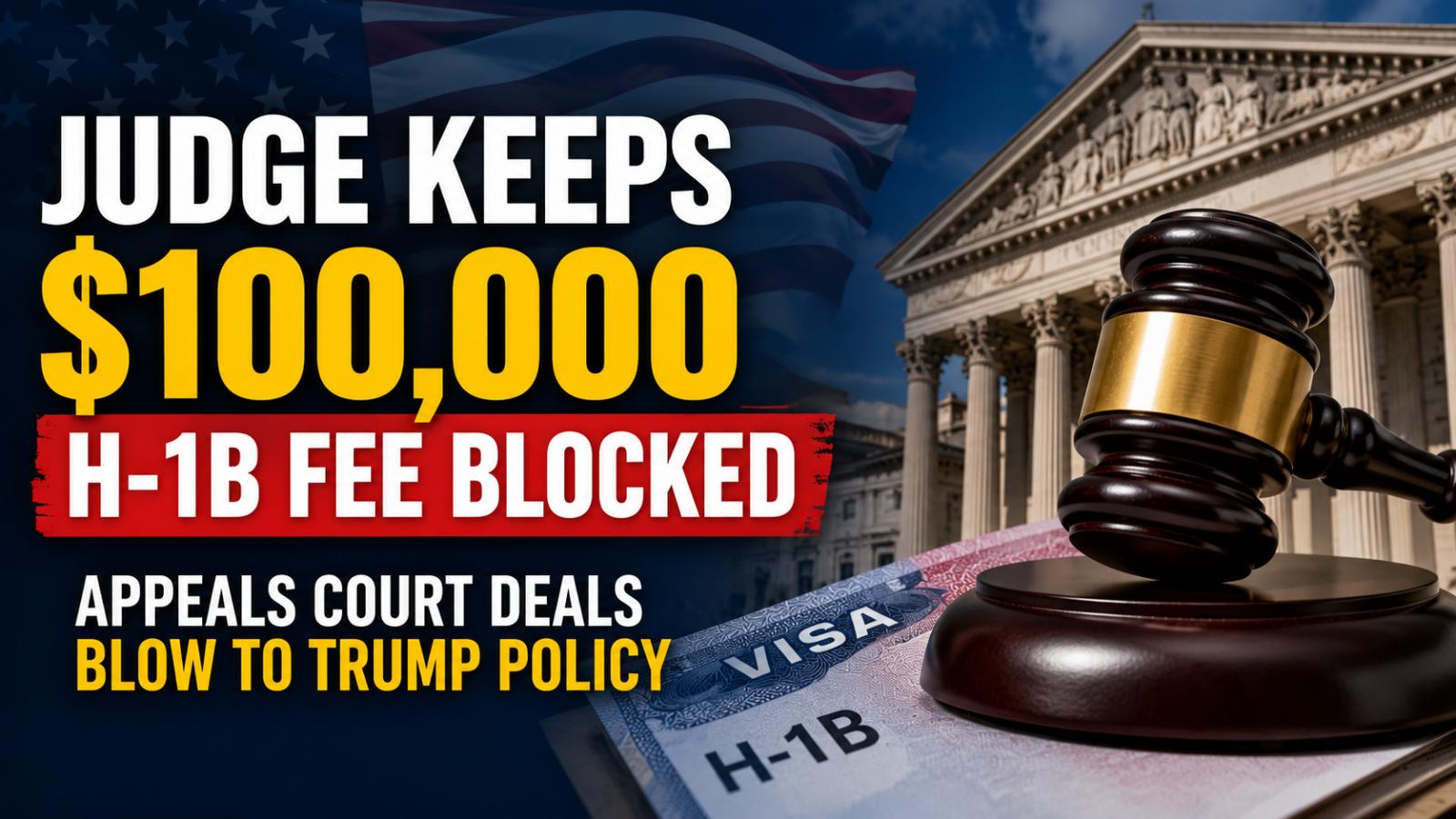
A US federal appeals court has kept the Trump administration’s $100,000 charge on new H-1B petitions blocked, preserving a lower-court injunction while the government continues its appeal. The Trump H1B fee ruling affects employers, skilled workers and applicants following the wider immigration dispute.
H-1B Fee Block Remains in Place
On Friday, July 24, the Boston-based First US Circuit Court of Appeals declined to pause a June 8 order barring federal agencies from enforcing the fee. The three-judge panel found that the administration had not shown a strong likelihood of succeeding on its claim that the president had legal authority to impose the payment.
The decision does not end the case. It leaves the federal injunction in place while the court reviews the broader appeal. Employers preparing new petitions therefore do not face an immediate return of the $100,000 charge.
Appeals Court Reviews Presidential Authority
President Donald Trump introduced the payment through a September 19, 2025 proclamation covering certain new H-1B petitions for workers outside the United States. The White House said the measure aimed to curb misuse of the programme and protect American jobs. Official guidance stated that qualifying petitions filed after September 21, 2025 had to include the payment.
A coalition of 20 state attorneys general challenged the policy, arguing that it functioned as a tax created without congressional approval. California Attorney General Rob Bonta’s office said the charge would harm states and employers that depend on skilled foreign professionals.
On June 8, US District Judge Leo Sorokin ruled that the executive branch had exceeded its authority by imposing a tax without clear approval from Congress. The ruling prevented the State Department and US Citizenship and Immigration Services from continuing to enforce the fee.
Visa Fee Lawsuit Continues
The administration has defended the policy as a lawful immigration restriction rather than an unauthorised tax. It argued that federal immigration law allows the president to restrict the entry of foreign nationals when their admission is considered harmful to US interests.
The appeals panel, however, concluded that the government had not met the legal standard needed to suspend the lower-court ruling. The visa fee lawsuit remains active, and a later decision could address the full merits of the administration’s arguments.
The White House had not issued an immediate public response to the latest appeals court order at the time of reporting. The ruling represents a temporary legal setback rather than a final resolution of the policy dispute.
Skilled Workers and Employers Watch Next Steps
The H-1B programme allows US employers to sponsor foreign professionals for specialty occupations. USCIS maintains a regular annual cap of 65,000 visas, with another 20,000 places available under the US advanced-degree exemption.
Technology companies are major users of the programme, but healthcare organisations, universities, engineering firms and research institutions also depend on skilled H-1B workers. The states challenging the fee said the unusually high charge could restrict recruitment and worsen labour shortages in essential sectors.
The latest decision removes the immediate risk of the $100,000 fee returning while the appeal proceeds. Employers and visa applicants should continue checking official USCIS guidance because filing requirements and future court orders may change.