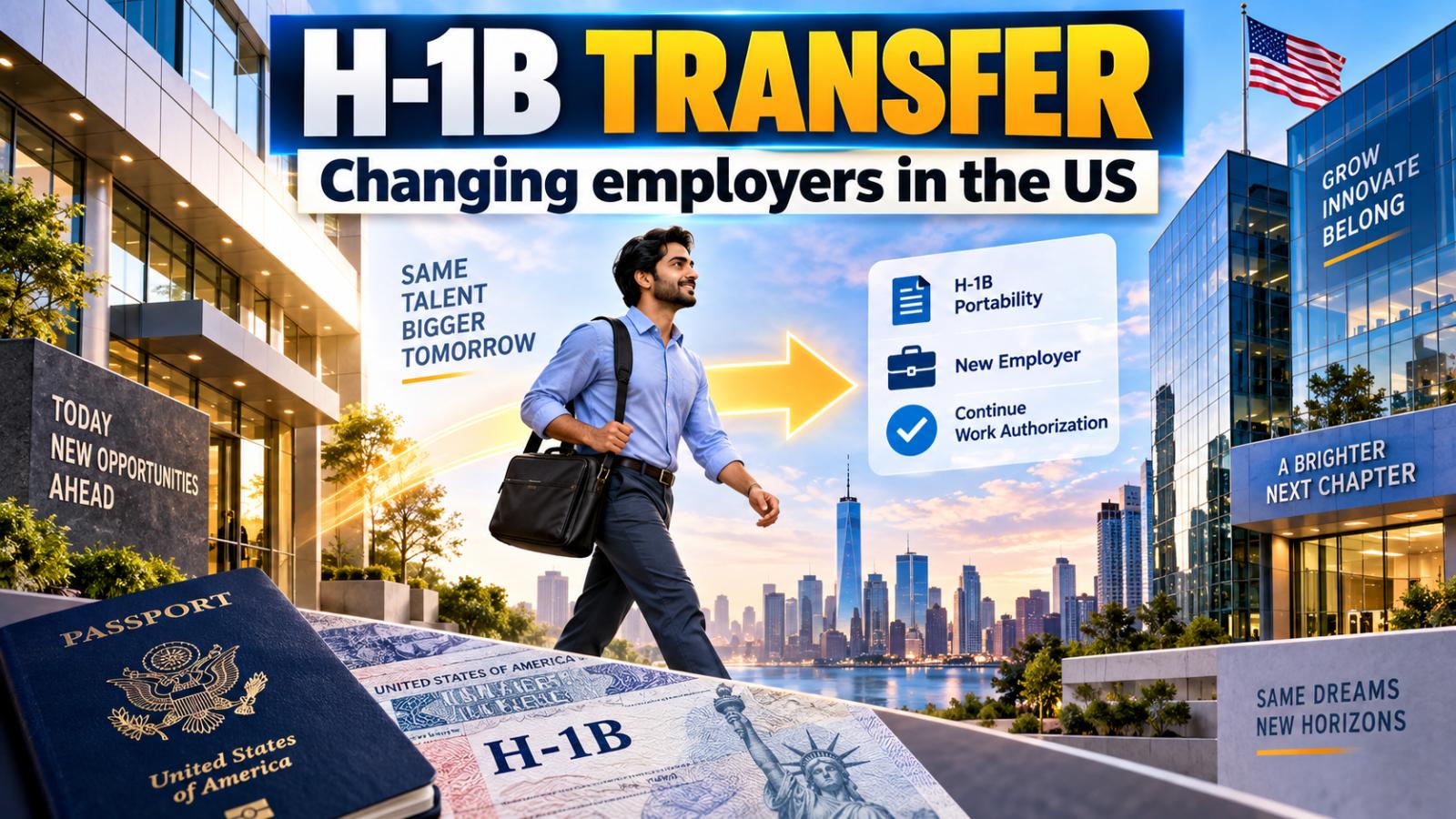
An H-1B worker can change US employers when the new company follows the required petition process. This guide explains H-1B transfer rules, the LCA and Form I-129 process, portability, when work can begin and when another H-1B lottery may or may not be required.
How the H-1B transfer process works
An H-1B “transfer” is commonly used to describe changing from one H-1B employer to another. The existing visa is not simply transferred to the new company. Instead, the new employer generally must complete the H-1B petition process for the worker.
Before filing with U.S. Citizenship and Immigration Services, the new employer generally submits a Labor Condition Application to the Department of Labor covering the position, wages and intended work location. Once certified, the employer can file Form I-129 with USCIS requesting H-1B employment for the worker.
H-1B portability may allow work to begin earlier
Eligible H-1B workers do not always have to wait for USCIS to approve the new employer's petition before starting the new job.
Under H-1B portability rules, a worker may generally begin employment with the new employer after a properly filed, nonfrivolous H-1B petition is submitted, provided the worker was lawfully admitted to the United States, the new petition was filed before the end of the authorized stay and the worker has not engaged in unauthorized employment since admission.
This portability provision allows qualifying workers to change employers while USCIS adjudicates the new petition.
Does an H-1B transfer require another lottery?
In many cases, no. A worker who has already been counted against the H-1B cap and remains eligible for H-1B status can generally move from one cap-subject employer to another without going through the annual cap selection process again.
USCIS has long treated petitions to change employers for workers already counted against the cap differently from initial cap-subject petitions. Certain exceptions can apply, particularly when moving from cap-exempt employment to a cap-subject employer.
What happens after the new employer files?
The new employer remains responsible for showing that the position and worker meet H-1B requirements. Filing under portability allows eligible employment to begin while the case is pending, but it does not guarantee approval.
If USCIS denies the new petition, continued employment based on that pending portability petition can no longer be assumed. The worker's options then depend on existing status, any still-valid prior petition and the circumstances of the case. USCIS guidance notes that in some situations a worker may return to employment covered by an earlier valid petition if valid nonimmigrant status can still be maintained.
Workers considering an H-1B employer change should therefore confirm that the new petition is properly filed and understand their immigration status before leaving the existing employer, particularly when their authorized stay is close to expiring.