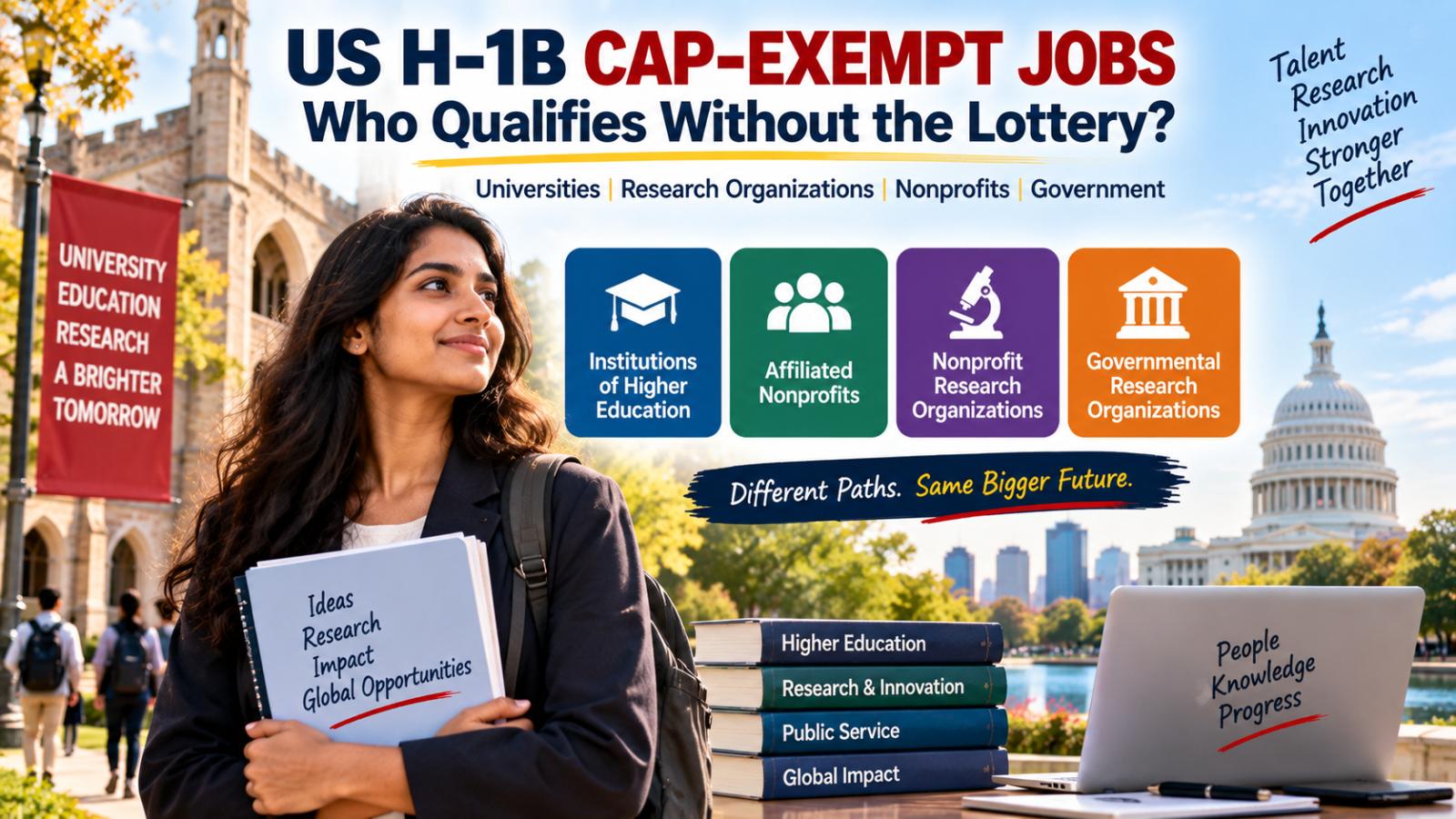
Cap-exempt H-1B jobs can allow qualifying workers to avoid the annual H-1B lottery when employed by certain universities, affiliated nonprofits, nonprofit research organizations or governmental research organizations. This guide explains eligibility and employer changes.
What does cap-exempt H-1B mean?
Most new cap-subject H-1B cases fall under annual limits of 65,000 regular H-1B visas plus 20,000 places for qualifying U.S. advanced-degree holders. Cap-exempt petitions fall outside those numerical limits, allowing qualifying employers to file without relying on the annual cap selection process.
Cap exemption does not waive normal H-1B requirements. The position and worker must still qualify for H-1B classification, and the employer must file the appropriate petition with USCIS.
Which employers can be H-1B cap-exempt?
Federal rules recognize four major categories: institutions of higher education, nonprofit entities related to or affiliated with such institutions, nonprofit research organizations, and governmental research organizations.
Rules effective since January 17, 2025, also allow nonprofit and governmental research organizations to qualify when research is a fundamental activity—an important and substantial activity—even when research is not the organization's primary mission.
Can a worker qualify without direct university employment?
In some cases, yes. Current rules can allow cap exemption when the worker is not directly employed by a qualifying institution but spends at least half of the work time performing duties at a qualifying institution, organization or entity.
Those duties must directly further an activity that supports or advances one of the qualifying entity's fundamental purposes, missions, objectives or functions. USCIS evaluates eligibility case by case.
What happens when moving to a cap-subject employer?
A worker who has only held cap-exempt H-1B employment and has never previously been counted against the annual cap may become subject to the cap when moving to a standard cap-subject employer.
There is also a concurrent-employment exception. In certain circumstances, a worker who continues qualifying cap-exempt employment may simultaneously work for a cap-subject employer without first being counted against the cap. If the cap-exempt employment ends, that protection may also end.
Workers considering a move from a university or research organization to a cap-subject company should therefore confirm whether they have previously been counted against the H-1B cap before changing employers.