H-1B workers can generally receive extensions within a six-year maximum, while some qualify for additional time through AC21 or recaptured time abroad. This guide explains Form I-129 extensions, continued work while a case is pending and the major exceptions to the six-year limit.
How the H-1B extension process works
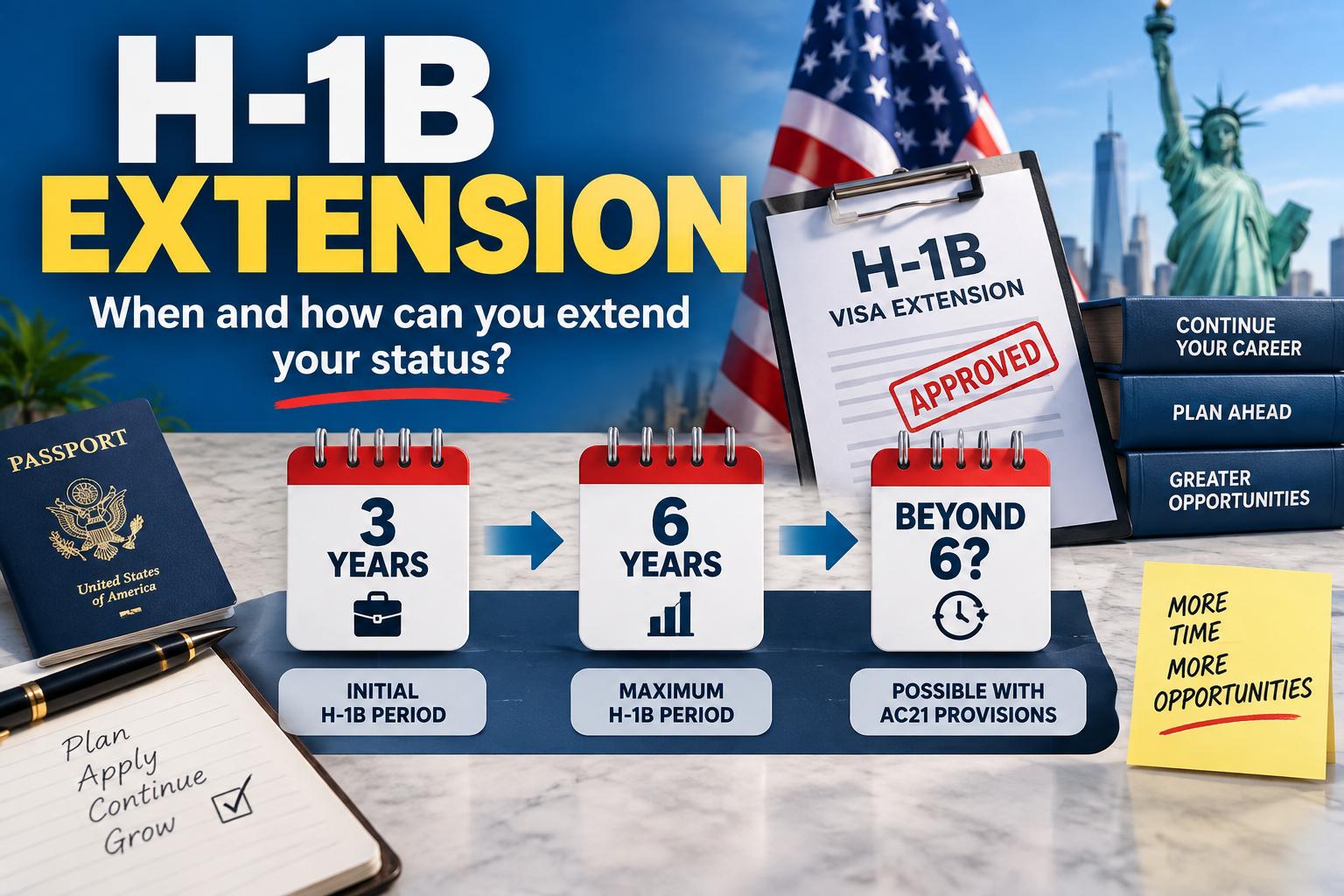
H-1B status is generally granted for periods of up to three years. An employer seeking to continue employing the worker may file another Form I-129 requesting an extension of stay.
Most H-1B workers can receive additional H-1B time up to a general maximum of six years in the United States. USCIS says an initial period of up to three years may generally be followed by another period of up to three years.
The extension request generally must be filed before the worker's current H-1B status expires, and the worker must continue to meet the requirements for H-1B classification.
H-1B 240-day rule while an extension is pending
When the same employer timely files a qualifying Form I-129 extension before the worker's authorized stay expires, the employee may generally continue working for that employer while the petition is pending.
USCIS allows this continued employment for up to 240 days after the previous authorized period expires. If USCIS denies the extension before the 240-day period ends, the employment authorization based on this rule ends when the denial is issued.
Can time spent outside the US be recaptured?
Time spent outside the United States generally does not count toward the H-1B six-year maximum.
A worker seeking an extension may request to recapture full days spent abroad, provided the employer and worker submit evidence documenting the periods outside the country. Evidence can include passport stamps, travel records and Form I-94 information.
Recaptured time can effectively extend the date on which the worker reaches the six-year H-1B limit.
H-1B extensions beyond six years
Certain workers pursuing employment-based permanent residence may qualify to remain in H-1B status beyond six years under the American Competitiveness in the Twenty-First Century Act, or AC21.
USCIS permits qualifying one-year extensions when a labor certification or employment-based immigrant petition was filed at least 365 days before the worker would exhaust the six-year H-1B limit.
Workers with an approved Form I-140 who cannot obtain permanent residence because an immigrant visa is unavailable due to applicable per-country limits may qualify for extensions of up to three years at a time.
Because eligibility beyond six years depends heavily on the Green Card case, priority date and immigration history, employers should verify the worker's eligibility before filing the extension.