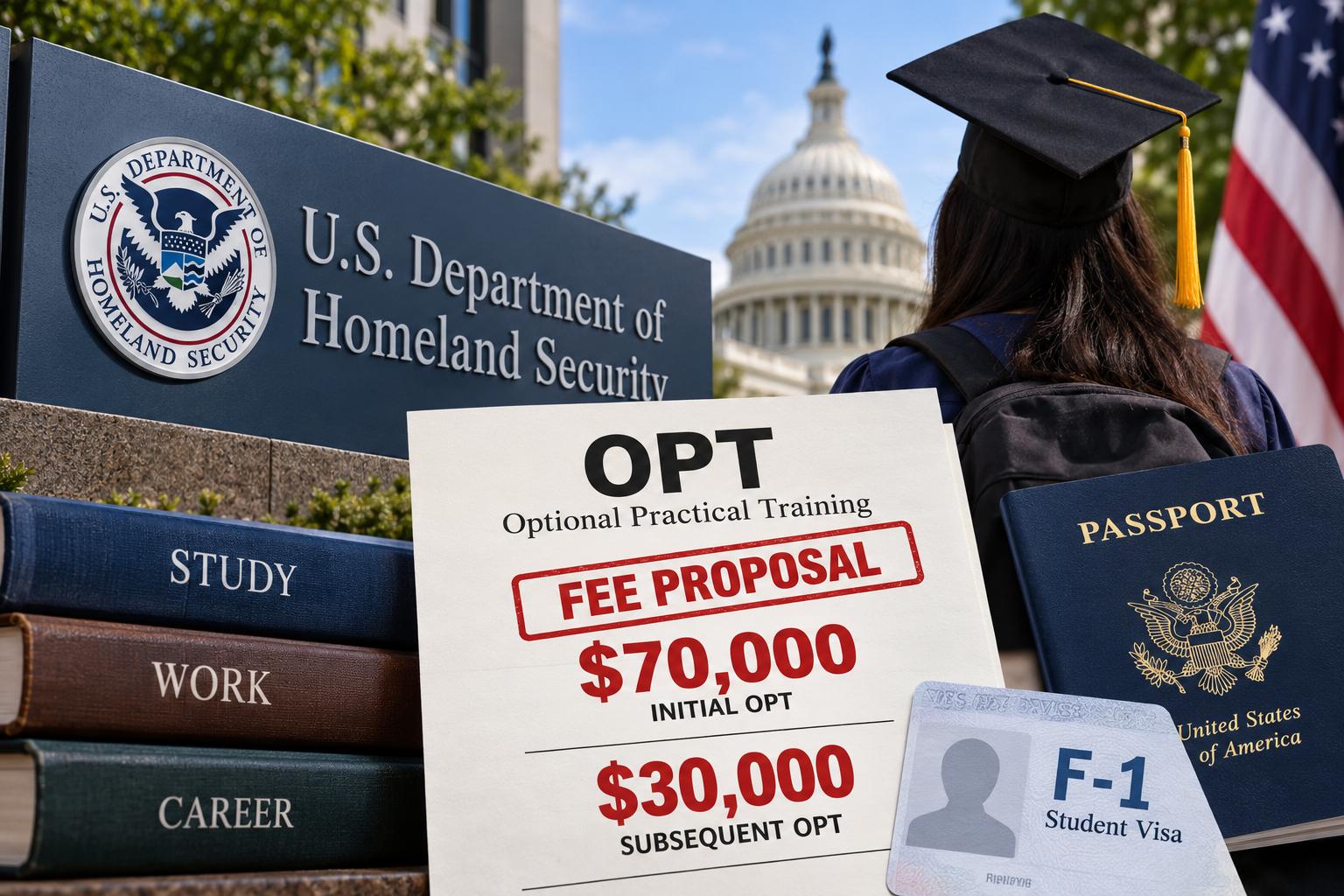
The DHS OPT fee proposal would require SEVP-certified U.S. schools to pay $70,000 before an initial F-1 OPT recommendation and $30,000 for later recommendations, potentially reshaping post-study work options for international students.
The U.S. Department of Homeland Security has proposed a major new fee structure for Optional Practical Training, or OPT, that would require participating colleges and universities to pay tens of thousands of dollars before recommending F-1 international students for work authorization.
Under the proposal, a Student and Exchange Visitor Program-certified institution would pay $70,000 for an initial OPT recommendation and $30,000 for any subsequent recommendation for the same F-1 student.
How the proposed DHS OPT fee would work
The payment would be required before a designated school official enters an OPT recommendation in the Student and Exchange Visitor Information System, known as SEVIS.
The proposed rule places the fee on the educational institution rather than requiring the student to make the payment directly to DHS.
OPT allows eligible F-1 students to work in positions directly related to their academic field. Standard post-completion OPT can generally provide up to 12 months of employment authorization, while qualifying science, technology, engineering and mathematics graduates may seek a 24-month STEM OPT extension.
Why DHS wants the new OPT fees
DHS says the proposed fee structure is intended to reduce fraud and abuse in the OPT program, strengthen immigration system integrity, protect U.S. workers and offset government resources used for OPT-related investigations.
The department also argues that the proposal would make SEVP-certified schools more accountable when determining whether to recommend students for OPT.
What it could mean for F-1 students and colleges
Although institutions would be responsible for paying DHS under the proposal, the financial consequences could extend beyond universities. Schools would have to determine whether participation remains financially viable and how the substantially higher cost affects their international student programs.
That makes the proposal particularly significant for students who view OPT as an important bridge between graduation and U.S. professional experience, including large numbers of Indian students studying at American universities.
Proposal is not yet in effect
The new OPT fees are not currently in effect. The proposal is scheduled for publication in the Federal Register on October 8, 2026, beginning the federal rulemaking and public comment process.
DHS can modify the proposal after reviewing public feedback before issuing any final rule. Until that process is completed and a final rule takes effect, existing OPT procedures remain in place.
The next major developments will be the response from universities, international education organizations and employers, followed by DHS's decision on whether to revise or finalize the proposed fee structure.