Meloni pushes back amid US controversy
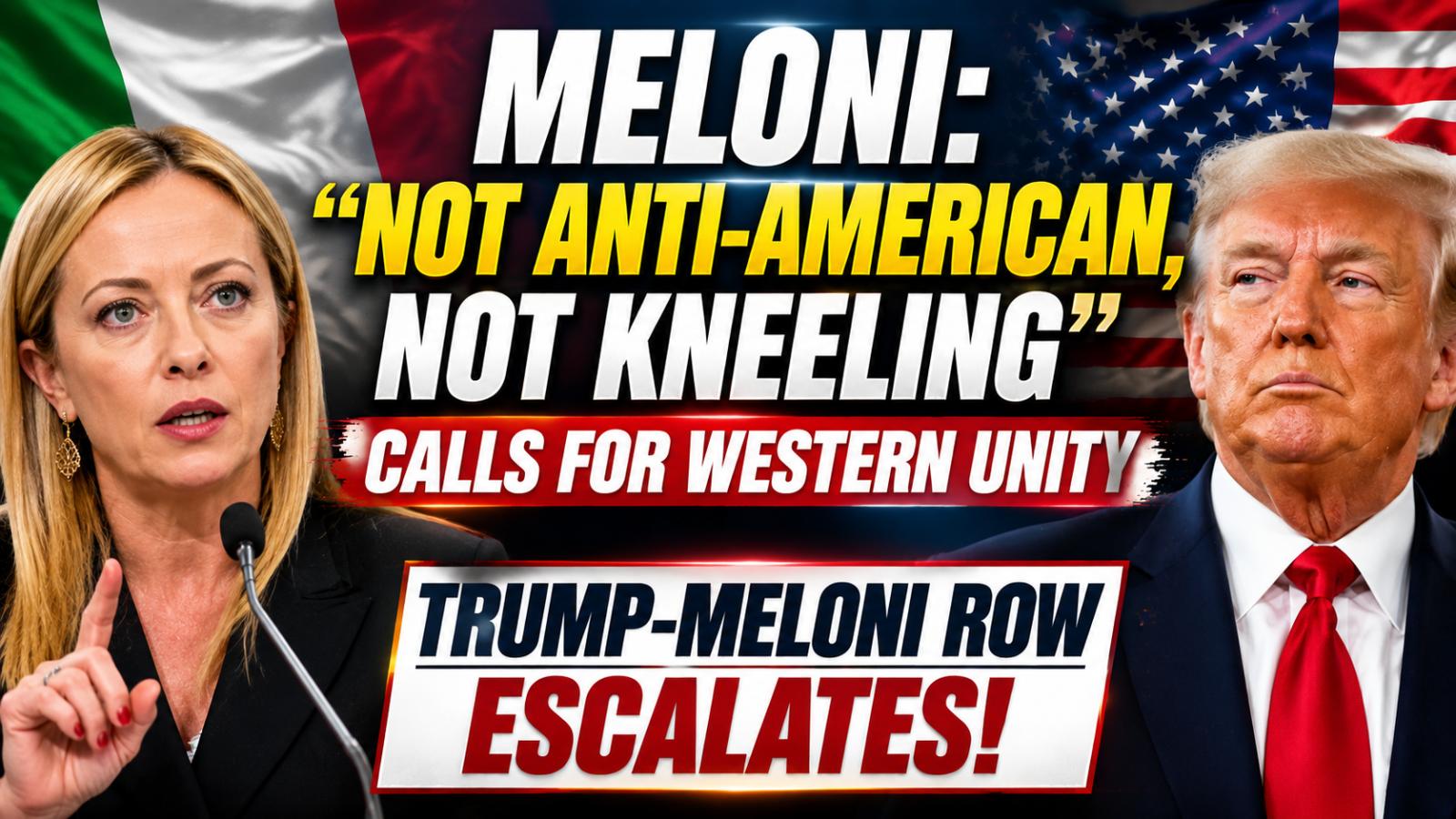
Italian Prime Minister Giorgia Meloni has responded to recent tensions with US President Donald Trump, stating that she is not anti-American but also refuses to be “kneeling” in political relationships. Her remarks come amid an ongoing public exchange that has drawn attention to the state of Italy–US relations and broader Western unity.
Meloni stressed that her position is rooted in the belief that the West is stronger when it remains united. She reiterated that Italy’s strength depends on cooperation within the transatlantic alliance while also maintaining frank and independent positions when necessary. According to her, constructive relationships require honesty rather than unconditional alignment.
Call for unity despite diplomatic strain
The Italian Prime Minister emphasized that she continues to support a unified Western approach in global affairs. While addressing the controversy, she clarified that her stance should not be interpreted as opposition to the United States. Instead, she framed her comments as part of a broader commitment to maintaining strategic cooperation while preserving national dignity.
Her remarks come at a sensitive moment following reported friction between senior Italian officials and the Trump administration. Earlier this month, Italy’s Foreign Minister Antonio Tajani cancelled a scheduled visit to the United States, citing offensive remarks directed at Meloni as the reason for the decision. The cancellation highlighted growing diplomatic discomfort surrounding the issue.
Background to Trump-Meloni exchange
The tensions trace back to interactions during the G7 summit in France, where Trump and Meloni reportedly had several exchanges. Following the summit, Trump made public comments suggesting that Meloni had sought multiple photographs and personal engagement during the meeting. He further claimed she was attempting to strengthen ties with Washington for domestic political advantage.
Trump later expanded on his remarks in public statements and social media posts, criticizing European leadership and questioning policy decisions on energy and immigration. He described Europe’s handling of these issues as flawed and warned of long-term consequences if they were not addressed. His comments intensified political debate across European capitals.
Diplomatic response and effort to de-escalate
Meloni rejected the allegations, calling them inaccurate and politically motivated. She pushed back against the portrayal of her diplomatic conduct and defended her political standing in Italy, stating that her popularity is not subject to external commentary. She also accused the US president of making repeated and unnecessary personal remarks.
Despite the escalation, Meloni later signalled a desire to move beyond the dispute. Speaking at a public event in Rome, she indicated that she did not intend to prolong the disagreement and reiterated her focus on maintaining stable international relationships. Her latest comments suggest an effort to balance firm political messaging with a willingness to stabilize ties with Washington.
The episode underscores the delicate nature of transatlantic relations at a time when political narratives, leadership styles and domestic pressures are increasingly intersecting with international diplomacy.