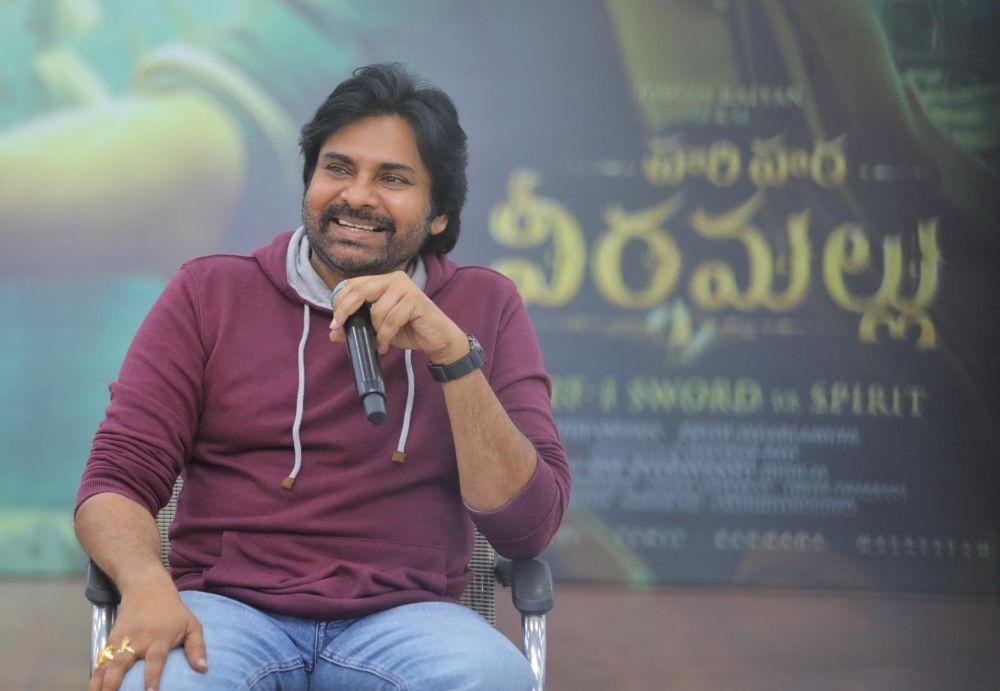
The interaction held at the Jana Sena Party central office on the occasion of the release of Hari Hara Veera Mallu (HHVM) provided an insightful conversation with Pawan Kalyan, the Deputy CM of Andhra Pradesh and the film's key promoter. The film has garnered significant attention, and in this interview, Pawan Kalyan opens up about its themes, struggles during production, and the intersection of politics and cinema.
Interviewer: Pawan Kalyan Garu, thank you for taking the time to speak with us. Let's begin with Hari Hara Veera Mallu—can you tell us a bit about the film's core message?
Pawan Kalyan: Thank you. The essence of Hari Hara Veera Mallu revolves around the battle for Dharma. It portrays a warrior who fought to protect his faith during the oppressive rule of Aurangzeb, who imposed a tax just for Hindus to practice their religion. The film subtly also touches on the journey of the Kohinoor diamond, discovered near the Krishna River, and how it ended up in the hands of the Mughals. The fight for religious freedom, against racial and cultural oppression, is at the heart of this story.
Interviewer: There have been rumors linking your character, Veera Mallu, to historical figures like Sarvai Papanna. Can you clarify that?
Pawan Kalyan: Veera Mallu is a fictional character. While some might draw comparisons to historical warriors, the core story is different. The film focuses on the oppression under the Mughal empire, particularly under Aurangzeb, who killed his own kin and imposed taxes to prevent Hindus from practicing their religion freely. This is what the film really delves into.
Interviewer: Given your dual role as a politician and actor, how do you balance both?
Pawan Kalyan: Politics is my top priority, and that's where I put my focus. But cinema gave me my identity, livelihood, and platform. It's a significant part of who I am. It's not just about acting; it's about my roots, my connection to the people. Cinema has always been a passion, and it remains an essential part of me.
Interviewer: This is the first time you are actively promoting a film. Why the change?
Pawan Kalyan: This film is special. It has faced tremendous challenges—natural, man-made, and political. The producers and everyone involved stood by it with immense courage and perseverance. Promoting the film and supporting such producers is my duty. It's not just about the film; it's about recognizing the efforts of the people who made it happen.
Interviewer: You’ve mentioned the struggles during the film’s making. Could you elaborate on some of those hurdles?
Pawan Kalyan: Politically, we faced a lot of challenges. I was detained in Visakhapatnam, ticket prices were unfairly reduced by the past government, which hurt the producers. There was deliberate targeting because I was associated with the film. But we kept pushing forward despite these setbacks. Every challenge we faced was an opportunity to grow, and we never stopped working on completing the film.
Interviewer: Ticket prices have increased now, unlike during the previous regime. What's your take on that?
Pawan Kalyan: The current ticket price hikes are a result of collective efforts within the film industry, not just my film. The present government recognizes the hard work of producers and has supported the cause. It's important to acknowledge the efforts that go into making films and allow the industry to thrive.
Interviewer: Will there be any special screenings for politicians or government officials?
Pawan Kalyan: I hadn’t thought of it, but it’s a great suggestion. I will definitely plan a special show for public representatives, MLAs, MLCs, MPs, and Ministers. It's always good to have them watch and appreciate the work that has gone into making a film like this.
Interviewer: You’ve also reflected on your past experiences, like the failure of Johnny. How has that shaped your approach now, both in filmmaking and politics?
Pawan Kalyan: Johnny was a major turning point for me. When it failed, I had to personally settle accounts with buyers and financiers. It was tough, but I learned valuable lessons from that failure. It taught me how to handle setbacks—both in cinema and in my political career. That experience gave me the strength to keep moving forward, no matter what.*
Interviewer: Regarding the success of Hari Hara Veera Mallu, will it face a theater shortage like some films? And what about Part 2?
Pawan Kalyan: There will be no shortage at all. Part 2 has already completed 20% of its shoot. We’re confident that the film will reach audiences in the best possible way, and the production is progressing smoothly.
Interviewer: Do you see yourself continuing with films while in politics?
Pawan Kalyan: That’s up to God. If He blesses it, anything is possible. But right now, politics is my primary focus.
Interviewer: What does Andhra Pradesh need to develop a film industry like Hyderabad?
Pawan Kalyan: Infrastructure is key. We need to set up proper film schools and build the necessary infrastructure. This would naturally lead to growth in the film industry and provide opportunities for many talented individuals. A flourishing industry will also bring in economic benefits and global recognition.
Interviewer: Finally, what’s your message for the fans and supporters of Hari Hara Veera Mallu?
Pawan Kalyan: I want to thank everyone who has supported the film, the producers, and the entire team. This film is not just a cinematic effort—it’s a tribute to the warriors who fought for Dharma, for justice. It’s a symbol of the struggles faced and the victory that came from them. I hope it resonates with you all and that you enjoy watching it.
As Hari Hara Veera Mallu gears up for its release, Pawan Kalyan’s insights into the film, the challenges faced, and his personal journey provide a deeper understanding of the passion and dedication behind this cinematic effort.